Key Technical Points for Meat Dog Farming and Scientific Feeding Management Methods
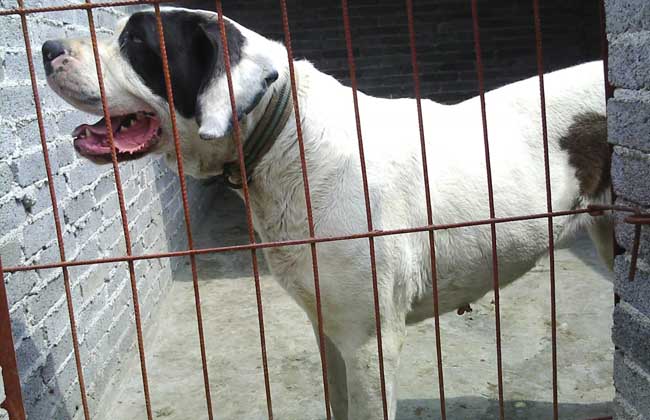
Dog meat is not only delicious and nutritious, but also has medicinal value such as tonifying the kidneys and strengthening yang. With the improvement of people's living standards, the prospects for meat dog farming are even broader. Luoyang started raising meat dogs relatively early and has accumulated rich experience in domestication, feeding, breeding, and selection. At present, the city's meat dog population has reached more than 20,000, and the processing industry based mainly on dog meat, dog skin, and dog fur has risen rapidly, becoming a quick-yielding industry for farmers to get rich.
Living Habits of Meat Dogs
1. Dogs have emotional changes. A dog's facial expressions and its joy, anger, sorrow, and happiness can be revealed without concealment through changes in all parts of its body. Mastering a dog's emotional changes is very important for feeding and management.
2. Dogs' sweat glands are underdeveloped and their coats are relatively thick, so dogs have poor heat tolerance. The suitable temperature in summer is 15-17 degrees. If the temperature is higher, the body temperature begins to rise. If the relative humidity exceeds 65%, the dog's heat dissipation is severely hindered, manifested as opening the mouth and extending the tongue, relying on saliva to lose heat.
3. Puppies have little subcutaneous fat, thin skin, sparse hair, imperfect thermoregulation, and low liver glycogen reserves, so they are afraid of cold and dampness. Attention should be paid to keeping them warm; otherwise they are prone to freezing to death or being crushed to death.
4. Dogs like foods with a fishy smell and can eat both animal and plant foods, but dogs are carnivores by nature, and their nature determines that what they like to eat most is animal protein and fat, such as various meats and fish.
5. The suitable breeding age for dogs is 1.5-2 years for males and 1-1.5 years for females. Most dogs come into estrus once a year in spring and autumn. The estrus period can be divided into proestrus and estrus, lasting 14-20 days. Dogs generally conceive in a single mating. The gestation period of dogs is 62 days, and they give birth to multiple puppies per litter.
Preparations in the Early Stage of Meat Dog Farming
1. Site preparation: For large-group raising, choose a dog kennel on sandy soil that is relatively high, dry, flat, and slightly sloped, sheltered from the wind and facing the sun, shaded and ventilated in summer, and warm with full sunlight in winter. The underground level of the dog kennel should be low to avoid low-lying dampness. The dog kennel should face south or southeast, be located downwind of residential areas in a relatively quiet place, with sufficient water sources, good water quality, convenient transportation, and easy access to electricity, and should be at a certain distance from residential areas, main traffic roads, livestock and poultry farms, sewage pits, and chemical plants.
2. Facility preparation
There are two ways to raise dogs: high-density pen raising and factory-style intensive cage raising:
① High-density pen rapid-raising method: Use one pen per 10 sq m, with 10 to 12 dogs per pen. Raise males and females in separate pens and separate rows. The advantages are isolation from the outside, a quiet environment, convenience for epidemic prevention, easy feeding, labor and effort savings, and easy operation. According to comparative feeding, free-range dogs need more than 1,200 grams of cooked food per dog per day, while pen-raised dogs, because of reduced activity, need only 800 to 1,000 grams, and their weight gain speed is 20%-30% higher than that of free-range dogs, with marketing 20-plus days earlier.
② Factory-style intensive cage-raising method: If raising in large quantities in limited space, bamboo, wooden, or iron cages can be used to raise dogs. The cage is 100 cm long and 80 cm wide and high, with 1 dog per cage. If further increasing density is needed, two tiers can be used for three-dimensional raising. The advantages are low cost, high density, large capacity, uniformity, easy operation, fresh air, sufficient light, easy observation, and convenience for dogs to eat evenly and for epidemic and disease prevention. It also benefits consumption, thereby rapidly fattening the dogs.
3. Technical preparation: The technology for raising a few or a few dozen dogs is relatively simple, but large-scale meat dog farming requires fairly strong feeding techniques. Therefore, it is necessary to study independently through books, newspapers, and magazines, and one can also study in columns such as the "Meat Dog Knowledge Lecture" of this website's online school or the electronic publication "Collection of Dog Raising Techniques" to continuously improve and enrich feeding techniques.
4. Feed preparation: Meat dog feed mainly includes: cornmeal, wheat bran or rice bran, meat or animal offal, and a small amount of bone meal 3%, salt, and green feed. Feed ingredients can be selected according to local resources.
5. Epidemic prevention preparation: There are many kinds of dog diseases, which can cause large-scale outbreaks and deaths, so great attention must be paid. Strengthen feeding management in ordinary times, do a good job in the hygiene of the dog kennel, strictly implement disinfection, strengthen control of transmission by rats, mosquitoes, flies, and other animals, and strengthen quarantine and preventive vaccination.
6. Preparation for introducing breeding stock: Before introducing breeding stock, it is necessary to comprehensively and multi-directionally understand the supply sources, master relevant knowledge, follow the principle of purchasing from units qualified to deal in breeding stock, adhere to the principles of comparing quality, price, and service, and adhere to the principle of purchasing from nearby, and strictly control the quality, price, and structure of the breeding stock.
Meat Dog Farming Management Techniques
1. Feed should be diversified. Dogs need many nutrients, and a single feed is unbalanced and incomplete. Therefore, multiple feeds must be combined with one another to meet the needs of meat dog growth and development.
2. Reasonably prepare feed. Different preparation methods should be adopted according to different feeds. Root tubers, stem tubers, and green feed should be carefully washed and cut fine. Soybeans and feeds rich in carbohydrates should be cooked before feeding.
3. "Four fixeds" feeding. Feeding should be fixed in time, quantity, temperature, and quality. Feeding at fixed times can help dogs form conditioned reflexes and is conducive to improving feed utilization. Generally, feed 2 times a day, and puppies can be fed 1-2 additional times per day. Fixed quantity means providing a certain amount of feed according to the dog's age and growth stage, not too much or too little; generally, feeding to about 80%-90% full is enough. Fixed temperature means adjusting the temperature of feed and drinking water according to different seasons, achieving warmth in winter, coolness in summer, and warmth in spring and autumn. Fixed quality means ensuring feed quality; rotten and spoiled food must not be fed.