Masked Palm Civet Breeding Techniques: Key Points and Methods Explained
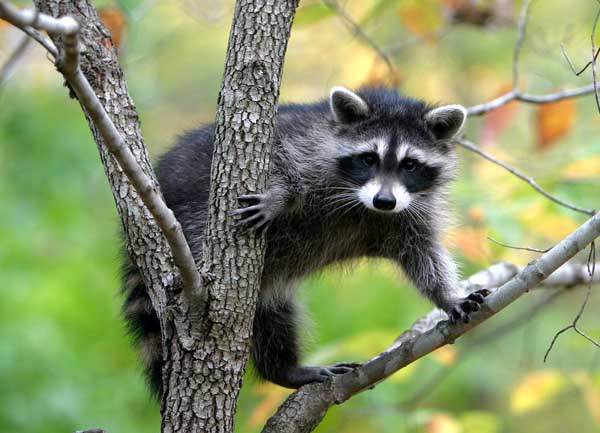
The masked palm civet is a species in the genus Paguma within the family Viverridae, and is a wild animal with valuable fur. There are currently 17 subspecies, 9 of which are found in China. The genus Paguma contains only this one species, and together with other species in the same family it belongs to the primitive group of carnivores. The masked palm civet is a fur-bearing animal; its pelt can be made into fur garments, and it is one of China's traditional major export furs.
Morphological Characteristics
The masked palm civet has a body length of 48-50 cm, a tail length of 37-41 cm, and a body weight of 3,600-5,000 g. The body is somewhat plump, and the neck is thick and short, making it hard to distinguish from the body. The body fur is short and coarse, and the body color is yellowish-grayish-brown. The fur on the head is darker, with a distinct four-striped marking running from the forehead to the bridge of the nose; there are white patches below the eyes and ears, and the fur on the back is grayish-brown. The back of the head, shoulders, ends of the limbs, and the rear half of the tail are black. The limbs are short and sturdy, each with five toes. The toes have claws, and the claws are slightly retractable; the tail is long, about two-thirds of the body length. It is commonly known as the "broken-face dog."
Living Habits
The masked palm civet is a forest-edge animal and a nocturnal creature. It mainly inhabits forests, thickets, rock caves, tree holes, or burrows, and can occasionally be found in cultivated land. It prefers to be active at dusk, at night, and before sunrise, and is good at climbing. It is an omnivorous animal and is quite fond of eating succulent fruits; it feeds mainly on wild fruits and grains, also eats branches and leaves, and will enter orchards to eat fruit, occasionally eating its own feces. It has scent glands near the anus, and when threatened it releases a peculiar odor to drive away enemies.
1. Growth and Reproduction: The masked palm civet comes into estrus from February to May each year. The gestation period is 70-90 days. It gives birth in summer, with 1-5 cubs per litter. The lifespan is 15 years. At 10-12 months after birth, when body weight exceeds 4 kg, it can reach sexual maturity at around 1 year of age. The breeding season is from March to August each year, during which there are 4-6 estrous cycles, each lasting 10-16 days, averaging 14 days, with estrus lasting about 8 days. During estrus, the female civet's labia swell, noticeably enlarge, and evert, with wrinkles appearing on the surface; the color changes from pink to red, the vulval opening becomes large, and mucus is secreted. At this time she accepts mating from the male, and after mating an orange-red vaginal plug is expelled from the vagina. The male civet has sexual desire continuously from March to August, with the testes descending into the scrotum, the scrotum hanging outside the abdominal wall, and the skin color turning pink; after September the testes atrophy and sexual desire disappears. The gestation period of a mated female civet is 51-71 days, averaging 55 days. A newborn civet cub weighs 130-150 g, and cubs born before May can weigh more than 3 kg by the end of the year.
2. Habitat and Distribution: In the wild, the masked palm civet is distributed across Indochina, Indonesia, Myanmar, India, Bhutan, Nepal, and the vast areas of China south of North China, from the western suburbs of Beijing, Datong in Shanxi, the Qinling Mountains in Shaanxi, and western Sichuan in the north all the way to the southern Himalayas in Tibet, and south to Taiwan, China, Hainan Island, and the southern edge of Yunnan. The nominate subspecies is distributed in the southeastern provinces; the subspecies endemic to Taiwan, China is found from low to high elevations in mountainous areas, but mainly in mid- and low-elevation mountainous areas and cultivated land.
In addition, there is a large amount of captive breeding of masked palm civets in Jiangxi, Guangxi, Hainan, Fujian, Guangdong, and other places in China.
Breeding Techniques
The masked palm civet has omnivorous feeding habits, tolerates coarse feed, is simple to raise, has strong disease resistance, is easy to tame, and yields high economic returns under artificial breeding.
1. Housing and Site Construction: The masked palm civet is active at night and rests by day, prefers activity inside the enclosure, and is gregarious, so it has no special requirements for the civet house. The masked palm civet is also not strict about periodic changes in sunlight. The main forms of housing are cage rearing, group rearing, and a combination of cage and group rearing. The cages are made of galvanized iron mesh, with small chambers and dark chambers built of brick inside the cage, and perches should be set up in the cage for the civets to climb, jump, and rest on. Its range of activity is relatively small, and the environment should be kept dry and quiet. The inner chamber should preferably have a cement floor for easy washing. Since the masked palm civet is good at climbing, perches, tree stumps, and the like can be placed indoors and outdoors for the animals to climb on, so they can move about and rest; the room should also be fitted with a top net or top cover, with mesh openings no larger than 5 sq cm, to prevent the animals from escaping and to ensure safety. In summer, protect against direct sun and rain; in winter, protect against drafts, especially at night, which can be blocked with straw curtains or cotton curtains; generally keep the ambient temperature at 25-30°C. Drinking water must be clean and fresh; do not let them drink water that has been sun-warmed in summer or frozen in winter, and change the water frequently.
2. Seed Stock Selection and Mating: For artificially bred masked palm civets, a male-to-female ratio of 1:2 or 1:3 is more suitable. Male civets aged 4-6 years have the highest mating success rate. In selecting breeding civets, one should choose an excellent civet group with moderate body size, robust health, good fur quality, bright fur color, clear white facial patches, moderate size, strong adaptability, and fewer illnesses. Introduction of breeding stock should be carried out in November; if introduced too early, the masked palm civet has poor ability to adapt to the environment and low disease resistance. If introduced too late, it will greatly affect the next year's reproduction. In terms of timing the selection, it should be divided into three stages: from May to June each year, conduct a preliminary selection of adult masked palm civets. Choose cubs that were born early, develop normally, and begin feeding early and vigorously. The number of cubs retained should be 30%-50% more than the planned number. From September to October each year, based on molting, fur replacement, growth and development, and physical recovery, conduct a second selection on the basis of the preliminary selection. Eliminate a small number of breeding civets that are sick or whose physique has recovered poorly. For bred masked palm civets (young civets), select individuals that develop normally, have good fur quality, are robust, are of moderate size, and molt early to retain as breeding stock. In November each year, conduct the final selection, comprehensively appraising all preselected breeding civets, and finally select the breeding civet group according to plan. In terms of the number selected in the final selection, priority should be given to retaining adults, with young civets used to make up any shortfall, and the proportion of young civets of the year should not exceed 30% of the civet group. Finally, maintain a male-to-female ratio of 1:3 or 1:2 in the breeding civet group.