Are the spines on a sea urchin actually poisonous?
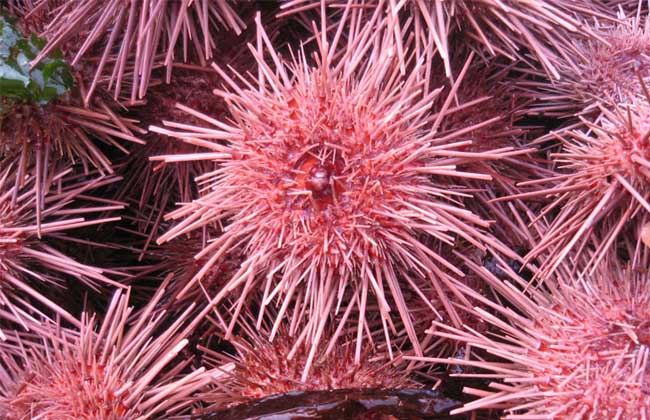
Sea urchins are a class of invertebrates in the phylum Echinodermata that live in shallow ocean waters. The test (shell) is covered in spines, generally about 1-2 cm long, while the spines of the crown sea urchin active in the Caribbean reach 10-20 cm long. The spines themselves are hollow and fragile, but broken spines can grow back. Let's take a look below at whether sea urchin spines are poisonous!
Are sea urchin spines poisonous?
There are many species of sea urchins, and some species can secrete different sea urchin toxins. Sea urchins have two toxin-producing organs, pedicellariae and spines. During the reproductive season, eating the gonads and ovaries of sea urchins, or being stung by spines or pedicellariae, can cause poisoning. After a person is stung by sea urchin pedicellariae, severe pain and coma can occur, and there are records of death. Sea urchin toxins are water-soluble, but their effects vary: some can cause breathing difficulty, muscle paralysis, convulsions and even death in animals; some have a dissolving effect on animal red blood cells; and some cause cardiac activation and make muscles unresponsive to direct external stimulation.
The toxicological effects of sea urchins
1. Toxin of the trumpet sea urchin (Toxopneustes pileolus): The toxin of the trumpet sea urchin can cause temporary contraction of the blood vessels around a frog's heart, has an obvious contracting effect on smooth muscle, and chymotrypsin can inactivate it. The toxin of the trumpet sea urchin is a protein and behaves like a kinin toward smooth muscle.
2. Toxin of the white-spined sea urchin (Tripneustes gratilla): The toxin of the white-spined sea urchin can cause sustained contraction of isolated guinea pig ileum, in direct proportion to the dose. Coronary perfusion of guinea pig heart can produce changes in heartbeat amplitude and rate, and also causes varying degrees of heart block. It has hemolytic activity on the red blood cells of rabbits, humans, guinea pigs, cattle, sheep and fish, causes a drop in blood pressure in whole animals, and also causes irreversible block of muscle response to intracellular stimulation.
What poisonous sea urchins are there?
1. Trumpet sea urchin (Toxopneustes pileolus): The test diameter of the trumpet sea urchin is 80-90 mm, with the largest reaching 150 mm, and the test is a low hemispherical shape. The side with the mouth is called the oral surface, and the opposite raised side is called the aboral surface. The spines on the aboral surface are small and fine, while the spines on the oral surface are slightly longer, and some spines are flattened and wide at the upper part, forming a club shape. The back is green, densely covered with spines that are white at the edges and purple at the base. The venom glands are well developed and the toxicity is very strong. After being stung, mild cases involve unbearable pain, while severe cases can lead to death.
2. Ring-spined sea urchin (Echinothrix calamaris): The test diameter of the ring-spined sea urchin is 70-80 mm, with the largest reaching 130 mm. The outline of the test is roughly pentagonal, and both the aboral and oral surfaces are flat. The large spines on the aboral surface are hollow and fragile, and are easily broken off. The color is beautiful, and the spines often have black-and-white alternating bands, as well as green, brown, purple, pink or red bands. The tips of the large spines have barbs and are toxic. When a person touches it, they are immediately stung, and the spine breaks off in the skin. The patient experiences severe pain, and the injured area becomes red and swollen, usually taking about a day and a night to subside.
3. Crown sea urchin (Diadema setosum): The crown sea urchin has a diameter of 70-80 mm, and its height is slightly greater than the test radius. The test is thin and forms a low hemispherical shape. The large spines on the aboral surface are slender and needle-like, hollow, with ring-like ridges on the surface, and their length is about 3-5 times the test diameter, reaching up to 26 cm. When alive, the whole body is purple-black, and the color of the large spines often varies. The spines are especially sharp and fine, and after piercing the skin they break off inside the human body, causing severe pain.
4. White-spined sea urchin (Tripneustes gratilla): The white-spined sea urchin generally has a diameter of 100 mm, with the largest reaching 145 mm. The test shape varies greatly, generally being a hemispherical shape with a pentagonal outline. The oral surface is flat. The large spines on the aboral surface are short and slightly sharp, with fine striations on the surface, while the large spines on the oral surface are shorter and blunt. The large spines are generally white, and can also be orange-yellow or black, while the test is blackish-purple. The toxin of the white-spined sea urchin can dissolve the red blood cells of humans, cattle, sheep, rabbits and fish.
5. Horse dung sea urchin (Hemicentrotus pulcherrimus): The test of the horse dung sea urchin is low hemispherical, with a height approximately equal to the test radius. The test diameter is generally 30-40 mm, with the largest reaching 61 mm. The surface of the test bears short spines, 5-6 mm long, and the spines of some individuals are often not upright but tend outward. The color of the spines varies greatly, generally being dark green. The spines are poisonous, but the eggs are edible.