How to raise zebra finches properly? Teach you the correct breeding method
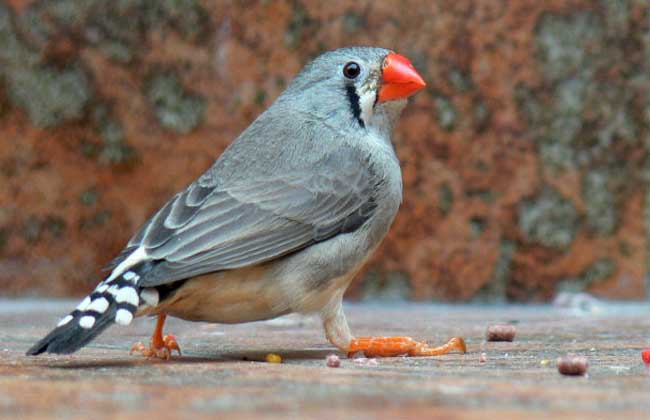
The zebra finch is also known as the chestnut-eared finch, spotted-breasted grass finch, and painted flower bird, among other names. It is a small bird of the genus Taeniopygia in the family Estrildidae, originally distributed in the tropical forests of eastern Australia and eastern Indonesia. It was introduced to China around the 1970s and 1980s from Australia, and multiple color varieties such as camel, white, and pied have now been bred and developed. Its plumage is gorgeous, its body is small and exquisite, and its call is soft and gentle, bringing people aesthetic enjoyment. Let's take a look below at how to raise zebra finches properly!
Living habits of zebra finches
1. Environment: Zebra finches inhabit dry sparse woodlands, shrublands, open farmland, grasslands, salt marshes, plantations, parks, courtyards, etc., mostly moving in pairs or flocks.
2. Calling: Male zebra finches call more frequently, while females generally rarely sing. Adult males and females are often inseparable, showing a strong affection of the husband singing and the wife following.
3. Drinking: Zebra finches can go without drinking water for a long time and can also obtain the water necessary for physiological activities from food. When drinking, they suck water somewhat like pigeons.
4. Water bathing: Zebra finches do not have high requirements for water bathing. During bathing, they only need to slightly wet their feathers, and afterward the male and female birds can preen each other's feathers.
5. Food: Zebra finches mainly feed on plant-based food, such as plant seeds, tender leaves, and tender buds. They mostly forage on the ground, and sometimes catch some small insects in the air.
How to raise zebra finches properly?
1. Breeding environment: Zebra finches are relatively timid and afraid of people, and are easily frightened when seeing people. The environment for keeping birds should be quiet and should not cause fright. Therefore, they are still not suitable for group keeping. Generally, household breeding cages should be about 30 cm long, 25 cm wide, and 35 cm high, and keeping one to several pairs is sufficient.
2. Cage setup: In the upper corner of the zebra finch cage, an artificial nest box should be set up. The artificial nest box should be about 9 cm long, 7 cm wide, and 10 cm high. The bottom of the box should be covered with about 2 cm thick cotton or nesting grass. The entrance and exit should be about 3 cm in diameter, with a small platform outside the entrance and exit. Bamboo tubes or gourds can also be used instead.
3. Feed management: For daily feeding, zebra finches are fed shelled millet, or a mixture of 60% barnyard grass seeds, 30% millet, and 10% broomcorn millet. During the young bird period and breeding period, feed egg millet and increase the supply of fresh green leafy vegetables and fruits. Mineral feeds such as cuttlebone, shells, and grit should also be supplied as appropriate.
4. Temperature management: Zebra finches very much enjoy water bathing, and the water temperature should be kept at around 30°C. However, except during the brooding period, provide a basin with an appropriate amount of bath water. The most suitable growth temperature is 20-25°C. In winter, the indoor temperature should not be lower than 15°C, and insulation should be provided at night to facilitate the growth and development of zebra finches.
5. Breeding and incubation: After zebra finches complete nest building, there will be several mating behaviors within a week. About one week after successful pairing, they lay 4-6 small white eggs in the nest. The male and female birds incubate alternately, but the female is the main incubator. The incubation period is 14 days, with a fluctuation of 1-2 days due to climate differences between the north and south. During this period, the environment should be kept as quiet as possible, the light should not be too strong, and the cage and nest box should not be moved easily.
6. Young bird management: After zebra finch chicks hatch, their bodies are completely bare, covered only with a small amount of white down. The parent birds spit out semi-digested food they have eaten to feed the chicks. At this time, weakly egg-coated millet with an egg proportion below 15% should be provided as feed for the chicks. Young birds leave the nest at 21 days to learn to fly. After three months, the black color of the beak gradually fades starting from the base of the nose, reaching sexual maturity. At five months, they have reproductive capacity. If raised properly, they can breed year-round.
Precautions for zebra finches
1. Breeding cage: For breeding cages for zebra finches, it is recommended to choose metal square cages. This type is most appropriate for breeding purposes.
2. Breeding nest: The breeding nest for zebra finches should have a partition in the middle, dividing the nest box into two inner and outer compartments. The partition and the outer compartment should each have an entrance and exit, with a small platform outside the entrance and exit, making it easy for the birds to step on when entering and leaving the nest.
3. Feeding for estrus: When zebra finches grow to 3-4 months old, select good parent birds, feed them egg millet and cleaned fresh green vegetables (rapeseed is best), thereby promoting estrus.
4. Egg-laying summary: When the parent zebra finches frequently enter and leave the breeding nest, it indicates that the female bird is about to lay eggs. Eggs can be laid in about two weeks, generally 4-6 eggs.
5. Incubation summary: Zebra finches begin incubation when 3-4 eggs have been laid. Once a bird is found staying in the nest all the time and not coming out, that means incubation has begun. The male and female parent birds incubate in turns, and the incubation period is 14 days.
6. Feeding during incubation: During the incubation period for zebra finches, keep the water in the water trough as little as possible to prevent the parent birds from bathing, and remove the egg millet and vegetables, replacing them with millet, broomcorn millet, and barnyard grass seeds, etc.
7. Breeding frequency: Zebra finches can breed and lay eggs throughout the year. As long as the living environment of the zebra finches is quiet and the light in the breeding cage is not too strong, they can lay eggs continuously.