Key points and management methods for zokor breeding
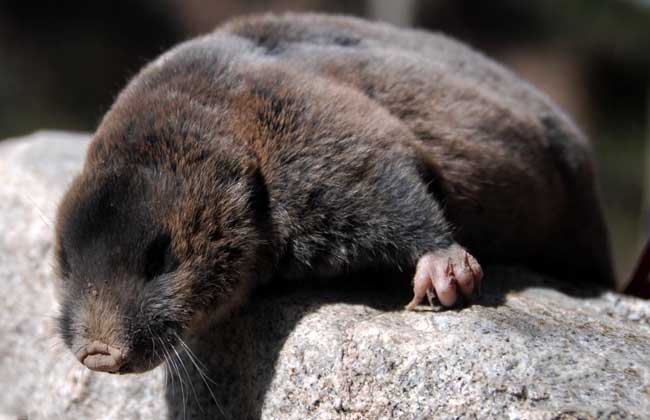
The zokor is a general term for the subfamily Myospalacinae in the family Cricetidae of the order Rodentia, also known as diyang, sailong, and other names. Its bones can be used as a substitute for tiger bone in medicine, and the whole animal can also be used medicinally, with the liver and gallbladder being especially valuable for medicinal use. Its fur is a precious animal pelt with strong water-repellent properties, comparable to otter fur, and its meat is delicious. Therefore, artificial breeding of zokors has very high economic value. Let us take a look at zokor breeding techniques below!
Living habits of zokors
Zokors live in burrows in moist, loose soil. Females and males live separately, but live together during the breeding season. They like darkness and fear sunlight, have poor eyesight but sensitive hearing, and like quiet and fear being startled. Their food is mainly potatoes and grass roots, and they generally dig burrows to feed. They have relatively strong disease resistance and do not hibernate.
Growth and reproduction of zokors
Zokors generally breed from March to September, producing 2 litters per year, with 1 to 8 young per litter. In the wild, they come into estrus and mate from April to June each year. Under artificial rearing conditions, they breed from March to October each year, producing 2 to 3 litters per year, with 4 to 6 young per litter, and sometimes more than 8. Generally, young zokors reach sexual maturity after 2 months of growth. When a female is in estrus, mucus appears in the genital area and she makes a “zhi” sound; this is a good time for mating. The gestation period is 30 days, and births mostly occur at night. The young mainly nurse for the first 10 days, after which they can be fed potatoes, grass roots, and so on. After 20 days, the young can live independently.
Capture techniques for zokors
1. Timing: The active period of zokors is from the Spring Equinox to Lesser Fullness in spring, and from the Autumn Equinox to Cold Dew in autumn. They are generally most active from 8 to 12 a.m. each day, and sometimes also active from 3 to 4 p.m., with little activity at other times.
2. Peak period: The peak activity period of zokors is on rainy days, windy days, cloudy days, or on the eve of a change to bad weather.
3. Male and female: Zokors must be distinguished as male or female so that capture can be carried out purposefully. Where the mounds of soil on the ground form a straight line, they are male; where they form a curve, they are female.
Rearing methods for zokors
1. Closed-pen method: Build a pool of brick with length, width, and height of 1×1×1.2 m. The soil placed inside the pool should generally be 50 cm thick, to allow the zokors to dig burrows. In one corner of the pool, place some rice straw or wheat straw so the zokors can use it for bedding and nest building, and in another corner place food and a water container. Keep 1 pair per pool, but be very careful that the cover is sealed tightly and that the bricks have no cracks, to prevent the zokors from escaping.
2. Cage rearing method: One cage per zokor. Make a wire cage of 60*40*30 cm. The mesh openings must be small, not exceeding 2 cm, to prevent nursing young from slipping through. Place about 1 kg of soft dry grass in the cage for the zokors to rest on, and place food and a water container in the cage. Usually cover it tightly with black cloth to block light, so as to keep the medicinal properties of the zokors unchanged.
Feeding and management of zokors
1. Feed: The zokor is a typical herbivorous animal. The feed of zokors is mainly grasses, accounting for about 50% of the daily ration. In its daily ration formula, vegetables account for 20%, such as Chinese cabbage and carrots, and concentrate feed accounts for 30%, mainly corn, bran, potatoes, sweet potatoes, and so on, with 1 to 2 grams of salt added.
2. Feeding: Zokor feeding should follow the “three fixed” principles. Fixed time: feed 3 times a day, starting at 7 a.m. Fixed amount: based on different ages, generally adult zokors are fed 200 to 250 grams per day. Fixed water: supply enough clean water for the zokors to drink freely.
3. Disease prevention: When rearing zokors, treat illness early and prevent outbreaks of disease. Once zokors are found to have colds, pneumonia, gastroenteritis, parasitic diseases, and so on, they should be treated promptly.
4. Marketing: Breeding zokors are best sold at 30 days of age. For commercial zokors, the market should guide the timing; generally, adult zokors can be sold when they reach 400 to 500 grams.