Is the platypus viviparous or oviparous?
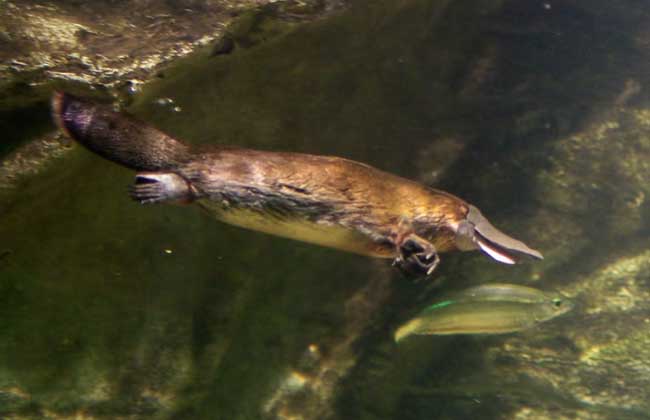
The platypus is an incompletely evolved mammal, with very few species; within its genus there is only one animal, the platypus, and it is also one of the lowest mammals. It appeared 25 million years ago and still lives in Australia today. Because its numbers are relatively small and its distribution is relatively limited, no subspecies have been found so far. Let us take a look below at whether the platypus is viviparous or oviparous!
Is the platypus viviparous or oviparous?
The platypus is oviparous. The platypus is a mammal. Although the mother also secretes milk to feed her young as they grow, it is not viviparous but oviparous, that is, the mother lays eggs and incubates them with her body temperature like a bird. Because the platypus can lay eggs like a reptile or bird, and after the eggs hatch it can feed milk to its young like a mammal, this contradicted scientists' existing division between mammals and non-mammals. After much controversy and research, scientists finally reached a conclusion: this strange creature belongs to the "monotremes" family, that is, "egg-laying mammals," and this animal represents a link in the evolution from reptiles to mammals.
Is the platypus a mammal?
The platypus is a mammal. The platypus is an incompletely evolved mammal. It has neither a pouch nor nipples; clustered mammary glands open directly onto the mammary area of the abdomen, and the young feed on the milk in the mammary area with a retractable tongue. The lactation period is about five months. It relies on breast milk for 4 months before it can go out to forage on its own, and at over 2 years old it is considered an adult. Its lifespan is generally 10 to 15 years.
Is the platypus a protected animal?
The platypus is listed in the International Union for Conservation of Nature (IUCN) Red List of Threatened Species 2012 ver 3.1——Least Concern. It is of great academic significance. Having survived hundreds of millions of years, it has neither gone extinct nor evolved much, and has always lingered in a "transitional stage," full of mystery. This animal, found only in Australia, declined severely in population due to years of overhunting in pursuit of specimens and precious fur, and once faced the danger of extinction. Because of its uniqueness and rarity, it has been listed as an internationally protected animal, and the Australian government has formulated protection regulations.