Is the blue long-glanded coral snake venomous? Let us take you through its venom characteristics
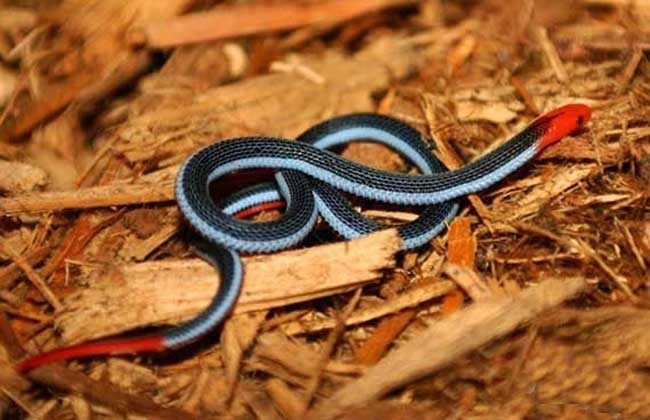
The blue long-glanded coral snake, also known as the blue Malayan coral snake, is a snake of the genus Calliophis in the family Elapidae. It has long been one of the most mysterious snakes in Southeast Asia, distributed in Myanmar, southern Thailand, western Peninsular Malaysia, Sumatra, Java and other places. It reproduces by laying eggs. Let us take a look below at whether the blue long-glanded coral snake is venomous!
Is the blue long-glanded coral snake venomous?
The blue long-glanded coral snake is venomous, and its venom is mostly neurotoxins and highly fatal. The long-glanded coral snake has the largest venom glands among snakes, with the glands extending under the skin to as much as 1/3 of its body length. Its venom is potent, and although the venom yield is unclear, estimating from the size of its venom glands, it is probably not small. Because it is gentle in temperament, secretive in its movements and far from areas of human activity, fatal bite cases are very rare.
What does the blue long-glanded coral snake eat?
Human understanding of the various habits of the blue long-glanded coral snake is very limited. It usually feeds on other snakes, and some sources describe it preying on skinks or frogs. It inhabits primary forests and mature secondary forests, is semi-fossorial, and is mainly active at night, in the early morning and at dusk. It is distributed in Myanmar, southern Thailand, western Peninsular Malaysia, Sumatra, Java and other places.
Top ten most venomous snakes in the world
1. Sea snake: The venom of sea snakes is among the strongest animal venoms. The venom of the beaked sea snake is equivalent to twice the toxicity of cobra venom and 80 times the toxicity of sodium cyanide. The composition of sea snake venom is a neurotoxin similar to cobra venom, yet strangely the part of the human body it mainly damages is voluntary muscle rather than the nervous system.
2. Eastern brown snake: The eastern brown snake ranks second in the world's most venomous snake rankings. Once provoked, it is extremely aggressive and will strike multiple times. It is also the snake that has killed the most people on the Australian continent. The coagulants in its venom cause blood clotting, and a bitten creature will die from kidney failure.
3. Black mamba: The black mamba is the longest, fastest and most aggressive killer among the world's venomous snakes. It can chase prey at a speed of up to 19 kilometers per hour, and just two drops of venom are enough to kill a person. What is even more terrifying is that at any time the black mamba has 20 drops of venom in its fangs, and once a human is bitten, death is almost 100 percent certain!
4. African boomslang: The African boomslang is not an aggressive snake; it prefers to keep a low profile, which means fatal accidents are quite rare. If you are bitten by an African boomslang, you can only say your luck is truly terrible. The African boomslang is found throughout the savanna grasslands south of the Sahara Desert in Africa. Its fangs are very long, growing at the rear of the mouth and extending straight to the front of the mouth. A bite from its fangs causes bleeding and can be fatal.
5. Puff adder: The puff adder has killed more people in the African continent than all other venomous snakes combined. It is not easily startled, and when a person approaches it, it does not rush to move away, so it is very easy to step on in the dark. At this point, the viper will react immediately and strike a person with a sudden bite. The puff adder has large fangs and highly toxic venom, and once treatment comes too late, the bitten person will undoubtedly die.
6. Desert horned viper: The desert horned viper also has a pair of movable hollow fangs. Apart from launching an attack, it normally keeps this pair of fangs folded away in its upper jaw. The fangs are large, filled with venom, and highly toxic, able to kill prey in seconds. It feeds on lizards and small mammals, and it can lie in ambush in the desert with its tail swaying, making it hard to spot.
7. Forest cobra: The venom of the forest cobra has a median lethal dose of 0.12 mg. In addition, not only is its venom extremely potent with a fatal paralytic effect, but it can also deliver a high dose of venom. Moreover, when this snake bites its prey, it will hang on without letting go. Interestingly, the neurotoxins contained in forest cobra venom may be useful in treating Alzheimer's disease.
8. Tiger snake: The tiger snake secretes strong neurotoxins, coagulants, hemolysins and muscle toxins unique to snakes, and its toxicity ranks among the strongest snake venoms in the world. After being bitten by a tiger snake, besides severe pain at the wound, the toxins spreading from near the wound will also cause pain in the feet and neck, and the body will feel numb and sweaty, followed by difficulty breathing and localized limb paralysis.
9. Indian krait: The Indian krait is extremely venomous, with an average of 2 to 3 mg of venom being enough to be fatal. Its venom contains severe neurotoxins, and many experts believe that the Indian krait's toxicity is far stronger than that of ordinary cobras. This toxin affects the nervous system of organisms, such as the brain. A person bitten by an Indian krait may die after 6 to 8 hours, and even with an injection of snake antivenom, there is only a 50% chance of survival.
10. Tiger rattlesnake: The tiger rattlesnake is found in the southwestern United States and northwestern Mexico. One source records its median lethal dose as 0.06 mg, while other records give higher figures. The tiger rattlesnake is the most venomous of all rattlesnakes. Being bitten by this snake should be regarded as an extremely dangerous situation. If you have ever encountered a tiger rattlesnake, then its markings are a warning.