Nutria Farming Techniques and Feeding Management Methods
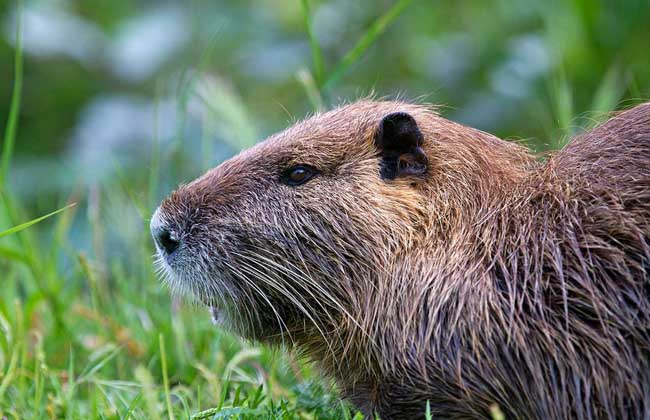
The nutria is also known as the coypu, swamp beaver, etc. Its fur is a valuable material for making coats, hats, scarves and other garments; its meat is a high-quality, high-protein wild game delicacy; and its internal organs are a major source of biological medicines. Farming nutria has the characteristics of high economic value, abundant feed sources, simple enclosure construction, ease of rearing, ease of management, and no plagues. Let us now take a look at nutria farming techniques!
Nutria Living Habits
1. Feeding habits: The nutria is a plant-eating animal with very economical and wide-ranging food sources. Wild plant species include dandelion, nettle, reed, cattail, water hyacinth, alfalfa, and tender branches and leaves of poplar, willow, elm and pagoda tree; vegetables include potato, radish, Chinese cabbage, spinach, etc.; crops include wormwood stalks, autumn leaves, corn, barley, wheat, beans, bran, etc.; animal feeds include bone meal, eggs, eggshell powder and silkworm pupae; special supplementary feeds include milk, soybean milk and cod liver oil; additive feeds include fish meal, bone meal, meat meal, yeast powder, blood meal, and various vitamins, growth promoters, antibiotics, salt and various trace elements, etc.
2. Reproductive habits: Female nutria come into estrus multiple times a year, once every 15-30 days, with each estrus lasting generally 2-3 days. The gestation period is 132 days, and births mostly occur at night or in the early morning. Newborn nutria can squeal 2 minutes after birth, begin suckling colostrum after 20 minutes, and within 4 hours can leave the nest, move about, swim in water and look for food. Before 10 days of age, young nutria depend on mother's milk for their living; after 10 days of age they begin supplementary feeding, and the lactation period is 1.0-1.5 months. Young nutria grow relatively quickly; generally at 2 months after birth, male young nutria reach an average body weight of about 1.4 kg. Young nutria have strong vitality and are not difficult to raise.
Nutria Farming Value
1. Nutria meat: Nutria meat contains 18 kinds of amino acids and more than 30 kinds of trace elements; in particular, its zinc and calcium are several times higher than those in ordinary livestock and poultry meat, making it an ideal food for women's beauty care and for children's physical development and intelligence enhancement.
2. Fur: Nutria fur is thick and substantial in texture, soft and wear-resistant, gorgeous in appearance, with dense underfur and good water-shedding and heat-retention properties. The clothing made from it is both fine and inexpensive, and is very popular among wage earners and in some Eastern European countries.
3. Nutria oil: With the deep processing of nutria products, some high-value-added products have now been developed, such as nutria oil, which can be used to make high-grade cosmetics.
4. Nutria blood: A health-care medicine can be extracted from nutria blood, used to treat gastrointestinal diseases with good results.
5. Nutria bone: Medicinal liquor made from nutria bones has good results for rheumatism.
6. Nutria tail: The nutria's tail has a remarkable effect of nourishing yin and strengthening yang, second only to deer penis. After scientific processing, the tail tendon is made into absorbable protein sutures used for stitching wounds, with no need to remove the stitches.
Nutria Farming Methods
1. Cage rearing: Cage rearing is the best method for large-scale nutria farming, especially for breeding nutria, for which cage rearing should be adopted even more; however, the farming cost is relatively high. The cages for raising nutria should be built inside a house or shed. Generally, double-tier cages are installed on both sides inside the house or shed, with a walkway set up between the two rows of cages to facilitate feeding management and feed transport. The interior should be bright, dry and well ventilated.
2. Pen rearing: For household nutria farming, the pen rearing method is preferable. The size of the pen depends on the number of nutria being raised, with an average of 1 square meter of ground area per nutria. The pen walls can be built with brick or cement board or wire mesh. On the south side of the pen, build a pool with specifications of 80 cm long, 40 cm wide and 30 cm deep, for the nutria to swim and bathe in. Between the pool and the nest chamber is an exercise yard for the nutria to feed and move about.
3. Free-range rearing: Nutria free-range rearing is a relatively extensive rearing method. Its advantage is that it can make full use of natural water resources and reduce infrastructure costs, lowering production costs by 50-60%. However, whether the site selected for free-range release of nutria is appropriate is greatly related to whether free-range rearing can succeed.
4. Semi-free-range rearing: Nutria semi-free-range rearing is a rearing method combining free-range rearing with pen rearing; free-range rearing is carried out in spring, summer and autumn, and in winter the nutria are confined indoors for rearing. For specific methods, refer to free-range rearing and pen rearing methods.
Nutria Farm Building Construction
1. Site selection: Choose a place with relatively high terrain, dry and easy to drain, sheltered from the wind and facing the sun, with sandy soil, and a quiet environment, in an area with little disturbance, little pollution and little disease transmission. It is required that the farm be at least more than 300 m from main traffic trunk lines and more than 100 m from pedestrian paths.
2. Feed supply: No matter how large the scale of construction, feed supply must be guaranteed. In large-scale farming, because the farm is large and the number of animals raised is relatively great, relying only on purchased feed from outside may not necessarily meet the rearing requirements and often increases production costs. Therefore, when building the farm, consideration should be given to setting up a feed base commensurate with the scale of construction.
3. Convenient water source: Raising nutria requires a large amount of pollution-free clean water for drinking and bathing; in addition, washing down the pens also requires a large amount of water. Therefore, larger-scale farms should have their own deep wells to ensure water supply. If using tap water, two things should be considered: first, that the supply is guaranteed; second, that it is pollution-free.