In which month do penguins usually lay eggs?
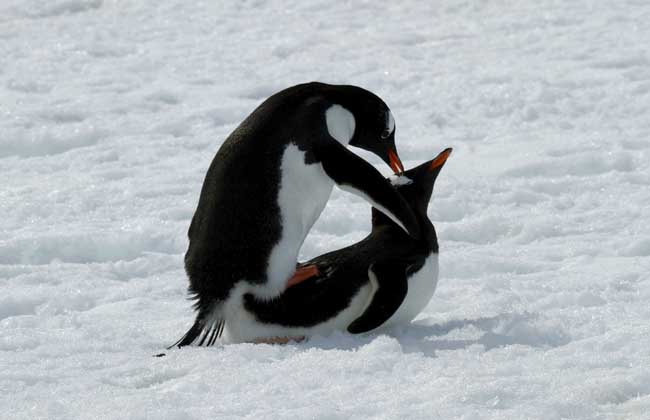
Penguins are one of the oldest swimming birds, and most likely settled in Antarctica before they even acquired their ice armor. There are 18 independent species in total. The largest species is the emperor penguin, averaging about 1.1 m tall and weighing more than 35 kg. The smallest penguin species is the little blue penguin (little penguin), standing 40 cm tall and weighing 1 kg. Let's take a look below at which month penguins usually lay eggs!
In which month do penguins lay eggs?
Penguins usually lay eggs in May. The life history of penguins varies with the body size of the species and their geographical distribution, and the breeding cycle of the same species is also related to latitude. Some species migrate long distances to ancestral nesting grounds inland to lay eggs. The African penguin and the little blue penguin (little penguin) breed 2 times a year, while most species breed only once a year. The king penguin, however, breeds 2 times in three years. King penguins and emperor penguins lay 1 egg each time, while other species lay 2, occasionally 3. Most penguins breed in the spring and summer of the Southern Hemisphere, and some populations of the gentoo penguin also breed in winter. The emperor penguin has a long development period, so it begins breeding in autumn, so that the chicks emerge in summer when their chances of survival are greatest.
How long does it take for a young penguin to become independent?
It takes 24 to 48 hours for a penguin chick to hatch from the eggshell. After hatching, it immediately shows feeding behavior, putting its beak into the parent bird's mouth to take in liquid regurgitated food of crustaceans or fish. At first the chick hides under the parent bird's body, and as it gradually grows it stays at the parent bird's side. The period from hatching to full independence is 2 months for the smaller species, 5 and a half months for the emperor penguin, and 12 to 14 months for the king penguin. Half-grown chicks form large groups tended by adult birds, generally as in a “nursery”.
Why can't penguins fly?
For a long time there have been several theories explaining why penguins cannot fly. One view holds that some species lost the ability to fly because of a lack of ground predators. Another view is a biomechanical hypothesis: when birds fly and dive, they must use their wings for two different tasks, and from the biomechanical hypothesis it is impossible to build wings that are good at both tasks at the same time. Penguins once faced an evolutionary choice: to fly in the air or to swim agilely underwater. As the wings became more and more efficient when penguins dived, their flying ability became weaker and weaker. At a certain point, flight became very laborious, so the best choice was to give up flying and let the wings shrink into flippers.
Why aren't penguins afraid of the cold?
Although Antarctica is bitterly cold, penguins have been tempered by tens of millions of years of blizzards. They have a very thick layer of fat, and the feathers over their whole body have become overlapping, closely packed scale-like shapes. This special feather coat not only makes it hard for seawater to soak through, but even at temperatures near minus 100 degrees Celsius it cannot breach its insulation defense. Moreover, through long-term evolution penguins have developed a unique vascular system: the arteries and veins form a three-dimensional interlocking pattern, so the cold blood flowing back to the heart and the warm blood flowing out of the heart can exchange heat, thereby ensuring the temperature of the blood.