Who is responsible for incubating the emperor penguin's egg?
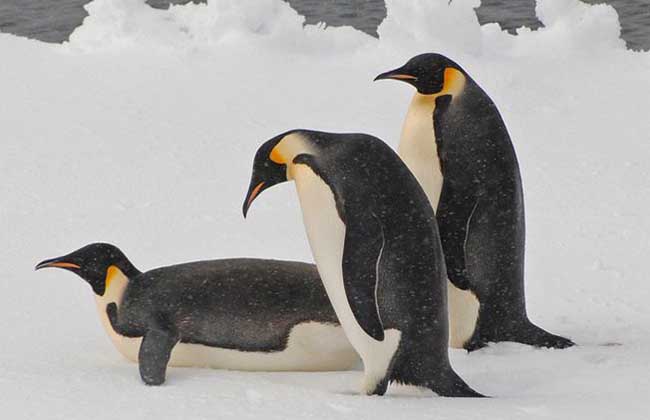
The emperor penguin, also known as the emperor penguin, is the largest individual in the penguin family, generally standing over 90 cm tall, reaching a maximum of 120 cm, and weighing up to 50 kg. Whenever harsh weather arrives, they huddle together to shelter from the wind and cold. They can dive to depths of 150 to 500 m, and the deepest recorded dive can even reach 565 m. Let's take a look below at who incubates the eggs of the emperor penguin!
Who incubates the eggs of the emperor penguin?
The male penguin is responsible for incubating the eggs. Emperor penguins live in Antarctica and the nearby oceans, and usually breed during the harsh Antarctic winter, because there are relatively fewer predators in winter. What is peculiar is that the female penguin is only responsible for laying the egg, while the male penguin is the one responsible for incubating it. During incubation, in order to avoid the cold and block the wind, many male penguins often stand side by side, with their backs to the wind, forming a windbreak wall. The female penguin lays her egg around May, and the emperor penguin lays only 1 egg each time. Penguins breed once a year. After the female penguin lays the egg, her task is temporarily complete. The female penguin has consumed a large amount of energy during the egg-laying process and is already ravenously hungry, so after handing the heavy responsibility of incubating the egg to the male penguin, she rushes desperately to the sea to forage.
What food do emperor penguins eat?
Emperor penguins mainly feed on crustaceans, and occasionally also prey on small fish and squid. In the Antarctic summer, emperor penguins mainly live at sea, feeding, swimming and playing in the water. On the one hand, they build up their bodies to be strong; on the other hand, they eat and drink their fill and conserve their energy to welcome the arrival of the winter breeding season. At the same time, emperor penguins are social animals, gathering in groups whether foraging or nesting. In harsh weather, the penguins huddle together to protect one another, and for most of the year they are active between the nesting areas and the ocean feeding areas.
The current population status of the emperor penguin
At present, the continued rise in seawater temperature has caused a sharp reduction in the penguins' food sources, and their habitat environment is deteriorating. All of these seriously threaten the survival of penguins. According to a report by Hong Kong, China's Wen Wei Po, the impact of climate change on the ecological environment is becoming increasingly obvious. The latest research points out that the melting of Antarctic ice due to climate change will cause the number of Antarctic "emperor penguins" to drop by more than half by 2100. Scientists are calling for the emperor penguin to be listed as an "endangered animal" to reduce the impact of climate change on them.
At present, there are 45 known emperor penguin colonies in Antarctica, and all of these places are threatened by melting ice. The penguin numbers will still increase by about 10% before 2050, but after that they will drop sharply by at least 19%, and in 2/3 of these places the penguin numbers may even plummet by more than half, with the situation most severe in the western Indian Ocean and the eastern region. The emperor penguin has been listed in the International Union for Conservation of Nature (IUCN) 2012 Red List of Threatened Species ver3.1 -- Near Threatened (NT).