Where Do Penguins Live? A Full Analysis of Their Habitat Distribution
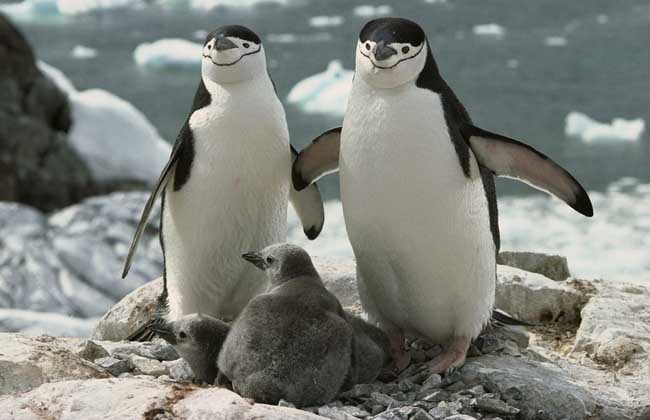
Penguins are one of the most ancient swimming birds, and very likely had already settled in Antarctica before it was covered in ice. They live mainly in the Southern Hemisphere. It is known that there are 17 or 18 species of penguins worldwide, most of them distributed in the Antarctic region, though there are also penguins in Cape Town, a tourist city in South Africa on the hot African continent. Let's take a look below at where penguins live!
Where do penguins live?
Penguins are usually seen only in places south of the equator that are rarely visited by people. Some penguins live in cold places, and some live in tropical places. But penguins actually do not like hot weather and are only happy in cold climates. So, in the icy seas off the coast of far, faraway Antarctica, the largest number of penguins live. A penguin's habitat varies depending on the species and its distribution area. Emperor penguins like to live on ice shelves and sea ice; Adelie penguins and gentoo penguins can live both on sea ice and on exposed rocks in ice-free areas; penguins in the sub-Antarctic mostly prefer to perch on rocks in ice-free areas and often build their nests with stones.
What do penguins eat?
Penguins feed on marine zooplankton, mainly Antarctic krill, and sometimes also prey on some brachiopods, squid and small fish. Penguins have a good appetite; each penguin can eat an average of 0.75 kg of food per day, and as predators they play an important role in the food chain of the Southern Ocean. Penguins prey on about 33.17 million tons of krill in Antarctica, accounting for 90% of the total consumption by Antarctic birds, equivalent to half of the krill preyed on by whales.
Why are penguins not afraid of the cold?
Although Antarctica is bitterly cold, penguins, tempered by tens of millions of years of blizzards, have a very thick layer of fat, and the feathers all over their bodies have become overlapping, closely packed scale-like forms. This special feather coat not only makes it hard for seawater to soak through, but even air temperatures of nearly minus one hundred degrees Celsius cannot break through its insulation line of defense. Moreover, through long-term evolution penguins have developed a unique vascular system, in which arteries and veins form a three-dimensional interlocking pattern, so that the cold blood flowing back to the heart and the warm blood flowing out of the heart can exchange heat, thereby ensuring the temperature of the blood.
Why can't penguins fly?
For a long time there have been several theories explaining why penguins cannot fly. One view holds that some species lost the ability to fly because of a lack of ground predators. Another view is a biomechanical hypothesis: when birds fly and dive, they must use their wings for two different tasks, and according to the biomechanical hypothesis it is impossible to build wings that are good at both tasks at the same time. Penguins once faced an evolutionary choice: whether to fly in the air or to swim flexibly underwater. As the wings became more and more efficient when penguins dived, their flying ability became weaker and weaker. At a certain point, flying became very laborious, so the best choice was to give up flying and instead let the wings shrink into flippers.