Are There Penguins in the Arctic? Uncovering the True Distribution of Penguins
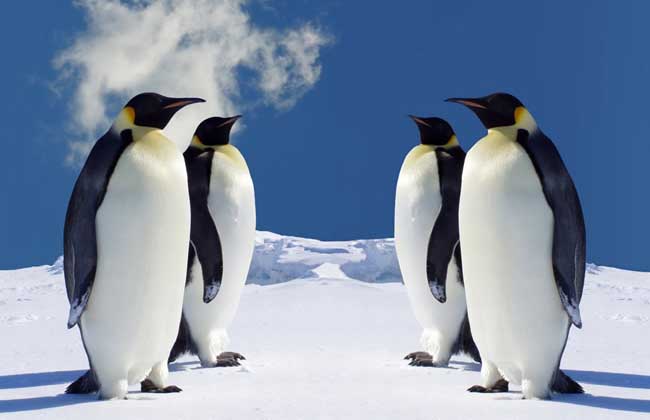
Penguins are flightless birds that look like they are wearing split-tailed suits, waddle when they walk, and are endearingly clumsy. There are 9 species of penguins in the natural world, and the icy, snow-covered landscapes that most creatures cannot endure are precisely the habitats penguins depend on for survival. The snow-and-ice-covered Antarctic is the penguins' main region for survival and reproduction. Let us take a look below at whether there are penguins in the Arctic!
Are there penguins in the Arctic?
There are no penguins in the Arctic. The reason penguins did not continue advancing northward into the Northern Hemisphere may be that penguins cannot endure the warm water of the tropics; the northernmost limit of their distribution range is very consistent with the line connecting areas with an annual average temperature of 20°C. Warm equatorial currents and higher temperatures form a natural barrier that blocks penguins from crossing the equator and heading north. Penguins must stay in sea areas traversed by water from melting ice and snow from the Antarctic or by colder currents welling up from the deep sea. There are now about 20 species of penguins in the world, all distributed in the Southern Hemisphere, centered on the Antarctic continent, reaching north to the southern tip of Africa, South America and Oceania, and mainly distributed along continental coasts and on certain islands.
Why are there no penguins in the Arctic?
Some scientists believe this must be traced back to their ancestors. The ancestors of penguins were tube-nosed animals that began developing in regions south of the equator. When penguins determined their direction of development, they also determined where their main homeland would be. Zoologists speculate that at that time penguins only chose to go south and did not continue advancing northward, because the hot tropical climate blocked the route northward; in particular, they could not endure the warm water of the tropics. The physiological characteristics of penguins determined that they must stay in sea areas with water from melting ice and snow from the Antarctic or traversed by colder currents welling up from the deep sea. In this way, warm equatorial currents and higher temperatures formed a physical barrier that heat-fearing penguins could not swim across. Checking the distribution of penguins again, the northernmost limit of their distribution is areas with an annual average temperature of 20 degrees, which is quite consistent with the speculation of zoologists.
Did penguins ever exist in the Arctic?
Archaeologists once found the bones of an extinct bird in the Arctic region that was extremely similar to penguins. Researchers called it the “great penguin.” This great penguin was about 60 cm tall, comparable in size to the Adélie penguin, the most numerous species in the Antarctic region. Its head was brown, its back feathers were black, and its belly was snow white. The skeletal structure shows that they also had a clumsy, waddling way of walking, and in the sea they were likewise good swimmers, almost no different from modern penguins. The coastal areas of the Scandinavian Peninsula in Europe, Canada and northern Russia, as well as all Arctic and subarctic islands, were the main distribution areas of the great penguin, and they were very numerous, once counted in the millions.
Great penguins fed in the ocean and bred on land, facing dual threats from marine and terrestrial predators, while their defensive ability was poor, causing them to suffer a crushing defeat in the competition for survival against later-developing mammals and be devoured in large numbers. The surviving penguins were also limited to coasts or isolated islands less affected by predators. However, humans deprived them of their last chance to survive in the Northern Hemisphere.
When early humans invaded the Arctic region, the peaceful life of the great penguin began to suffer some disruption. About 1,000 years ago, Norse Vikings also discovered this great penguin. They also found that almost every part of this animal was valuable, and what delighted them even more was that penguins had no ability to resist humans at all. So humans began to hunt and kill the great penguin.
About three or four hundred years ago, Europe set off a wave of Arctic exploration. At the same time, driven by greedy desire, humans carried out frenzied and indiscriminate slaughter of these innocent animals. In Greenland, Elizabethan Islands and other places, the great penguins were driven to have nowhere to settle, and their numbers plummeted, ultimately leading to the “disaster of extinction” for the great penguin. On June 2, 1844, the last two penguins in the Northern Hemisphere were hunted and killed on a small island in the Irish Sea. Now, apart from occasional remains that humans can use to mourn them, penguins can no longer be found in the Arctic.