What Do Meerkats Eat? A Detailed Guide to Their Diet and Eating Habits
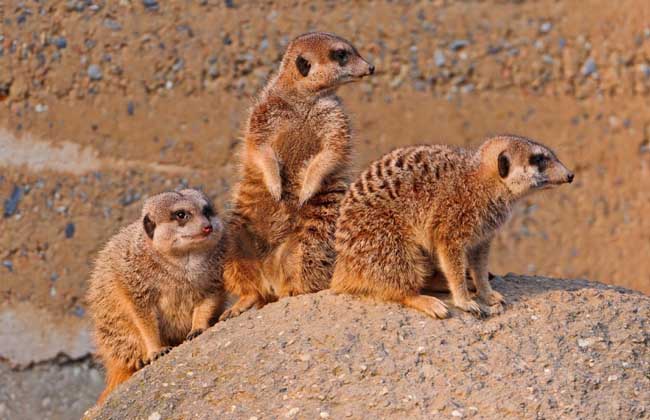
The meerkat, scientifically known as Suricata suricatta and also called the slender-tailed meerkat, grey meerkat, or grey-clawed meerkat, is a small mammal of the genus Suricata in the family Herpestidae. It inhabits grasslands and open plains, and its distribution depends on soil type, favouring hard tropical soils, mainly in desert or dune regions of terrestrial biomes. Let us take a look below at what meerkats eat!
What do meerkats eat?
Meerkats feed mainly on insects, but they also eat lizards, snakes, spiders, plants, eggs, and small mammals. Like other mongooses, meerkats have developed immunity to many venoms, which allows them to eat scorpions (including the stinger) and certain snakes without suffering discomfort, poisoning, or death. Meerkats do not store fat in their bodies, so if they do not forage every day, they will starve to death.
The Social Groups of Meerkats
The meerkat is a highly social animal. Each meerkat group usually consists of 2 to 50 meerkats, and the group forms a matriarchal society whose internal rulers are a dominant male and a dominant female, with the dominant male chosen by the dominant female. Below them, all other meerkats hold lower status, while pups rank slightly higher, but pups must leave the family once they reach 3 years of age. Male pups will become the leaders of other groups or form new groups, while females may return to the group after leaving. Individuals within the same group frequently groom one another to strengthen social bonds.
The Burrowing Habits of Meerkats
Meerkats are very social animals. They dig burrows and live together in large underground network burrows with multiple entrances that they excavate themselves, leaving only during the day. In the early morning as the sun rises, meerkats climb out of the burrow one by one, leaning on each other's shoulders and embracing, facing the sunlight. During the day they forage, care for pups, and defend their territory, and they also nap in the shade or huddle together in the burrow. While one or more meerkats forage or play, others stand sentry to warn of approaching danger. When a predator is spotted, the sentry meerkat calls out a warning and the other members quickly flee or hide in the burrows scattered throughout the territory. The sentry is the first to appear at the burrow entrance to scout the predator's movements, calling continuously to keep the other members inside the burrow. If there is no threat, the sentry stops the warning call, and the other members safely emerge.
The Current Population Status of Meerkats
Meerkats are distributed in the Kalahari Desert of South Africa, mainly in Angola, Namibia, and Botswana. Their range is wide and does not approach the thresholds for vulnerable or endangered species (range or fluctuation range less than 20,000 sq km, habitat quality, population size, range fragmentation). The population trend is stable, so they are evaluated as a species with no survival crisis. At present, meerkats are listed on the International Union for Conservation of Nature (IUCN) Red List of Threatened Species 2015 ver 3.1——Least Concern (LC).