How Many Stomachs Does a Camel Have? A Detailed Explanation of the Camel's Stomach Structure
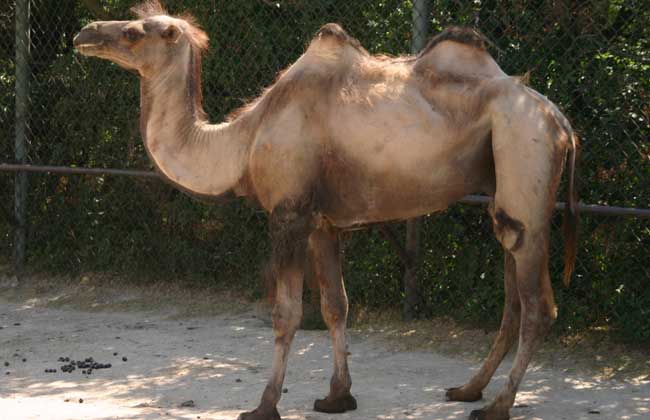
The camel is the collective name for two species of animals in the genus Camelus of the family Camelidae. Humans living on the edges of deserts began domesticating camels as early as 3000 BC. Ruminants generally refer to animals that have multiple stomachs at the same time, and camels are ruminants, so camels also have multiple stomachs. Let's take a look below at how many stomachs a camel has!
How many stomachs does a camel have?
A camel has 3 stomachs and lacks an omasum, and it can ruminate. Camels are quite able to endure hunger and thirst. After drinking its fill of water once, it can go several days without drinking water and still remain active in hot, arid desert regions. Because there are many extremely fine and winding ducts inside the nose, and these ducts are normally moistened by fluid, when the body is short of water, the ducts immediately stop secreting fluid and form a layer of hard crust on the surface of the ducts, which allows them to absorb the moisture exhaled and prevent it from being lost from the body. When inhaling, the moisture within the hard crust can be returned to the body. In this way, water is repeatedly circulated and used within the body, so the camel can endure thirst.
Controversy over the camel's stomach
1. Camels have 2 stomach chambers: Some people believe that camels have 2 stomachs, one for storing water and the other for storing food.
2. Camels have 3 stomach chambers: Some people also believe that camels have 3 stomach chambers. The first chamber is a water pouch, which can hold water, so it endures hunger and thirst. Once a camel drinks water, it can go half a month without drinking water again. This is a special function the desert has given the camel. The second chamber is a stomach sac for eating dry grass, and the third chamber is a stomach sac with digestive and absorptive functions. With so many stomach sacs inside a camel, it generally will not starve to death.
3. Camels have 4 stomach chambers: Still others believe that camels, like other ruminants, are divided into four chambers, namely the rumen, reticulum, omasum and abomasum. The first two stomach chambers (the rumen and reticulum) mix food with bile, and in particular use symbiotic bacteria to break down cellulose into glucose. Then the food is regurgitated, slowly chewed to mix it thoroughly, and the fiber is further broken down. Then it is swallowed again, passing through the rumen to the omasum for dehydration. Then it is sent to the abomasum. Finally it is sent into the intestine for absorption.
Extension: The stomachs of ruminants
1. Rumen: The rumen is the first "dark chamber" that food comes into contact with after entering the gastrointestinal tract of a ruminant, and it is also the "main battlefield" of food digestion. The rumen is a sealed living fermentation tank, inhabited by many kinds of microorganisms, mainly including three major categories: protozoa, bacteria and fungi. After food is fully digested by microorganisms in the rumen, about 50% of the crude fiber can be digested in the rumen.
2. Reticulum: The reticulum is a stomach chamber closely attached to the rumen, and it is not completely separated from the rumen in spatial structure, so food particles can freely shuttle back and forth between the two stomach chambers. The food that ruminants forage in the wild often contains some foreign objects such as iron nails. At this time, the reticulum acts like a sieve, storing these foreign objects within it, which both plays a filtering role and prevents the foreign objects from damaging the inner surface of the rest of the intestinal tract.
3. Omasum: The omasum connects to the reticulum in front and the abomasum behind. Its digestion of food is more like a "sequel" to rumen digestion. It is like a water pump: the coarse parts of the chyme from the rumen are concentrated here, and after water and electrolytes are removed, they are further ground fine, while the thinner chyme is pushed into the abomasum. In the omasum, 20% of the cellulose in food can be digested.
4. Abomasum: The abomasum is the stomach chamber connected to the small intestine behind, and it is also the only stomach with a secretory function. It has a true digestive function, so it is called the true stomach. The abomasum can secrete a large amount of gastric juice, including hydrochloric acid, pepsin and rennin and other digestive enzymes, as well as a large amount of mucus. These secretions mainly carry out further chemical digestion of the primary metabolites of the food digested by the first three stomachs.