What special behaviors does the cuckoo show when laying eggs?
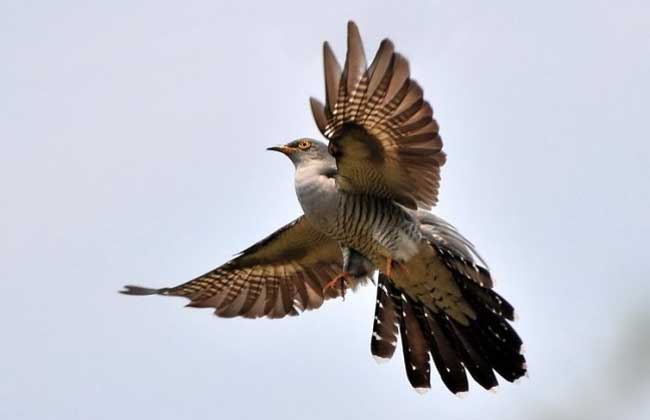
The cuckoo, also known as Duyu, Zigui, Cuigui and so on, usually refers to about 60 arboreal species in the subfamily Cuculinae and the subfamily Phaenicophaeinae, distributed across temperate and tropical regions worldwide, with especially many tropical species in the Eastern Hemisphere. It inhabits areas with dense vegetation, and is often heard but not seen. Its most well-known trait is brood parasitism. Now let us take a look at what the cuckoo does when laying eggs!
The most well-known trait of the cuckoo is brood parasitism, which is found in all species of the subfamily Cuculinae and in 3 species of the subfamily Phaenicophaeinae, namely laying eggs in the nests of certain bird species and relying on the foster parents to incubate and raise the chicks. The parasitic cuckoo lays its eggs in the nests of other birds, and generally hatches earlier than the other birds; as soon as it hatches, it pushes the other bird eggs out of the nest and is fed and raised by the foster parents. The malkoha builds its nest with twigs in low vegetation, and both the female and male birds take part in incubating the eggs and raising the chicks.
How can the cuckoo parasitize its eggs in another bird's nest without its scheme being discovered? At the turn of spring and summer, before laying eggs, the female cuckoo carefully searches for the nests of small birds such as thrushes and reed warblers. After choosing a target, it makes full use of its similarity to the harrier in shape, size and body color, and flies over from a distance. The cuckoo's flight posture also closely resembles that of the bird of prey known as the harrier: it flies very low, making sharp turns now to the left, now to the right. Occasionally it flaps its wings, flapping very loudly, to intimidate the small bird that is incubating. When the incubating small bird sees the silhouette of a bird of prey gliding in from low altitude, it is so frightened that it abandons its home and flees, and the cuckoo has achieved its goal of intimidation.
How does the cuckoo put its egg into another bird's nest? In some cases it lays the egg directly, but for nests that are too small or difficult to get into, it first lays the egg and then carefully uses its beak to place the egg among the other bird eggs. However, before placing its own egg, the cuckoo often removes one of the other eggs from the nest (eats it or throws it away).
The cuckoo is much larger than some small birds, yet the egg it lays is very small; moreover, the cuckoo egg is strikingly similar to the host bird's eggs in shape, color and other aspects (the result of natural selection), so it can pass off the fake as genuine, and the other small birds find it difficult to tell true from false. Although the cuckoo egg is small, it develops very quickly, and often hatches earlier than the host bird's eggs or at the same time.
As soon as the little cuckoo is born, it busies itself with being a porter, carrying another little bird (or bird egg) on its back, supporting it with its not yet fully developed wings, and carefully crawling toward the edge of the nest. It lowers its head, presses the top of its head against the bottom of the nest, and suddenly throws itself sharply backward, tossing the little nestling (or bird egg) resting on its “shoulder” upward and over the edge of the nest. Then this little “porter” slides down to the bottom of the nest, gets under another victim, and continues its porter work.
A few hours after hatching, the little cuckoo develops the urge to throw everything in the nest out. When the foster mother returns and sees that only the sole young nestling remains in the nest, she will still cherish this murderer as her darling and nurse the little cuckoo even more carefully. After the little cuckoo's feathers are fully grown, it leaves without saying goodbye and flies far away.