Wasp farming technology video tutorial, with a detailed explanation of farming methods
Video: Wasp farming technology
Hornets, also called wasps, have more than 5,000 known species worldwide, with more than 200 species recorded in China, where they are widely distributed. Hornets are sweet and pungent in taste and warm in nature, and are mainly used to treat rheumatic arthralgia. The hornet nest can be used as a traditional Chinese medicinal material, with effects of relieving pain, expelling parasites, reducing swelling and detoxifying, and is mainly used to treat convulsions, wind arthralgia, breast abscess, toothache, stubborn tinea, cancer, and so on. Hornet wine dispels wind and removes dampness, and treats acute and chronic rheumatic pain and rheumatoid arthritis. Hornet venom can treat arthritis, has extremely high medicinal value, and is of great significance to the research, development and production of new medical products. There are currently more than 20 kinds of hornet venom sold on the international market, and their prices are quite high. In addition, hornet larvae and pupae are rich in nutrients and can be developed into various nutritional foods. Therefore, farming hornets has relatively high economic benefits and broad development prospects.
The life of a hornet includes four stages: egg, larva, pupa and adult, with 3 generations occurring in 1 year. The first-generation adults emerge in mid-June, the second generation generally occurs from mid-June to early July, and the third generation emerges from mid-July to early to mid-August, mates in late October, and begins overwintering. Males mostly appear in the third generation and die after mating, with a relatively short lifespan. Overwintering males are gregarious and often cluster together to overwinter and resist the cold. In spring, females forage alone and build nests, generally building them in trees or tree holes. Adults prey on Lepidoptera larvae and also feed on fruit juice and tender leaves.
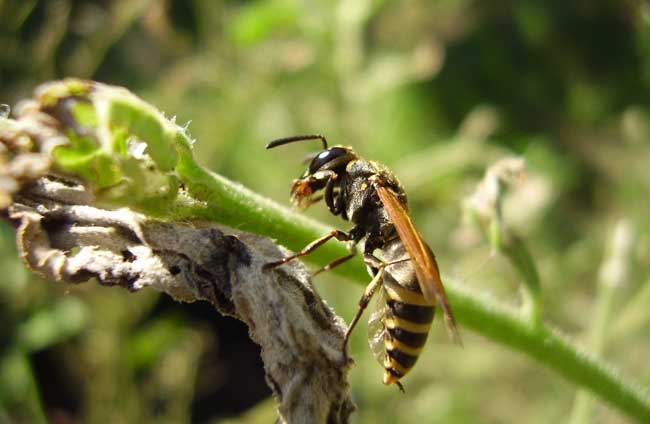
Hornet farming equipment
1. Bee cage. Made of wood or iron gauze, with a volume of about 0.03-0.04 cubic meters, so that they have ample room to move.
2. Bee shed. The size depends on how many nests are harvested. A large glass greenhouse, a large factory building, or a dedicated bee-rearing shed can be used. The bee shed uses iron or wood as supports and iron window screen as enclosure netting. It is generally about 100 square meters in area and 2 m high. Crops that insects can easily access, such as corn, soybeans and cotton, are planted inside the shed, and one side of the shed has a screen door. Small dishes containing feed such as honey water, fruit and melon rind should be hung inside the shed so that the bees can feed and move freely after being placed inside.
3. Bee box. Made of wood, with side lengths of 15-20 cm, and thin wooden boards used to make the top and bottom. Hooks are installed on the top, screen windows are hung around the sides, and a movable door is left on one side.
Hornet farming feed
Fruit, such as fully ripe apples and peaches; green vegetables with a high water content; molasses; melon rind, and so on.
Hornet living habits
Hornets are a group of insects with social behavior. Species in the family Eumenidae usually have no nest and live freely. When laying eggs, the female builds a mud chamber or chooses a suitable bamboo tube, lays eggs inside, and at the same time stores the larvae of other insects or spiders that have been captured and paralyzed by stinging. One chamber has one egg, and each is sealed separately. The larva hatched from the egg feeds on the stored prey. After pupating and emerging as an adult, it bites through the nest opening and flies out.
Other kinds of hornets build nests and live in them throughout their lives. In a colony, there are differences among the queen, worker bees (also called worker wasps) (female) and males. The queen is a female that mated and was fertilized with a male after autumn of the previous year. They store sperm in the spermatheca and use it in installments when mating. Males die shortly after mating. As the weather gradually turns cold, fertilized females leave the nest one after another to seek wind-sheltered places such as wall cracks and haystacks, and cluster together to overwinter. In the following spring, the surviving females disperse from the cluster, go out to act separately, and find suitable places on their own to build nests and lay eggs. The fertilized eggs they lay develop into females, and unfertilized eggs develop into males. As worker wasps increase, the nest gradually expands. Worker wasps are responsible for building the nest and rearing larvae. In central China, there are 3 occurrence peaks each year. After autumn, males in the nest account for about 1/3 of the total, which is the period with the most males in the year.
Generally, when the temperature is 12-13°C, hornets emerge from dormancy and become active; when it is 16-18°C, they begin building nests; and after autumn, when the temperature drops to 6-10°C, they overwinter. In spring, they are most active at noon when the temperature is high; in summer, when it is hot at noon, they often suspend activity. At night they return to the nest and remain still. They have a light-loving habit. When the wind is above force 3, they stop activity. A relative temperature of 60%-70% is most suitable for activity, and they stop going out on rainy days. Hornets are fond of sweet substances. Within a range of 500 meters, hornets can clearly identify direction and return to the nest smoothly; beyond 500 meters, they often lose their way and forget to return.
Hornet farming management
The key issues in raising hornets are: protecting female seed hornets safely through winter in winter, and guiding them in spring to build nests early and build more nests.
1. Collection. At the end of September and the beginning of October each year, hornets begin to leave their old nests and migrate to suitable places to gather and overwinter. At this time, collecting the colony is most suitable. At night, use an insect net to collect the colony at its overwintering site and raise them in bee cages. Put 300-500 individuals in each bee cage, cover it with black cloth to block light, and place it in a dry, ventilated and undisturbed empty room to reduce their activity and prompt them to enter hibernation early. To avoid difficulty in finding the colony after it leaves the nest, they can also be harvested from the original nest in mid-September and placed in cages or boxes. Taking advantage of the colony's upward habit, place fully ripe apples, peaches and green vegetables with a high water content at the bottom of the cage. When the noon temperature is high, sun them in the sunlight for 3-4 h to make them active and feed, delaying dormancy. This not only supplements nutrition but still allows them to overwinter safely. Hornets are semi-hibernating insects. When the temperature drops to 5°C, they begin to cluster; the lower the temperature, the tighter the cluster; when the temperature is slightly higher, the cluster becomes loose; when the temperature is above 7°C, they begin to disperse. The survival rate after overwintering is mainly related to whether the clustering is good. Therefore, during the overwintering period, inspections should be carried out frequently, and the clustering condition of boxes and cages should be checked once every 10-15 days. If dispersal is found, the temperature should be lowered in time and the light-blocking outer cover should be thickened.