What Kind of Animal Is a Sea Urchin? A Guide to the Basic Characteristics of Sea Urchins
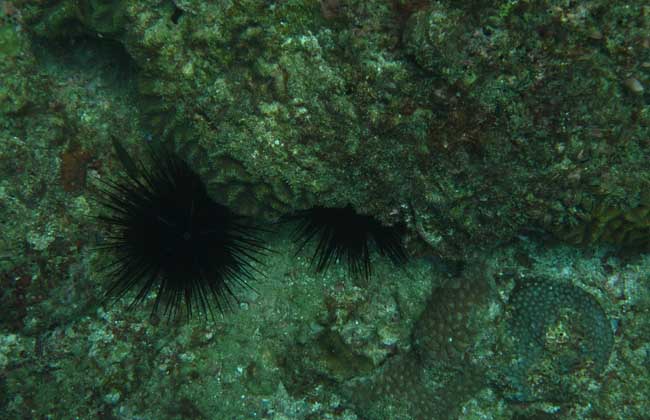
Sea urchins, also known as "sea porcupines" or "sea hedgehogs," are a class of marine invertebrates in the phylum Echinodermata that live in shallow ocean waters. They are divided into two subclasses, the Regularia and the Irregularia, comprising a total of 22 orders, 225 genera, and more than 900 species. They are distributed from the intertidal zone to the seafloor several thousand meters deep, mostly concentrated on rocky or sandy seabeds in coastal zones. Some have a wide distribution, while others are limited to specific sea areas, varying by species.
Sea urchins are an ancient marine organism and are close relatives of starfish and sea cucumbers. According to scientific evidence, sea urchins have existed on Earth for hundreds of millions of years. In the distant Paleozoic and Mesozoic eras, there were many species, and as many as 5,000 species of sea urchin fossils have been found. Due to the changes of time, sea urchin fossils have even been discovered on the Tibetan Plateau in China. Many extinct species are index fossils of the Paleozoic and Mesozoic eras.
The main characteristics of sea urchins are a body shaped like a sphere, a disc, or a heart, with no arms. The internal skeleton fuses together to form a solid shell. Most species have a complex chewing apparatus in the mouth called Aristotle's lantern, which bears teeth for chewing food. The digestive tract is a long tube coiled within the body, feeding on algae, hydroids, and worms. Most are dioecious, and during individual development they pass through a sea urchin larva (pluteus) stage, then metamorphose into a juvenile sea urchin, taking 1 to 2 years to reach sexual maturity.
Sea urchins live in oceans around the world, with the greatest number of species found in the Indian Ocean and the western Pacific. They occur from shallow waters to depths of 7,000 meters, dwelling on the bottom or in mud and sand. Sea urchins prefer areas with high salinity, so they are rarely or not at all found near river estuaries and in low-salinity waters. In China, they are mainly distributed along the coasts of the Yellow Sea and Bohai Sea, the Liaodong Peninsula and the northern part of the Shandong Peninsula, and southward to the shallow seas of Zhejiang and Fujian, as well as the Zhoushan Archipelago and the Taiwan Strait. Artificial cultivation is now being carried out. Their roe is edible, and in Japan the roe is used as the raw material for making uni (sea urchin roe paste).
Sea urchins are naturally timid and will flee at the sight of an enemy, but they cannot move quickly. They move in response to feeding; when food is abundant, they may move only 10 cm per day, while when food is scarce, they can move 50 cm per day. Movement is carried out by means of transparent, tiny, numerous, and sticky tube feet and spines. The tube feet function similarly to those of starfish during movement, able to grip rocks, while the spines on the underside lift the sea urchin's body to help it move freely. Sea urchins have a very broad diet; carnivorous ones feed on seafloor worms, mollusks, or other echinoderms, while herbivorous ones mainly feed on algae. There are also sea urchins that feed on organic debris and animal carcasses.
The vast majority of sea urchins are dioecious, with no difference in external appearance, while some species are hermaphroditic. The gonads are located in the interambulacral areas within the test. When mature, they are very long, suspended in the body cavity, and composed of two layers of coelomic epithelial cells, muscle, and connective tissue. Each gonad has a very short gonoduct that passes through the genital plate and opens to the outside through a gonopore. Sperm and eggs are fertilized in seawater. They spawn several times a year, and the breeding season is from June to mid-July.