Are Penguins Mammals? A Detailed Explanation of Penguin Classification
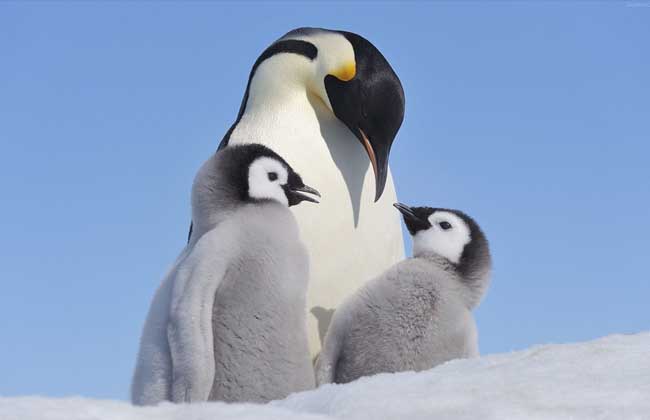
On land, penguins look just like Western gentlemen wearing tuxedos, waddling as they walk, and when they encounter danger they tumble and scramble in a sorry state. But in the water, those short little wings become a pair of powerful “oars,” swimming at speeds of 25 to 30 kilometers per hour and able to swim 160 kilometers in a day. Let's take a look below at whether penguins are mammals!
Are Penguins Mammals?
Penguins Are Not Mammals. An important hallmark of mammals is that they must be viviparous, whereas penguins are oviparous. The life history of penguins varies with the body size of the species and their geographic distribution, and the breeding cycle of the same species is also related to latitude. Some species migrate long distances to ancestral nesting grounds inland to lay eggs. The African penguin (Spheniscus demersus) and the little blue penguin breed twice a year, most species breed only once a year, while the king penguin breeds twice every three years. King penguins and emperor penguins lay 1 egg each time, while other species lay 2, occasionally 3. Most penguins breed in the spring and summer of the Southern Hemisphere, and some populations of the gentoo penguin also breed in winter. Emperor penguins have a long development period, so they begin breeding in autumn, so that the chicks emerge in summer when their chances of survival are greatest.
What Kind of Animal Is a Penguin?
Penguins Are Birds. Penguins are typical seabirds. Although they cannot fly, their swimming ability makes them superstar athletes among birds. Many waterbirds swim by paddling forward with their webbed feet in the water. Although penguins' feet are also webbed, they are used only as a rudder to control direction, while the forward power comes entirely from those oar-like wings, flapping through the water as if flying. Penguins swim very fast. The emperor penguin can swim about ten kilometers an hour, while the white-flippered penguin holds a record of thirty-six kilometers an hour, making it the fastest swimmer of all birds. Penguins often use dolphin-style swimming, that is, diving underwater for a distance, surfacing to breathe, then diving down again to continue swimming. In fact, penguins are also the diving champions among birds, with records of staying submerged for 18 minutes and diving to a depth of 265 meters.
Why Can't Penguins Fly?
For a long time there have been several theories explaining why penguins cannot fly. One view holds that some species lost the ability to fly because they lacked ground predators. Another view is a biomechanical hypothesis: when birds fly and dive, they must use their wings for two different tasks, and according to the biomechanical hypothesis it is impossible to build wings that are good at both tasks at the same time. Penguins once faced an evolutionary choice: whether to fly in the air or to swim agilely underwater. As the wings became more and more efficient at diving, their flying ability became weaker and weaker. At a certain point, flight became very laborious, so the best choice was to give up flying and let the wings shrink into flippers.
What Kinds of Penguins Are There?
Penguins are usually regarded as a symbol of Antarctica, but the greatest number of penguin species are distributed in the southern temperate zone, with relatively many on the islands of the Southern Ocean, in South America and in New Zealand. Here 6 genera and 13 species of penguins nest, of which 2 genera are limited to the Australia-New Zealand region, and the largest penguin genus, the crested penguins, also has its distribution center in the Australia-New Zealand region. The second largest penguin genus, the banded penguins, is mainly distributed in subtropical and tropical regions, and can even reach near the equator, while only 2 genera and 4 species of penguins nest along the coast of the Antarctic continent, 2 genera and 2 species in the sub-Antarctic, and only the emperor penguin truly overwinters on the Antarctic continent. There are 18 species of penguins existing in the world today: the little penguin, the white-flippered penguin, the yellow-eyed penguin, the Magellanic penguin, the Humboldt penguin, the Galapagos penguin, the emperor penguin, the king penguin, the Adelie penguin, the chinstrap penguin, the gentoo penguin, the Snares penguin, the erect-crested penguin, the rockhopper penguin, the macaroni penguin and the royal penguin.