What Grape Varieties Are There? A Full Introduction to Common Varieties
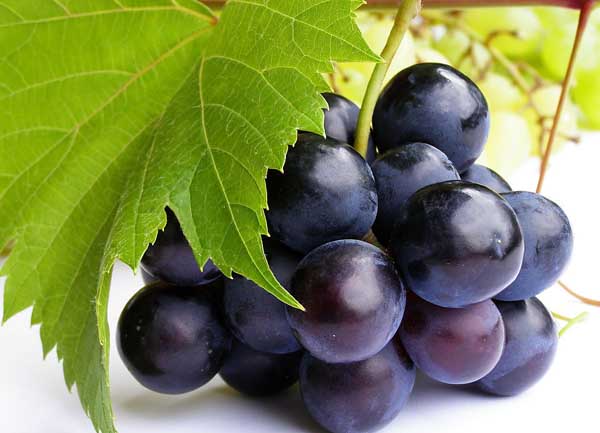
Grapes originated in western Asia. Most of the world's vineyards are distributed between 20 and 52 degrees north latitude and between 30 and 45 degrees south latitude, with the vast majority in the Northern Hemisphere. In China, grapes are mostly grown between 30 and 43 degrees north latitude. There are many kinds of grapes, with more than 8,000 varieties worldwide and more than 500 in China. Famous ones include the purple-red, round, pearl-like "Longyan," hailed as the "Pearl of the North." There are also the early-ripening Thompson Seedless and the sweet-and-sour Red Globe, among others.
1. Cabernet Sauvignon
Cabernet Sauvignon is the king of noble red wine grape varieties and is widely planted around the world. Its berries are small, its skin is thick, and it ripens late, and the wine made from it is deep in color. When the wine is young and fresh, its tannins are sharply astringent, and it has the quality to age. Its characteristic is that it best expresses blackcurrant flavor, melon flavor, and licorice flavor, with a full and firm body and strong alcoholic power.
2. Pinot Noir
Pinot Noir is the queen of noble red wine grapes. Its wine is gentle and elegant; its characteristic is that when young it is fresh and aromatic, and when mature it is gentle and refined, with full and complex fruit flavors and a fairly obvious aroma of strawberry and cherry. Pinot Noir can produce the world's most exciting red wines, but even fine jade has flaws: Pinot Noir is recognized as a difficult grape variety to cultivate. Although its berries ripen relatively early, they are fragile, thin-skinned, and prone to rot.
3. Syrah
Syrah is the prince among classic red wine grapes. It belongs to a medium-bodied wine, falling between Cabernet Sauvignon and Pinot Noir, and has aging value. When fully ripe, it is as smooth and rich in texture as fine Pinot Noir. Syrah is a late-ripening variety with a relatively deep color, and it grows best in warm soils such as granite soil. But if planted too densely, its distinctive mulberry aroma and black pepper flavor will become fainter.
4. Merlot
Merlot is also one of the most popular red grape varieties. Merlot is popular because it ripens early, is fresh and tender, and is high-yielding, and it can be used to make delicious and smooth wines in large quantities. It can also be widely used in blends with other grape varieties to make mature and balanced red wines. Merlot grows well in cooler places.
5. Gamay
Gamay originated in Burgundy, France, and is now mainly produced in the village of Beaujolais. The wine produced has a pale purplish-red color, very low tannin content, a light taste, and rich fresh fruit aromas. Wine made from Gamay is simple and easy to drink, usually not suitable for long storage, and belongs to wines to be drunk while young. However, if grown on igneous shale and soil low in lime, Gamay can also produce rich, full-bodied red wines with good aging potential, such as several Beaujolais cru appellations including Moulin-a-Vent and St. Amour, and so on. Apart from the village of Beaujolais, it is planted most extensively in the Rhone Valley. As for the Gamay Beaujolais produced in California, it is a type of Pinot Noir, not the true Gamay variety.
6. Tempranillo
Tempranillo originated in northern Spain, and etymologically it means "early-ripening." Poor hillside limestone-clay soil is its best growing condition, and unlike other Spanish varieties, it is suited to a cooler and milder climate. Tempranillo is the most important variety in Rioja, mainly planted in Rioja Alta and Rioja Alavesa, and it is also commonly planted in northern Spain, but it is not famous in other countries. Tempranillo's quality is not poor, but insufficient acidity is a common shortcoming, and when vinified it is sometimes blended with other grape varieties.
7. Zinfandel
Zinfandel was introduced to California from Italy in the 19th century and is currently the variety with the largest planted area there, mainly used to produce ordinary table wine and semi-sweet white wine and even sparkling wine. However, if planted on cooler gravelly slopes, small yields and a longer maceration process can also produce high-quality red wines with good aging potential. It has rich floral and fruit aromas, and after aging it often develops various spice notes. Dry Creek Valley, Alexandra Valley, Geyserville, Amador, Sierra Foothill, and Paso Robles are the best production areas.
8. Nebbiolo
Nebbiolo may be the best variety in Italy. In the Piedmont region, Valrellina, Lombarby, Barolo, Barberesco, and some other D.O.C.-level appellations have relatively large planted areas. The red wine made from Nebbiolo has layered complex aromas (tea aroma, rose, spicy notes, and tar aroma), a firm tannin structure, and deep aging potential. Nebbiolo requires the best growing environment; otherwise it will not fully ripen. The name Nebbiolo comes from "nebbia," which means "fog" in Italian. This reflects Nebbiolo's characteristic of usually being harvested at the end of the year (a late-ripening type). Experiments have shown that, apart from Italy, Nebbiolo so far cannot be grown well in other countries or used to make good red wine.
9. Barbera
Barbera was once made in Piedmont in northern Italy as an everyday drink, and it has now become one of the most widely planted grape varieties after Sangiovese. Over the past twenty years, Barbera has been one of the highest-quality grape varieties, as deacidification processes and Dolcetto fermentation techniques have become increasingly excellent. Today, red wine made from Barbera has a more complex flavor, a firm body, and a fruity red sheen, and its aging value and potential are both good, but what is said above refers to the Piedmont region or southern southern Italy. Barbera made elsewhere appears ordinary, with relatively high acidity, especially in Argentina and California.
10. Dolcetto
In Piedmont in northern Italy, Dolcetto is the third-largest grape variety after Nebbiolo and Barbera. Dolcetto is the earliest-ripening grape variety. It contains a lot of tannin and will produce a lot of sediment during vinification. Therefore, winemakers usually use a shorter fermentation time and bottle it as soon as possible, thereby avoiding this problem in the red wine produced. The Dolcetto red wine produced is very attractive, with a deep ruby color, exuding sweet berry and cypress aromas, and carrying an almond flavor.