What Kind of Fruit Is the Kiwifruit? Classification Knowledge Explained in One Go
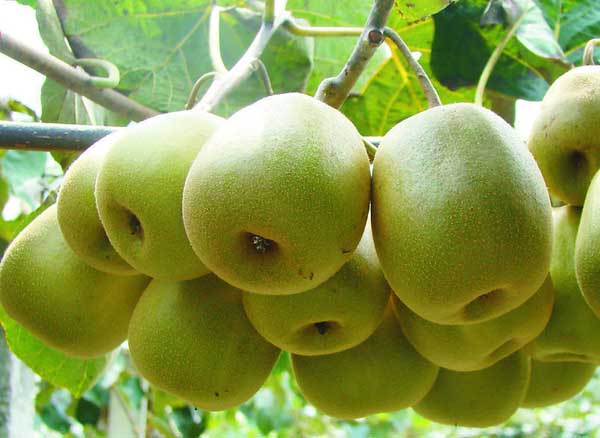
The kiwifruit belongs to the phylum Angiospermae, class Dicotyledoneae, subclass Archichlamydeae, order Parietales, suborder Theineae, family Actinidiaceae, genus Actinidia, and is a perennial plant; the kiwifruit is the fruit of plants in the genus Actinidia of the family Actinidiaceae. The kiwifruit, like the fruits of the tomato and the grape, belongs to the simple fruit — fleshy fruit — berry category.
Types of Kiwifruit
Among the genus Actinidia, the one that receives the most attention both in China and abroad is the Chinese kiwifruit (Actinidia chinensis); next come the northern-grown kolomikta vine (Actinidia kolomikta), the hardy kiwifruit (Actinidia arguta) and the silver vine (Actinidia polygama). The fruits of the southern-grown woolly-flowered kiwifruit (Actinidia eriantha), the Jingli kiwifruit and the golden-flowered kiwifruit are also quite large, and are tasty and delicious, making them species also worth promoting. According to the actual specimens, species with relatively large fruits also include the large-seeded kiwifruit, the plum-leaved kiwifruit, the rowan kiwifruit, the Chengkou kiwifruit and the star-haired kiwifruit, which likewise appear to be worth noting.
Medicinal Value
The kiwifruit is sweet and sour in taste and cold in nature, and has the effects of promoting fluid production and relieving heat, regulating the middle and lowering qi, quenching thirst and promoting urination, and nourishing and strengthening the body. It contains a hydrolytic enzyme of thiol protease and superoxide dismutase, and has the functions of beautifying the skin, improving immunity, fighting cancer, resisting aging, softening blood vessels, and resisting swelling and inflammation.
The serotonin contained in the kiwifruit has the effect of stabilizing emotions and calming the mood; the natural inositol it contains helps brain activity; dietary fiber can lower cholesterol and promote heart health; and kiwifruit alkali and various proteases have the functions of stimulating the appetite and strengthening the spleen, aiding digestion, and preventing constipation. In addition, the kiwifruit also has the effect of darkening the hair and beautifying the skin and making the skin tender.
Edible Value
The kiwifruit contains various vitamins as well as fat, protein, amino acids and calcium, phosphorus, iron, magnesium, pectin, etc., among which the vitamin C content is very high, with every 100 grams of kiwifruit containing 400-430 mg of vitamin C.
The kiwifruit is suitable for patients with stomach cancer, esophageal cancer, lung cancer, breast cancer, hypertension, coronary heart disease, jaundice hepatitis, arthritis and urinary tract stones; it is suitable for people with poor appetite and indigestion; and it is suitable for special workers in aviation, navigation, high altitudes and mines as well as the elderly and the weak and sick. People with low spirits and those who often eat grilled foods should also eat kiwifruit.