Detailed Explanation of Key Plum Tree Cultivation Techniques
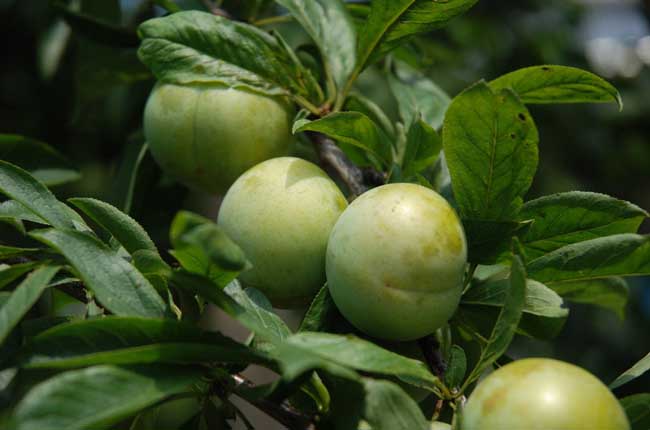
The plum is the fruit of the plum tree, a plant in the Rosaceae family, also known as Jiayingzi, Bulin, plum, Yuhuang plum, and mountain plum. It ripens between July and August, plump and round, delicate and translucent, beautiful in form, and sweet in taste. It is one of people's favorite fruits and is widely cultivated around the world. Plums taste sour and can promote the secretion of gastric acid and gastric digestive enzymes, and can promote gastrointestinal peristalsis, thereby improving appetite and aiding digestion. They are especially effective for those with insufficient gastric acid, post-meal bloating, and constipation. Amino acids such as serine, glycine, proline, and glutamine in fresh plum flesh have a diuretic and swelling-reducing effect and provide adjunctive therapeutic benefits for cirrhosis. Plums contain a variety of nutrients and have beautifying and skin-smoothing effects. The antioxidant content in plums is astonishingly high, making them worthy of being called a "super fruit" for anti-aging and disease prevention.
Morphological Characteristics of the Plum Tree
Deciduous tree, 9-12 m tall, crown broadly rounded, bark grayish brown, uneven, old branches purplish brown or reddish brown, glabrous, branchlets yellow-red, glabrous, winter buds ovoid, red-purple, with several imbricate scales, usually glabrous, rarely scale margins with very sparse hairs.
1. Leaves
Leaf blades oblong-obovate, oblong-elliptic, rarely oblong-ovate, 6-8 (-12) cm long, 3-5 cm wide, apex acuminate, acute or shortly caudate-acuminate, base cuneate, margin with rounded obtuse double serrations, often mixed with simple serrations, teeth glandular when young, adaxially dark green, glossy, lateral veins 6-10 pairs, not reaching leaf margin, forming a 45° angle with the midvein, both surfaces glabrous, sometimes abaxially sparsely pubescent along the midvein or bearded in the vein axils, stipules membranous, linear, apex acuminate, margin glandular, caducous, petiole 1-2 cm long, usually glabrous, apex with 2 glands or absent, sometimes with glands on the basal margin of the blade.
2. Flowers
Flowers usually 3 in a cluster, pedicel 1-2 cm, usually glabrous, flower diameter 1.5-2.2 cm, hypanthium campanulate, sepals oblong-ovate, about 5 mm long, apex acute or rounded-obtuse, margin sparsely toothed, nearly as long as the hypanthium, hypanthium and sepals glabrous outside, sparsely pubescent inside at the base of the hypanthium, petals white, oblong-obovate, apex erose, base cuneate, with distinct purple vein lines, shortly clawed, inserted on the margin of the hypanthium, 2-3 times as long as the hypanthium, stamens numerous, filaments unequal in length, arranged in 2 irregular whorls, shorter than the petals, pistil 1, stigma disc-shaped, style slightly longer than the stamens.
3. Fruit
Drupe spherical, ovoid, or nearly conical, 3.5-5 cm in diameter, up to 7 cm in cultivated varieties, yellow or red, sometimes green or purple, with a sunken stem cavity, apex slightly pointed, base with a longitudinal groove, covered with a waxy bloom, stone ovoid or oblong, wrinkled. Flowering period April, fruiting period July-August.
Growing Environment of the Plum Tree
It has strong adaptability to climate. As long as the soil layer is relatively deep and has a certain level of fertility, it can be planted in any type of soil. It has relatively high requirements for air and soil moisture and is extremely intolerant of waterlogging. Poor drainage in an orchard often causes root rot, poor growth, or susceptibility to various diseases. It is advisable to choose a site with loose soil, good soil aeration and drainage, deep soil layer, and a low groundwater table for establishing an orchard.
Cultivation Techniques for Plum Trees
1. Seedling Selection
Select plum seedlings with pure variety, complete root systems, vigorous growth, plump buds, and free of quarantine pests and diseases.
2. Planting
The general spacing between plants and rows is 2.5 m × 4 m, and planting should be done before buds sprout (preferably before April 20). Plums exhibit self-incompatibility, so a single cultivar should not be planted alone. Different cultivars with the same flowering period should be planted at certain distances as pollinizers, at a ratio of 4:1 or 8:1.
Fertilizer and Water Management for Plum Trees
1. Fertilization
① Base fertilizer. Base fertilizer is the basic fertilizer that can supply plum trees with various nutrients over a longer period. It is generally based on slow-release farmyard manure, such as compost, barnyard manure, crop straw, green manure, fallen leaves, etc. Base fertilizer is best applied in autumn. For adult plum trees, apply 50-100 kg of farmyard manure per tree.
② Topdressing
a. Pre-flowering topdressing. About 10 days before plum trees bud (early April), apply 0.5-1 kg of quick-acting nitrogen fertilizer or 25 kg of decomposed human excrement per tree.
b. Post-flowering topdressing. Quick-acting nitrogen and potassium fertilizer should be applied in a timely manner to reduce physiological fruit drop. From late May to mid-June, apply 0.5 kg per tree.
c. Topdressing during fruit enlargement and flower bud differentiation. From after physiological fruit drop until before the fruit enters the rapid enlargement stage (late June to mid-August), apply quick-acting nitrogen, phosphorus, and potassium compound fertilizer, 0.5-1 kg per tree.
d. Topdressing during the late fruit growth stage: apply fertilizer from the beginning of fruit coloring to harvest. This application should focus on phosphorus and potassium fertilizers. Quick-acting nitrogen fertilizer is best applied as a foliar spray at a concentration of 0.2-0.3%, combined with pesticide spraying.
2. Irrigation
Plum trees require a certain amount of water at each phenological stage throughout the year. Irrigation should be carried out before bud break, during the young fruit enlargement stage, and during the new shoot growth stage. Before winter, one irrigation of frozen soil water is needed. In addition, plum trees are susceptible to waterlogging, so a drainage system should be built in the plum orchard to avoid waterlogging damage.