What are the growing conditions for jackfruit?
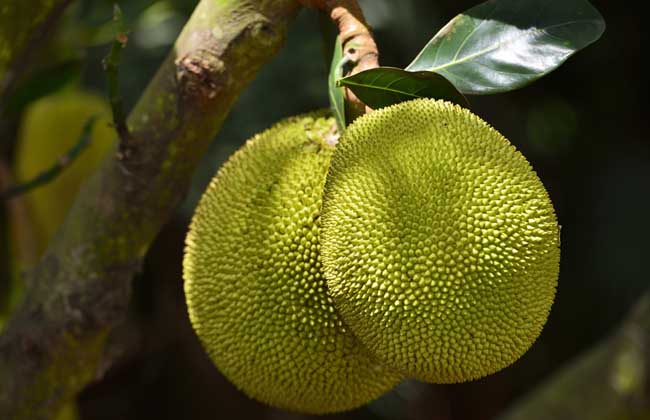
Jackfruit, also known as wood pineapple, tree pineapple, big tree pineapple, etc., is an evergreen tree of the genus Artocarpus in the Moraceae family. It originated in India and Southeast Asia and was introduced to China nearly a thousand years ago. The tree is usually 10-20 m tall, with dark brown bark, leathery elliptical leaves, and monoecious flowers. When the fruit ripens, its skin turns yellowish-brown, with wart-like protrusions and coarse hairs on the surface. Its cultivation has very high economic value. Let us take a look at the growing conditions for jackfruit below!
Growing conditions for jackfruit
Jackfruit likes hot, humid lowland environments and a warm, humid tropical climate. It is not cold-tolerant. The annual average temperature of the planting site is required to be greater than 21°C, the average temperature of the coldest month greater than 13°C, and the absolute minimum temperature greater than 0°C. A ground surface temperature of 0°C makes it prone to frost damage. It has low requirements for soil and can grow normally in deep, fertile, loose, well-drained acidic soil, as well as in slightly alkaline clay or sandy loam soil. Cultivation is best in low hilly land or flat land below 600 m in elevation.
Propagation methods for jackfruit
1. Seed propagation: In the main ripening period of jackfruit, select fully mature dry-pulp fruits with normal fruit development and no pests or diseases for seed selection. Wash them clean with clear water, then spread them flat on a sand bed for germination, cover the sand bed with 1-2 cm of fine sand, and then cover with a layer of rice straw. Water once or twice daily. After about 1 week, they will gradually sprout and take root. When the seedlings grow 1-2 true leaves, they can be transplanted to separate beds.
2. Bud grafting propagation: Jackfruit seedlings can be bud grafted once they grow to more than 1 cm, using the patch bud grafting method. Select one-year-old, sun-facing, mature branches from superior varieties as scions. The scions should be kept moist during storage, and it is best to graft immediately after collecting them. In Hainan, bud grafting can be done throughout the year, but the survival rate is higher during the rainy season and tree growth season from April to October, when the rootstock and scions are easy to peel and the grafts easily survive.
Jackfruit planting management
1. Timely planting: Jackfruit can be planted throughout the year, but spring planting (March to April) and autumn planting (September to November) are best. When planting, break up the soil in the planting hole finely, straighten and arrange the seedling roots, then press in fine soil layer by layer, with the root crown level with the ground being appropriate. After planting, immediately water thoroughly to settle the roots, and cover the tree base with plastic film.
2. Reasonable fertilization: Fertilization of young jackfruit trees aims to promote branch and shoot growth and rapidly form a canopy. In addition to applying organic fertilizer as base fertilizer in winter, apply quick-acting fertilizer before each new shoot flush to promote and strengthen the shoots. After fruit harvest, bearing trees should be heavily fertilized with organic fertilizer together with a small amount of quick-acting fertilizer to restore tree vigor, improve leaf function, and promote flower bud differentiation. In early spring before budding and inflorescence emergence, apply quick-acting fertilizer to promote new shoot growth and inflorescence development. When the fruit rapidly enlarges, apply fruit-strengthening fertilizer again to promote fruit development.
3. Water management: Jackfruit requires sufficient water, especially during the flowering period and fruit development period. If there is a long drought, small fruits may drop or development may stall, resulting in small, deformed fruits with small bulbs and thin flesh and poor quality. Therefore, if it is too dry during the flowering and fruiting periods, irrigation should be arranged. However, the rainy season is prone to waterlogging, so drainage work should be done well to prevent water accumulation and root rot.
4. Shaping and pruning: The fruiting parts of jackfruit are on the trunk, main branches, and small lateral branches. When the main trunk reaches a height of 1 m, cut the trunk back to encourage branching, and remove crossing branches, dense branches, and overlapping branches as necessary. Generally, cultivate 3-4 primary branches, with a canopy height of 3.5 m, to form a reasonable tree structure. Pruning of bearing trees is mainly winter pruning, mainly removing dead branches, weak branches, overly dense branches, residual fruiting branches, and male flower branches.
5. Fruit thinning and fruit retention: Thin jackfruit fruits from March to April each year, preferably keeping 3-5 fruits per sq m of canopy, with even and reasonable distribution. The principle of fruit thinning is to remove overly dense fruits and deformed fruits. During the young fruit stage, spray insecticide + fungicide + foliar fertilizer once every 15 days. When the fruits are basically set, spray insecticide + fungicide once every 30 days to prevent pest and disease damage and promote fruit enlargement.
6. Pest and disease control: Among jackfruit pests, longhorn beetles and beetles are common and severe, damaging branches and trunks, causing gum exudation, branch dieback, tree decline, trunk hollowing, and even rot and death. Adults can be captured and killed, eggs scraped off, or chlorpyrifos 600 times dilution applied to the trunk or injected into insect holes. Main diseases include leaf spot, sooty mold, and soft rot of flowers and fruits, which can be controlled with 1000 times carbendazim or 1500 times chlorothalonil.
7. Timely harvest: The fruit ripening period of jackfruit is relatively concentrated from June to August, with earlier or later timing depending on regional climate. Higher temperatures and earlier flowering lead to earlier ripening. Lower temperatures and later flowering lead to later ripening. Because the flowering period of the same plant is long, ripening occurs successively, so harvesting should be done in stages to ensure quality, increase yield, and also help the tree recover its vigor. When the hexagonal wart-like protrusions on the rind are rounded and prominent and the fruit is plump in shape, the rind feels slightly soft to the touch, and a fragrant aroma can be smelled, it can be harvested. After harvesting, it can be eaten after ripening for 2-3 days.