How to grow a potted orange tree? A detailed guide to cultivation methods
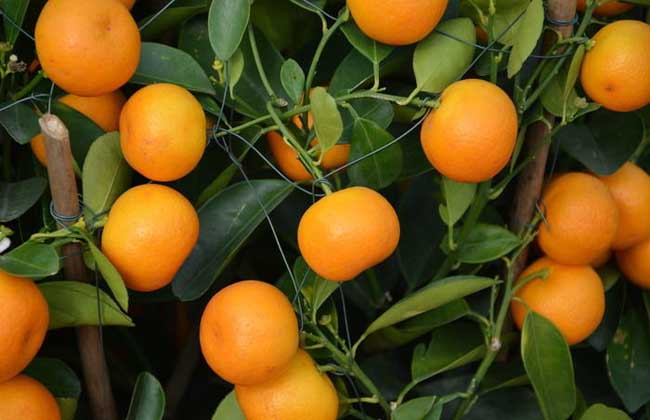
The orange tree is an evergreen small shrub of the genus Citrus in the family Rutaceae, native to China. It stays green all year round, with dense branches and leaves and a neat tree form. In spring the whole tree is covered with fragrant blossoms, and in autumn and winter it bears abundant yellow fruit, making a strikingly beautiful contrast of yellow and green. Besides being grown as a fruit crop, it is also very popular as a potted ornamental. Let us take a look below at how to grow a potted orange tree!
Choosing a container
The container for a potted orange tree should mainly be round, to help the root system spread evenly in all directions. At the same time, the container needs good water permeability and air permeability, to ensure the oxygen demand of root growth and to prevent water accumulation in the container from causing root rot. Among containers of various materials, unglazed clay pots are most suitable for growing orange trees. When using containers of other materials, to overcome the shortcoming of poor air permeability, you can spread a 5 cm thick layer of coarse sand at the bottom of the pot, line a layer of new tiles along the inner wall, and then fill in soil and plant the tree.
Preparing the potting soil
The potting soil suitable for growing orange trees is generally neutral (pH 4.5-7.5), humus-rich sandy loam or sandy soil. When mixing, use 4 parts of matured garden soil, 2 parts of river sand and 1 part of plant ash, mix thoroughly and evenly, crush fine and sift. The growing soil should be sterilized before use, such as by steaming, baking or chemical treatment (sprinkling in 1.5% formalin).
Fertilizer and water management
1. Watering: The pH of the water should generally be 6.5-7, and ferrous sulfate can be used to correct it. The temperature difference between the water and the soil should not exceed 5°C. During the growing season, water before 10 a.m. or after 4 p.m. On sunny days in summer, water once a day; if the soil is on the dry side, water once more that same day. In spring and autumn, water once a day; in early spring and late autumn, water once every 2-5 days depending on the moisture condition of the potting soil; in winter, control watering.
2. Fertilizing: Potted orange trees should be fertilized lightly and frequently, according to the tree, the weather and the soil. Potted plants with strong fertilizer tolerance, large growth and abundant fruit should be fertilized more; otherwise, fertilize less. Do not fertilize during the dormant period. If the potting soil has a low nutrient content or the plant has not been repotted for a long time, fertilize more; if the potting soil has a high nutrient content, fertilize less.
Canopy control and shaping
1. Choosing a tree form: For the tree form of a potted orange tree, according to the different requirements of fruit tree types and varieties for uprightness and drooping habit, you can create imaginative tree forms, such as the natural round-headed form, pagoda form, single-branch cliff form, double-branch antler form, three-branch cup form, weeping willow form, dragon-curved form, etc. These should not only favor fruiting but also have an aesthetic effect, enhancing its ornamental value.
2. Spraying and shaping: In summer, during the vigorous growth period of the potted orange tree, spray the leaves with plant growth retardants (such as chlormequat, paclobutrazol, etc.) 2-3 times, which can make the branches sturdy, shorten the internodes and dwarf the plant. In addition, measures to promote flowering and dwarfing, and to prune for shape, mainly include bud removal, pinching, branch bending, branch twisting, ringing, renewal pruning, rejuvenation and branch pulling, etc. Also, by opening the angle of branches and thinning out water sprouts, dense branches and ineffective branches, light exposure is enhanced and the ideal tree form is shaped.
Repotting at the right time
Because the nutrients in the potting soil of a potted orange tree are absorbed by the tree or washed away by frequent watering, it needs to be repotted in time every 2-3 years to replace the soil with fresh nutrient soil. After turning the root ball out upside down, cut away the old roots around the edge of the root ball to a thickness of 2-3 cm, mix organic fertilizer with nutrient soil and fill the bottom, then put the plant back into the pot with the root ball, add more fertilized soil around it to fill, and water thoroughly once.
Light management
The orange tree likes a warm, humid climate with plenty of sunshine, and during care it should be placed in a sunny place. If there is insufficient light and the environment is shady, it often causes the branches and leaves to grow excessively while flowering and fruiting less. Since kumquat prefers a cool climate in summer, or when the summer sunlight is intense, it is better to place it in a slightly shaded spot at that time.
Cold protection and overwintering
The orange tree likes warm, refreshing growing temperatures. When the temperature falls below 10°C in late autumn, it should be moved indoors in time. In winter, the indoor temperature is best kept at 6 to 12°C. Too low a temperature makes it prone to frost damage, while too high a temperature affects the plant's dormancy and is unfavorable for flowering and fruiting the following year. When no frost damage will occur in winter, it is generally not overwintered indoors; let it overwinter and go dormant naturally outdoors. To prevent frost damage, water thoroughly once before the soil freezes, then wrap the whole container with straw bags for cold protection, or dig a trench and bury it.