Golden Finger Grape Cultivation Techniques: Key Points and Management Methods
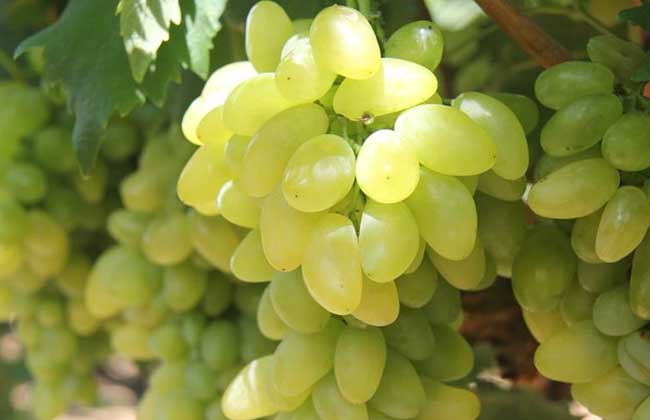
Golden Finger grape is a European-American hybrid. Its clusters are enormous, long conical in shape, moderately loose to tight, with an average cluster weight of 750 grams and a maximum cluster weight of 1500 grams. The berries are uniquely shaped and attractive, ripening in late July. It has strong stress resistance, adaptability and cold resistance, and is the only high-sugar early-ripening European-American hybrid, standing out in the vast grape family. Let's take a look at Golden Finger grape cultivation techniques together below!
Golden Finger Grape Cultivation Benefits
Golden Finger grapes have a beautiful appearance, extremely high sugar content and excellent flavor, which perfectly matches the high-end consumption concept, so they can fetch very high prices. In 2007, Golden Finger grapes sold for 50 yuan per jin. Calculated at 3000 jin per mu, this could reach an astonishing output value of 150,000 yuan per mu. Even in relatively underdeveloped areas, the price is several times that of Kyoho grapes. Calculated at 5 yuan per jin, it can still reach an output value of 15,000 yuan per mu, making the benefits very substantial.
Golden Finger Grape Trellis Construction
1. Trellis selection: Golden Finger grapes have relatively strong growth vigor and are easy to form flowers, suitable for any cultivation mode. The Shandong Fresh Grape Research Institute has conducted various trials in recent years, including small shed trellis, large shed trellis, single-arm vertical trellis, double-arm vertical trellis, T-shaped trellis, double-cross V-shaped trellis and Y-shaped trellis, and all produced good results. Among them, the Y-shaped trellis performed best.
2. Trellis design: Posts are 2.3-2.4 m tall, buried 0.5-0.6 m underground, with 1.8 m remaining above ground. At 0.7 m, 1.2 m and 1.7 m above ground, attach three crossbars of 0.5 m, 0.8 m and 1 m in length respectively, with equal lengths at both ends. Stretch a wire along the row at each end of the crossbars, and also stretch a wire on each side of the posts at 0.5 m above ground. In this way, there are 4 wires on each side of the posts, completing the trellis type.
3. Trellis building and planting: After the soil thaws in early spring, planting can be prepared. Generally, irrigate the plot thoroughly once; if it is saline-alkali land, irrigate thoroughly twice. When planting, do not bury the seedlings too deep in the soil; the top of the seedling should protrude 5—10 cm above the ground. After planting, water lightly once, then cover with plastic mulch. Dig the aboveground part of the grape seedlings out from inside the mulch, and press the plastic mulch down with a small amount of soil to prevent it from being torn by wind. The planting density is 2.5-2.8 m for wide rows, 0.2 m for narrow rows, and 1 m between plants, with 400-500 plants per mu.
Golden Finger Grape Cultivation Techniques
1. Soil management: During cultivation and management of Golden Finger grapes, strengthen soil management by frequently cultivating and weeding, deep plowing at appropriate times, and coordinating with other management practices; a good harvest can certainly be achieved. The main methods include deep plowing, intertillage and weeding, intercropping, mulching and growing grass cover.
2. Fertilizer management: Golden Finger grapes have a well-developed root system, moderate to slightly vigorous growth vigor, and relatively upright new shoots. Fertilization is the same as for other varieties: they need both elements such as N, P, K and Ca, and trace elements such as Zn, B and Mn. Fertilization timing should be closely combined with the growth and development stages of the grapes.
3. Water management: Golden Finger grapes have stronger drought resistance than fruit trees such as apples, pears and peaches, and many dryland vineyards can still achieve very high yields. Although drought resistance is strong, timely irrigation can ensure high yield and high quality of the fruit. At the same time, vineyard irrigation should also take into account the physiological characteristics of the grape's growth and development stages.
4. Reasonable load: Excessive grape yield not only affects quality and delays ripening, but also easily causes premature decline of the vine. In production, the vine load must be strictly controlled. Under normal management conditions, vigorous fruiting shoots can retain 1-2 clusters of fruit, moderate shoots retain only 1 cluster, and weak shoots retain no fruit.
5. Grape bagging: Bagging is one of the best ways to obtain brightly colored, high-quality, pollution-free fruit. It has become an essential step in the production of high-grade grapes. Grape bagging can effectively reduce damage from diseases and insect pests, reduce the number of spray applications, lower pesticide residues, improve fruit quality and increase commodity value.
6. Timely harvest: Golden Finger grapes can be picked and marketed successively 20 days after swelling and softening. However, if you want to bring out the rich honey aroma of Golden Finger grapes, it is best to let them fully mature before harvesting. Bagged Golden Finger grapes at the Shandong Fresh Grape Research Institute generally begin harvesting around September 1 each year and finish in mid-to-late October. During this period, the grapes are fully mature and can serve as high-grade gifts.