Detailed Explanation of Rose Apple Cultivation Techniques and Management Methods
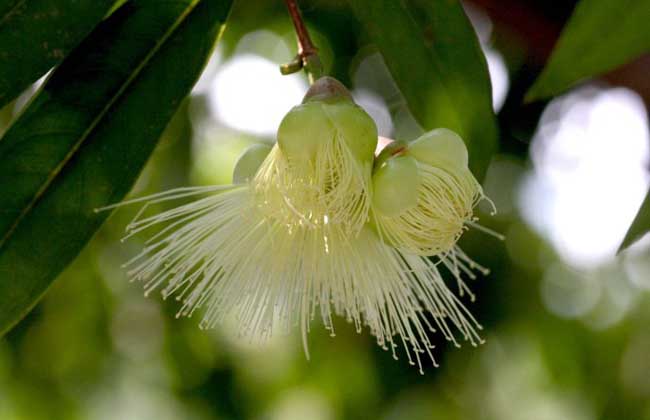
The rose apple is a good fruit tree and garden landscaping tree in humid tropical regions, also known as water rose apple, fragrant fruit, bell fruit, etc. It is an evergreen arbor plant of the genus Syzygium in the family Myrtaceae, native to Southeast Asia. Wild rose apples exist in the Hainan region, and artificially cultivated rose apples exist in South China. They can be cultivated as windbreak plants, and the fruit is edible. Let us take a look at the cultivation techniques of the rose apple below!
Growth Habits of the Rose Apple
The rose apple is distributed in Indochina, Malaysia, Indonesia and other places. It is cultivated in Taiwan, China, Fujian, Guangdong, Guangxi, Guizhou, Yunnan, Hainan and other provinces and regions of China, and is commonly found wild in South China, and is also cultivated for food. It is a water-tolerant plant, prefers warm and hot climates, and belongs to tropical tree species. It prefers to grow by riversides and in river valley wetlands, likes light, tolerates drought, barren conditions and high-temperature drought. It has low requirements for soil, a developed root system, rapid growth and strong adaptability, with fertile, deep and moist soil being optimal.
Cutting Propagation of the Rose Apple
1. Preparing the cutting bed: In the nursery, build a cutting bed with a bed length of 8-10 m, a bed width of 1.2 m and a bed ditch depth of 0.4 m, then spread coarse sand about 10 cm thick in the cutting bed as a drainage layer, and then evenly fill the cutting bed with 1/3 humus soil and 2/3 fine sand to a thickness of 15-20 cm. Such a cutting bed has good water permeability and aeration performance; in particular, the humus soil has a higher water content than fine sand and also has fertility, which is conducive to rooting and growth of cuttings. Before cutting, disinfect the cutting seedling bed with a 1.0% potassium permanganate solution.
2. Cutting the scions: Scions should be selected from plants with strong tree vigor, excellent varieties and no pests or diseases. Generally, select fully developed 1-year-old branches, but 2-3-year-old old branches may also be used. However, poorly developed leggy branches and overly old branches that are difficult to root should not be used. Cut the scions into 15-20 cm lengths. The upper end of the scion should be cut into a flat surface, and the lower end should be cut with a sharp knife into a half-moon shape; a straight cut is unfavorable for rooting. The scions should have half the leaves removed or all leaves removed while retaining the petioles.
3. Treating the scions: After cutting the scions, immediately soak the lower ends of the scions in a 50 microliter/liter naphthaleneacetic acid solution, and they can be cut after 6-8 hours; or soak them in a rooting powder at a concentration of 50 microliter/liter for 0.5-1 hour; or soak them in 500 microliter/liter indolebutyric acid for 10 seconds. All of these can relatively effectively promote rooting.
4. Cutting management: After cutting, water should be sprayed in a timely manner according to specific conditions so that the soil water content remains at 40%-50% of saturated water content. When the temperature is too high, the film should be uncovered and water sprayed to lower the temperature and preserve moisture. After cutting, roots, sprouts and leaves will appear in 1-2 months; at this time, attention should be paid to strengthening pest and disease control. After 2-3 months, timely foliar topdressing should be carried out with 0.3% urea plus 0.2% monopotassium phosphate, and after 2 months, apply a thin manure water topdressing once. The seedlings can leave the nursery only after the shoots produced from the cuttings are more than 30 cm long, more than 0.8 cm thick and fully mature.
Grafting Propagation of the Rose Apple
1. Collecting scions: Rose apple grafting can be carried out throughout the year, but April to November is more suitable. Grafting on rainy days has a lower survival rate. From mother trees that are high-yielding, stable-yielding, large-fruited, high-quality and pure in variety, cut fully grown, already lignified 1-year-old branches as scions. After collecting the scions, remove the leaves and keep them moist for grafting.
2. Grafting method: For rose apple grafting, the cut grafting method is most commonly used. Specifically, cut the scion well, ensuring that the cut surface has one long side and one short side and that the cut surface is smooth. Then cut the rootstock, that is, cut off the rootstock at 20-30 cm above the ground, select a place on the rootstock bark that is thick, smooth and straight in grain as the rootstock cut surface, and shave off a small amount. Then make a straight cut about 2 cm downward within the cortex slightly into the xylem, so that the length and width of the cut correspond to the length and width of the scion. Then insert the cut scion into the rootstock cut so that the cambium of the scion and the rootstock are aligned and pressed tightly together, and then bind tightly from bottom to top with a tough and thin plastic strip.
3. Post-grafting management: After grafting, water frequently and avoid disturbing the graft union. Those that survive after 3-4 weeks can sprout; at this time, pay attention to removing sprouts so that the grafted buds can emerge and grow. At any time, remove the buds sprouting from the rootstock, apply thin manure water topdressing and control pests and diseases. After the second flush of shoots from the scion matures, when the height above the graft union is 50 cm and the thickness at 2 cm above the graft union is 1 cm, the seedlings can leave the nursery.
Seed Propagation of the Rose Apple
1. Collecting seeds: Seeds should come from excellent rose apple mother plants that are high-yielding and produce many seeds. After the fruit is fully mature, harvest it, break open the flesh and take out the seeds. After the seeds are taken out, wash them, float off the non-viable grains, dry them in the shade, and store them sealed in plastic bags.
2. Preparing the seedbed: In the nursery, first deep-plow and rake finely according to plan, build beds 1.2 m wide with bed ditches 0.5 m wide, apply decomposed fine organic fertilizer such as pig or cattle manure mixed evenly with fine sand and burnt soil, and then disinfect with a 1.0% potassium permanganate solution.
3. Sowing time: In areas with relatively high winter temperatures, rose apple seeds are best stored for 1-2 months before sowing. Because the seeds have after-ripening, fresh sowing has a low germination rate. In Hainan Island, the Leizhou Peninsula and the Pearl River Delta, sowing can generally be carried out in August-September; delaying sowing further makes seedlings prone to cold damage and death. In the northern part of South China, storing until mid-March to April of the following spring is the suitable sowing period.
4. Sowing method: Seeds stored for 1-2 months should be soaked before sowing. Because their germination rate is relatively low, using 0.1 milliliter/liter gibberellin can promote seed germination, and the soaking time is 6-8 hours. After soaking, evenly broadcast the seeds on the bed surface, then cover with river sand or burnt soil, press slightly, cover with grass, water thoroughly, and set up a shade net. Because the temperature in August-September is still high, the seedbed should not use agricultural film to preserve moisture, but should use rice straw cover to preserve moisture.