A flower grower uses eggs to grow clivias and kalanchoes, and one plant blooms more than 80 flowers at a time
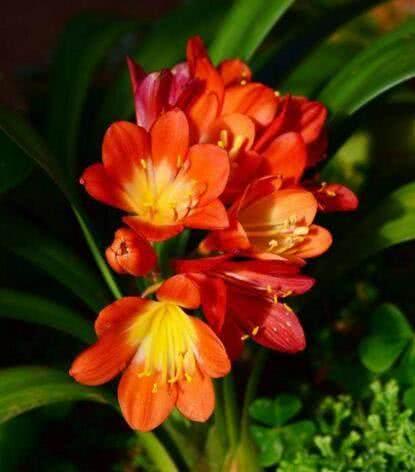
The flower-loving Aunt Zhang, located in Chuzhou, is especially fond of clivias and kalanchoes. One is the gentleman among flowers, and the other is the flower of longevity. Aunt Zhang says these two flowers symbolize good fortune and bloom beautifully, and she simply loves them. Not to mention it may be because Aunt Zhang likes them, so every clivia and kalanchoe she grows runs wild, blooming vigorously as soon as the flowering season arrives, with more than 80 flowers opening at once in a rush. They look so beautiful. Aunt Zhang says you enjoy the flowers during the blooming season and the leaves the rest of the time, and it is totally worth it!
How exactly does Aunt Zhang grow them so well?
Aunt Zhang says to give them a little egg, and the effect is especially good. How does she do it? Let us take a look together. Xiaohua hereby thanks Aunt Zhang for her selfless sharing!
It can be said that an egg is a treasure for growing flowers from head to toe, and the amount used is not large either. Aunt Zhang is willing to spare it, and I believe flower lovers will also be willing to use it for their beloved flowers.
The methods are as follows:
1. Eggshells
How to make: Flower lovers can collect eggshells from home and wash the egg liquid off them clean, then put them in the sun to bake for about a week, and then they can be crushed into powder. Flower lovers can step on them, smash them with a hammer, grind them with a blender... use every method available. Anyway, the finer the better.
How to use:
1. Dig a few holes around the edge of the pot for the kalanchoe or clivia, then put a spoonful of egg powder inside, cover with soil, and that is it. It is just that simple.
2. Mix the eggshell powder into the potting soil at a ratio of 1:20, and directly plant the clivia and kalanchoe in it.
2. Egg yolk
This does not need any other treatment, only to be used during the flowering season, because egg yolk contains a large amount of phosphorus and potassium fertilizer. Flower lovers can take out the yolk, dilute it with water, and directly water the flowers with it. At this time, you need to dig a hole at the edge of the pot. Remember it must be at the edge of the pot, then slowly pour it along the edge of the pot. Be sure to pour it around the edge of the pot, then cover with soil.
Then, as you water, the egg yolk will ferment and produce nutrients to supply the needs of the clivia and kalanchoe for flowering and growth.
3. Egg white
After separating the yolk and egg white, flower lovers take out the egg white. Dilute the egg white of one egg with 1 liter of water. Note that it must be diluted, otherwise the protein will ferment and attract insects. After that, water the clivia and kalanchoe with it.
Flower lovers need to note that egg white can be used during the growth period of clivias and kalanchoes, egg yolk should be used during the flowering season, and eggshells can be used as a base fertilizer.
Flower lovers, have you learned it? If you want to grow clivias and kalanchoes well, watering them is also very important. Below, Xiaohua will talk about it too, hoping all flower lovers can grow their clivias and kalanchoes into vigorous, bursting pots.
1. How to water kalanchoes?
For watering, grasp the principle of "water when dry, and water thoroughly when watering." During the growth period, do not water too much. Water once every 3-4 days, and keep the potting soil preferably moist but on the dry side. In winter, watering should be reduced.
2. How to water clivias?
The soil should not be too dry or too wet. Each time you water, you must water thoroughly. After flower buds appear, water a little more. Clivias have fleshy roots and are afraid of waterlogging. In addition, clivia leaves have a waxy layer, and in winter when temperatures are low, water transpiration and evaporation are low.
Therefore, do not water too much. Just water in combination with fertilizing and keep the potting soil moist. The soil should not be too dry or too wet. Each time you water, you must water thoroughly. After flower buds appear, water a little more.