Lee Tung-hao Speaks at the Hung Chun-pei Culture and Education Foundation on "Three Middles and One Youth" - Benefiting the Nation and the People
Legislator Lee Tung-hao's Speech on "Three Middles and One Youth - Benefiting the Nation and the People" at the Hung Chun-pei Culture and Education Foundation
Over the past six months or so, Beijing has been loudly trumpeting the slogan "Three Middles and One Youth" toward the Taiwan authorities. The original meaning of "Three Middles and One Youth" is that Beijing intends to conduct a comprehensive understanding of Taiwan's "small and medium-sized enterprises," "middle- and low-income groups," "central and southern regions," as well as Taiwan's "youth," and to use market forces to engage with Taiwan and achieve "shared benefits." The recent announcements by Chinese super-tycoons Lei Jun and Jack Ma that they intend to invest huge sums to sponsor Taiwanese youth entrepreneurship are a manifestation of the "Three Middles and One Youth" policy.
Borrowing this theme, the Hung Chun-pei Culture and Education Foundation invited Legislator Lee Tung-hao on May 9 to speak on "Three Middles and One Youth - Benefiting the Nation and the People." Legislator Lee drew on his years of experience and background as a legislator and in teaching and research to share his insights and analyze Taiwan's current problems. In recent years, Taiwan's squandering of its resources has nearly driven itself to a dead end. Everyone is anxiously seeking solutions, but opinions seem to diverge endlessly, and then people fall into an endless cycle. Legislator Lee's speech left the audience greatly benefited.
An Aging Society with a Declining Birth Rate: Socio-Economic Problems Strike from All Sides
Taiwan faces a severe declining birth rate problem, which has been a commonly heard social issue in recent years, because its impact is extremely wide-ranging, from education, social welfare, elderly care and nursing, pediatric medicine, to real estate, manufacturing labor, and domestic consumer demand - the effects permeate the entire society.
Taiwan's population aged 65 and above is growing rapidly at a rate of about 170,000 per year, an unprecedented phenomenon. For Taiwan's medical facilities and elderly care mechanisms, future demand will grow rapidly, and the funeral and elderly care industries will see this as good news, but for the entire social welfare system, it will cause the social insurance system to accumulate massive debts. For example, Taiwan's retirement and compensation funds for political and military civil servants have long been unable to make ends meet, and bankruptcy is only a matter of time. Civil servants and educators will also soon face the problem of income falling below expenditure. At that point, the government will inevitably have to borrow money to pay retirement pensions. The labor insurance fund will also go bankrupt under such circumstances, and it is only a matter of time before the government implements reduced benefits or increased contribution ratios.
In addition to social welfare system and medical problems, the education sector is the first industry to be hit. The number of classes in junior high and elementary schools will have to be reduced. The Ministry of Education estimates a reduction of 16,000 teachers in junior high and elementary schools in total, making it even harder for substitute teachers to pass the exams for official teaching positions in the future, because more schools will be unable to fill vacancies and can only hire substitute and contract teachers. Children's teaching quality will also be affected. The declining birth rate phenomenon below the junior high level will not have a chance to stabilize until at least 2025, provided that Taiwan's birth rate no longer declines.
For universities across Taiwan, the sharp drop in student numbers may force them to cut departments or even close down. When universities close, surrounding restaurants, entertainment and consumer businesses, and textbook publishers will also be affected, and the impact will be very wide-ranging.
If we consider that most young people in Taiwan enter the workforce only after graduating from school and starting work after age 23, generating actual labor, and that elderly people on average retire after age 60, the future dependency burden on Taiwan's young and middle-aged population will be even heavier. In addition, the age group with relatively strong consumption power in Taiwan - the 30 to 40 age group - is shrinking in number. For example, a relatively high proportion of Taiwan's real estate home buyers are in the 30 to 40 age group. In 2013, the government implemented the "Youth Peace of Mind Home Ownership Housing Purchase Subsidy Loan." The 30 to 40 age group is usually the first-time home buyer group, supporting half of real estate transaction volume. Besides the housing market, they also have a certain capacity for lifestyle and entertainment consumption. The decline of this age group will have an impact on Taiwan's private consumption that cannot be underestimated.
With a birth rate that is almost the lowest in the world, obstetrics and pediatrics are gradually declining. Many after-school care centers and kindergartens in Taiwan have sounded their lights-out call. Baby product businesses are quietly fading out of the market. In the future, as the population continues to decline, the domestic consumer market will shrink accordingly, affecting corporate willingness to invest, making sustained high-speed economic growth difficult. For Taiwan's international economic competitiveness, this is by no means a good sign.
Population structure is a country's long-term national policy. To change a country's population problem, the quick method relies on immigration, and the long-term method relies on social welfare to raise the birth rate. In the early stages of a low birth rate, it is like early-stage cancer - people cannot feel the existence of the problem. Taiwan's current low proportion of young people had already planted hidden worries as early as the 1990s. After more than a decade, the problem gradually surfaced. Now it is like a terminal cancer patient. For the government, handling this problem is quite thorny. Taking Taiwan as an example, when labor is insufficient, it brings in foreign workers; when higher education enrollment is insufficient, it opens up to foreign students; when national health insurance and the social welfare system have problems, it patches them up slightly. But none of these are fundamental solutions. If Taiwan's fertility rate never improves, then the population structure problem will not improve. This will be Taiwan's long-term hidden worry.
Balancing the North-South Gap Requires New Thinking That Respects Local Communities
Taiwan's territory is only 36,000 square kilometers, unlike the vast territories of the United States, Italy, or the ancient kingdom of Judah. Originally, there should not have been a so-called North-South gap. However, because government resources in earlier years were heavily skewed toward the north, over the long term, obvious North-South differences can be seen in education levels, employment opportunities, income, and consumption levels, and even in culture and politics.
Because household income in the north is far higher than in the south, there are also significant differences in consumption patterns and consumption scale between north and south. Economic gaps trigger political antagonism, and at the same time, Taiwan's North-South gap has also caused differences in people's views on cross-strait relations. Such differences have also affected the development of cross-strait relations, causing people in the south to distrust the development of cross-strait relations.
Taiwan's regional differences certainly have causes stemming from political and economic policies and history, but society's interpretation of regions also affects people's understanding and impressions of each area. Moreover, people's perceptions and attitudes often deepen regional divides and form the causes or results of uneven regional development. "Viewing the world from Taipei" has become deeply entrenched: a top-down perspective that forms an invisible yet clearly perceptible source of social and cultural conflict in Taiwanese society. For example, the central region is regarded as an acceptable weekend cultural and entertainment area for Taipei residents, the area south of the Zhuoshui River is regarded as an uncivilized land of roughness, and the eastern region is regarded as Taiwan's last hope for sustainable development. Whether in the media or the government, many public discourses centered on Taipei show a lack of deep knowledge and understanding of other regions of Taiwan.
In recent years, a postmodernist perspective for observing regional differences has gradually emerged in the south, attempting to re-understand the roles of north and south and construct a different north and south. In short, under the thinking of "living out oneself" and "creating uniqueness," the south can be seen anew; the south need not be vulgar, but can be the birthplace of a new Taiwanese culture featuring techno Third Prince performances; the south need not be grassroots, but can be LOHAS; the south need not resume the north's production role and can refuse the re-entry of petrochemical plants and heavy industrial zones. "Transformation" has become the south's new way out, in contrast to the north that is rigidly stuck in old culture.
Taiwan's North-South regional problems have generally become more complex under the interactive and reciprocal effects of the above political and economic factors. Southern Taiwan's economic disadvantage shows that the economic growth model Taiwan has relied on in the past has its bottlenecks. For decades, Taiwan drove its economy through low-cost mass manufacturing, high-efficiency production, rapid transportation, and export trade. Now, on the one hand, it can no longer withstand the challenge of globally mobile production; on the other hand, labor wages and employment quality are difficult to improve. Although the old economic model has its indelible importance, from the perspective of structural reorganization, it is necessary to try adding new economic models.
Corporate Relocation Abroad, Poor Investment Environment: Government Needs to Work Hard on SME Support
Taiwanese enterprises shifting investment to China has in recent years sparked domestic discussion and controversy. Although the themes and scope of discussion are many and varied, overall, whether corporate relocation abroad can keep roots in Taiwan and the impact it brings to our country's economic, social, and even political development can be described as one of the most common and important focal issues.When Taiwanese businesses choose the production model of "taking orders in Taiwan, producing and shipping in mainland China" and move production lines to the mainland, industrial relocation abroad is inevitable. According to statistics from the Ministry of Economic Affairs, the overseas production ratio of Taiwan's top four industries has already exceeded 50 percent. Industries transferring most of their production and sales to the mainland, on the one hand, prevents the domestic manufacturing sector's prosperity from rising along with order demand, and on the other hand, causes domestic job opportunities to be lost along with the relocation of production.
The growth rate of domestic investment cannot keep up with capital depreciation, causing a reduction in job opportunities and a rise in unemployment, while the proportion of laborers rises and the proportion of employers falls. Taiwan is also dominated by small and medium-sized enterprises, and the poor investment environment raises the threshold for SMEs to operate. How the government supports and assists SMEs has also become a long-term future economic problem.
Legislator Lee Tung-hao Profile:
Legislator Lee Tung-hao holds a bachelor's degree in economics from National Taiwan University and a doctorate in economics from Ohio State University in the United States. He has served as a professor in the Department of Finance at National Chengchi University's College of Commerce, a supervisor of the Taiwan Stock Exchange, a member of the Presidential Office's financial and economic advisory group, director of the Banking Research Center at National Chengchi University's College of Commerce, a task-based National Assembly representative for constitutional reform, a fifth-term legislator (national at-large), chair of the Department of Finance at National Chengchi University's College of Commerce, and a Chartered Financial Analyst (CFA) at the Institute of Financial Analysts in the United States, among other positions. He is currently an eighth-term legislator.
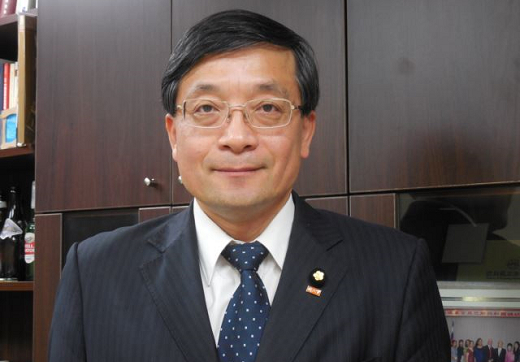
▲Legislator Lee Tung-hao's Speech on "Three Middles and One Youth - Benefiting the Nation and the People" at the Hung Chun-pei Culture and Education Foundation