What is the wild sweet potato? Get to know this little wild mountain fruit
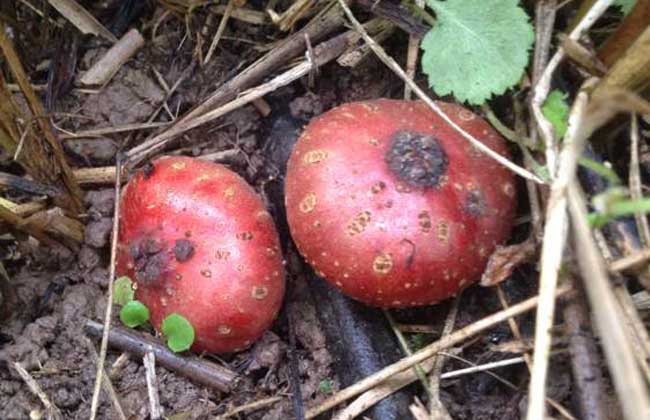
The wild sweet potato is a multi-purpose plant that combines edible, medicinal, landscaping and ornamental uses. Also known as Di Guo, Di Gua Pao and other names, it is a creeping woody vine in the mulberry family, genus Ficus. The whole plant contains milky sap and can reach more than 10 m in length, growing along the ground. Where it touches the ground it readily produces fibrous adventitious roots, resembling a giant centipede, hence it is also called the creeping centipede. Because its appearance resembles a loquat, in some parts of Hubei Province and elsewhere it is called the ground loquat.
The wild sweet potato has brown stems with slightly swollen nodes, and where they touch the ground they produce slender adventitious roots. The leaves are stiffly papery, obovate-elliptic, with an acute tip, a rounded or shallowly heart-shaped base, and finely or wavy serrated margins, with three main veins. The leaf stalk is 1-2 cm long. The flower receptacle has a short stalk and is clustered on leafless short branches, buried in the soil, spherical or egg-shaped, turning purplish-red when ripe, with 3 basal bracts. Male flowers grow at the opening of the receptacle, while female flowers grow inside another receptacle.
The stems and vines of the wild sweet potato are soft yet tough. The leaves are 2-6 cm long and 2-4 cm wide, emerald green, and do not fall through the winter, making them good fodder for herbivores; rabbits, sheep, geese and the like in particular regard them as a delicious treat in winter. The flowers are unisexual, clustered or solitary in the leaf axils or at branch points. The fruit is spherical, 1.5-2.5 cm in diameter; young fruit is green, and when ripe it turns pale red, overflowing with fragrance and sweet as honey.
The wild sweet potato is cold-resistant, drought-resistant, shade-tolerant, tolerant of poor soil and resistant to waterlogging. Even planted in barren gravel or crevices in stone slabs where not a blade of grass grows, it will still flourish with lush green growth. Whether in the scorching summer or the ice-and-snow winter, it spreads like brocade all year round, with green leaves like shade. Whether growing on a sun-scorched hilltop or beneath an ancient forest, its leaves are always emerald green and full of vitality. Whether in low-lying land or on arid mountain ridges, it adapts wherever it is and stays green all year round.
The wild sweet potato is suitable for greening parks or places easily trampled by visitors, as it can withstand being trodden on by many visitors. This is because its tough and luxuriant stems and vines always grow crisscrossing, naturally "weaving" into a "giant fishing net" that can firmly "net" the loose surface soil and sandy soil. Together with dense leaves that "cover" it year round, it looks just like a permanent green carpet has been laid over it. This special effect of preventing sand movement and fixing soil is unmatched by other groundcover plants, making it a top choice for sand prevention and soil fixation. It can also be cultivated as a fruit and is suitable for interplanting in orchards, turning traditional single-season orchards into double-season orchards. It can also be used for ornamental-fruit and ornamental-leaf hanging bonsai; its tough, emerald-green stems and vines are elegant and graceful, presenting the beautiful scene of "ten thousand green silk ribbons hanging down."