How to Grow Potted Large Cherry? Detailed Daily Care Methods
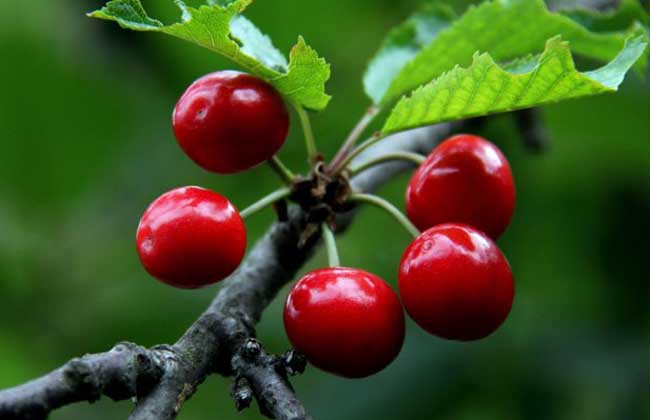
Large cherry is also known as Yingqing fruit, cherry pearl, chelizi, etc. Potted large cherry is a miniature large cherry orchard; you can enjoy the beautiful scene of flowers covering the branches and abundant fruit, and besides enjoying the view, you can also have fine fruit to savor. In recent years, along with the improvement of potting techniques, potted large cherry is gradually entering the balconies and courtyards of thousands of households. Let us take a look below at how to grow potted large cherry!
Growth Habits of Large Cherry
Large cherry is a fruit tree that loves light, warmth, moisture, and fertilizer. It is suitable for growing under climate conditions with an annual average temperature of 10-12°C, annual precipitation of 600-700 mm, and annual sunshine hours of 2600-2800 hours or more. It can grow well and bear fruit normally in places where the period with a daily average temperature above 10°C is 150-200 days and the extreme minimum winter temperature is not lower than -20°C.
Potting Cultivation of Large Cherry
1. Container selection: The cultivation container for large cherry should have good air permeability and be non-toxic to the root system. Fired clay pots and wooden barrels have the best effect, purple clay pots and plastic pots are second, and glazed ones are the worst, because large cherry is not easy to survive after potting.
2. Potting soil preparation: The root system of large cherry has vigorous respiration and high oxygen consumption. The soil requires high permeability, and sandy loam with loose texture and deep soil layer is best. The nutrient soil configuration ratio is turf soil: barnyard manure: sand = 5:3:2.
3. Seedling selection: For large cherry cultivation, select tree species that grow robustly, have plump branches and buds, well-developed root systems, and no pests or diseases. For perennial small trees, the trunk should be low, the branches should be reasonably distributed, and the taper between branches should be large.
4. Potting time: Potting of large cherry is mostly chosen in early spring. Before potting, first prune damaged roots and branches to expose new cuts, and cut off parts with pests or diseases. Next, check the drainage holes of the container and keep the container draining smoothly.
5. Potting method: Place a piece of tile upside down over the drainage hole, then spread a layer of about 20 cm of furnace ash and slag, add nutrient soil, and finally place the sapling. After lifting the seedling and pressing the soil 2-3 times, stop when the soil surface is about 5 cm from the rim of the container.
Cultivation Management of Large Cherry
1. Fertilizer and water management: Large cherry should be watered frequently when there are many branches and leaves and the temperature is high; otherwise, soil that is too dry will affect its growth, flowering, and fruiting. Fertilization should follow the principle of applying thin fertilizer frequently. From spring to autumn, generally apply once every 10 to 15 days with decomposed rapeseed cake fertilizer water. In autumn, also spray the leaves 2 to 3 times with a 0.5% potassium dihydrogen phosphate aqueous solution to promote plant growth and flower bud differentiation.
2. Heat preservation and moisture retention: Large cherry is relatively cold-tolerant. In high-cold areas, plastic film can be used to build a shed for cold protection when planted in the ground. During the fruit-setting period, the temperature should be kept at about 25°C, and during the growth period the humidity is best kept at 50% to 60%, which is beneficial to flower bud differentiation and increases yield. If there is frost damage locally, potted large cherry must be given good heat preservation and moisture retention measures.
3. Flower and fruit management: Thinning flowers and fruits of large cherry is the key to flower and fruit management. Thinning buds is better than thinning flowers, and thinning flowers is better than thinning fruits. When the tree body has a large number of flower buds, thin out some flower buds during the bud-breaking period. The operation method is to thin out 1/3 to 1/4 of the flower buds on flower-cluster fruit branches, carry out pollination between varieties during the flowering period, and thin out fruits with irregular shape when the fruits grow to the size of soybean grains.
4. Shaping and pruning: The terminal buds of large cherry and the central buds of flower-cluster fruit branch groups are leaf buds. Flower buds are pure flower buds, mainly axillary flower buds and flower clusters. Axillary flower buds generally grow at the base of 1-year-old branches, so pay attention to the position of flower buds when pruning. Pruning is mainly summer pruning, supplemented by winter pruning.
① Winter pruning: Winter pruning is mainly to adjust the tree shape and balance tree vigor. Mainly thin out competing branches, back branches, strong vigorous branches, and slender branches. Shorten the extension branches and retract the fruiting branches.
② Summer pruning: Summer pruning aims to maintain the tree shape and promote flowers and preserve fruits. Cut off competing branches and back branches. Pinch the tips when the branches grow to 15-20 cm. Generally complete it before July, no more than 2 times a year. Around September, when the branches have just begun to seal at the top, pull the branches flat.