What fruit is wampee? Get to know this distinctive fruit
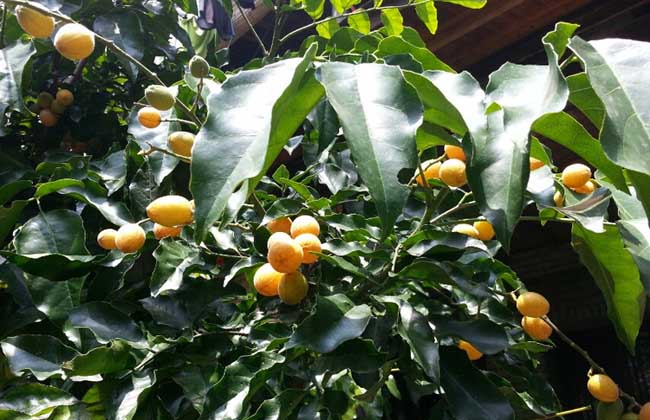
Wampee is one of the fruits of southern China, also known as huangdan, huangdanzi, huangduan and so on. It is a small tree of the genus Clausena in the Rutaceae family, native to southern China, with a history of more than 1,500 years in our country. It likes warm, humid environments with plenty of sunlight. It is not demanding about soil. Loamy soil that is loose and fertile is best for planting it, and in Hainan its flowering and fruiting periods are both 1 to 2 months earlier.
The wampee tree can reach 12 m in height. On the branchlets, leaf rachis, inflorescence rachis, and especially the veins on the underside of unopened leaflets, there are many distinctly raised fine oil dots scattered about, and they are densely covered with short straight hairs. The leaves have 5 to 11 leaflets; the leaflets are ovate or ovate-elliptic, often oblique on one side, 6 to 14 cm long and 3 to 6 cm wide, with a nearly rounded or broadly cuneate base, asymmetrical on the two sides, and wavy or shallowly rounded-toothed margins; the midvein on the leaf surface is often covered with short fine hairs, and the petiolules are 4 to 8 mm long.
The wampee panicle is terminal; the flower buds are globose; the calyx lobes are broadly ovate, about 1 mm long, covered with short pubescence on the outside; the petals are oblong, about 5 mm long, covered with short hairs on both sides or hairless on the inside. The ovary is densely covered with straight long hairs, the disc is small and slender, and the ovary stalk is short. The fruit is round, elliptical or broadly ovate, 1.5 to 3 cm long and 1 to 2 cm wide, pale yellow to dark yellow, covered with fine hairs; the flesh is milky white and semi-transparent, with 1 to 4 seeds, and the cotyledons are dark green. The flowering period is April to May, and the fruiting period is July to August.
As a high-quality fruit, wampee fruit can not only be eaten fresh, but can also be processed into jelly, jam, candied fruit, fruit cakes and refreshing drinks, or preserved in salt or sugar, so it has long been known among the people as the “treasure among fruits.” The leaves and roots contain flavonoid glycosides, alkaloids, coumarins and phenolic compounds. The seeds are rich in oil, with an oil yield as high as 42%, making them an excellent lubricant.
Wampee is rich in vitamin C, sugars, organic acids and pectin. Both the peel and the seeds can be used as medicine, with the effects of aiding digestion, resolving phlegm and regulating qi. They are used for indigestion, fullness and pain in the chest and diaphragm, phlegm-fluid cough and asthma and other conditions, and can also relieve constrained heat and regulate hernia pain. The leaves are pungent and cool in nature, with the effects of dispelling wind and releasing the exterior, removing phlegm and promoting the movement of qi. They are used to prevent and treat influenza, warm-disease fever, cough and asthma, water swelling and abdominal pain, malaria, difficult urination, heat-toxin scabies and leprosy and other conditions. The roots can treat qi pain and hernia pain.