Detailed Explanation of Key Technical Points for Growing Pineberries
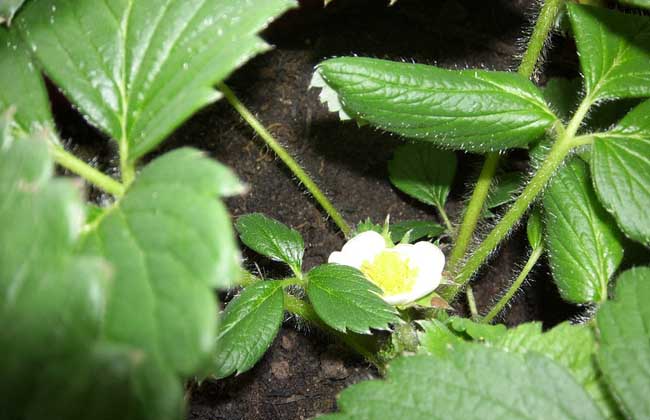
The pineberry is a strawberry variety, also known as the white strawberry. It is a perennial herbaceous plant of the genus Fragaria in the rose family. Its appearance closely resembles that of a strawberry, with white flesh covered with red spots. It shares the same genetic makeup as the strawberry. Because its flavor is surprisingly similar to that of pineapple, it is called the pineberry. It has extremely high edible value and cultivation value. Let's take a look at the growing techniques for pineberries below!
Growth Habits of the Pineberry
The pineberry was formed by crossing a strawberry growing on Chiloe Island (Chile) with a strawberry growing in Virginia, North America. In 2003, Dutch fruit farmers brought it to Europe for commercial cultivation and sale, successfully opening up a market for it. It needs to be planted in a sunny, warm environment, and the soil must have good drainage. If planting in the ground, level the soil and sow when the temperature is suitable.
Site Selection and Bed Preparation for Pineberries
1. Site selection and fertilization: For field cultivation of pineberries, choose a plot that has not grown strawberries for many years as the production field for greenhouse pineberries. Apply sufficient organic base fertilizer. About one month before planting, generally apply 1500-2000 kg of fully decomposed organic fertilizer per mu as base fertilizer, and plow and harrow multiple times.
2. Additional surface fertilizer: About 10 days before planting pineberries, choose sunny weather when the soil has good workability to prepare the bed heads. Before building the beds, apply 50 kg of imported ternary compound fertilizer and 50 kg of superphosphate as surface fertilizer, and apply 10 kg of phoxim granules per mu to control underground pests such as white grubs.
3. Reasonable bed preparation: The pineberry beds run north-south (parallel to the direction of the greenhouse). Each greenhouse has 7 beds. The middle 5 beds each have a surface width of 40-45 cm, with 2 rows planted per bed. The 2 beds on the sides each have a surface width of 15-20 cm. Each ridge is 30-35 cm high, and the depth of the furrow between beds is about 30-35 cm. Each bed on the sides is planted with 1 row.
Planting Techniques for Pineberries
1. Thorough watering and seedling lifting: The day before digging up pineberry seedlings, water the nursery thoroughly once around to help keep the soil ball intact and minimize root damage. Plant in separate greenhouses according to seedling size. If using nutrient pot seedlings, simply remove the plastic pot during planting, which results in a higher survival rate.
2. Planting density: For greenhouse cultivation of pineberries, the plant spacing is about 20 cm, with 1800-2000 plants per greenhouse and 6000-7000 plants per mu. The planting depth must be moderate. The base of the new stem must be buried in soil to encourage new root growth, but the heart of the seedling (the area where the outer leaf stipules are located) must not be buried in soil.
3. Directional planting: For ease of management, "directional planting" is adopted, which can also reduce disease and improve fruit quality. The middle 5 beds are planted with 2 rows each, placed as close to both sides as possible (with row spacing controlled at about 30 cm), and the arched side of the pineberry seedling crown should be clearly identified and oriented toward the outer side of the bed when planting. The 2 beds on either side of the greenhouse are planted with a single row.
4. Post-planting management: After planting pineberries, water immediately to stabilize the roots. They will survive in about 10 days. Along with weeding, loosen the soil between plants and mound soil around the roots. Regularly remove dead, old, and diseased leaves, and promptly fill in gaps with replacement seedlings.
Cultivation Management of Pineberries
1. Laying plastic mulch: Laying black plastic mulch can maintain soil moisture, suppress weed growth, lower the air temperature inside the greenhouse, isolate strawberry fruit from contact with the soil to reduce disease, and keep the fruit bright in color and clean and hygienic. The laying time is generally mid-to-late October. Cover the black plastic mulch over the plants on the bed surface. Feel for the seedling position and tear a small hole in the mulch, then carefully pull out the leaves. Be sure to expose the central leaves of the seedling, and press the surrounding old leaves on top of the mulch at the edge of the hole so that it fits closely against the ground.
2. Temperature regulation: Pineberries have different temperature requirements at different stages of growth and development, and these should be met as much as possible after the greenhouse is warmed. Because greenhouse-grown pineberries bloom and bear fruit continuously and in overlapping cycles, after bud emergence, generally maintain 24-28°C during the day and 6-8°C at night. Temperatures above 30°C or below 5°C are both unfavorable for pineberry flowering and fruiting.
3. Humidity regulation: The air humidity inside the greenhouse is very high, especially from early morning to mid-morning or during rainy weather, when relative humidity can reach 95-100%. This hinders pollination, easily breeds disease, and causes severe gray mold fruit rot. Therefore, in addition to covering the beds with black plastic mulch, straw should also be spread at the bottom of the furrows to prevent water evaporation. Around 9 a.m. on sunny days, ventilate from the leeward side with a single-sided curtain to bring the humidity inside the greenhouse down below 75%.
4. Plant training: After the greenhouse is insulated, pineberry plants grow faster and sprout large numbers of tillers and runners, which should be removed promptly. This can increase the leaf area of the main stem, promote timely sprouting of the terminal flower buds, and produce robust terminal inflorescences, leading to early flowering and good fruiting. Generally, a strawberry plant should retain at most 1-2 relatively robust tillers. Promptly remove old, declining, and diseased leaves.
5. Applying gibberellin: This is generally done about 7 days after the greenhouse is covered with film (under sunny weather conditions). The purpose of spraying gibberellin is mainly to address weak pineberry plant growth, a creeping and dwarfed appearance, smaller leaves, short petioles, and short inflorescence stalks. Taking the "Toyonoka" variety as an example, the concentration is generally kept at about 7 PPM, and the application amount is 10-12 kg of solution per standard greenhouse. Spraying should be done on sunny days. If the plant growth condition after spraying has not yet improved significantly, spray once more at the bud emergence stage.