Detailed Explanation of Banana Shrub Planting Techniques and Management Methods
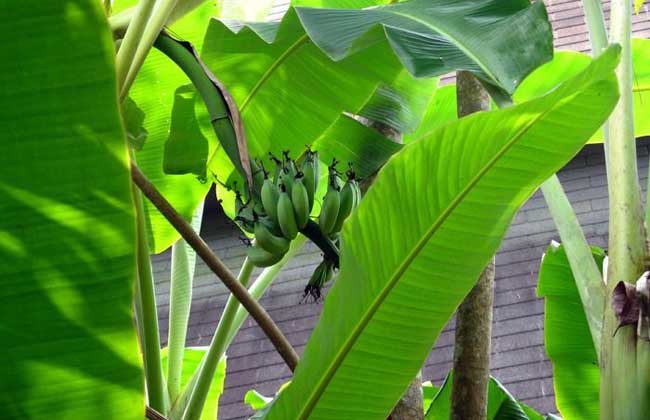
Banana shrub, also known as bajia, banjiao, and banjiao, is a perennial herbaceous plant of the genus Musa in the family Musaceae. It belongs to the same family as the banana and is similar in appearance, with certain medicinal value. It is native to the Ryukyu Islands. In China, it can be cultivated in the open ground south of the Qinling Mountains and the Huaihe River, and is mostly grown in courtyards and near farmhouses. Let us now take a look at the planting techniques for banana shrub.
Growth Habits of Banana Shrub
Banana shrub has large, wide leaves. It prefers warmth and has weak cold tolerance. Its stems have strong tillering ability, it tolerates partial shade, has relatively strong adaptability, and grows quickly. It grows best in deep, loose, fertile, and well-drained soil. It is not cold-tolerant and must be kept at temperatures above 4°C in winter, but it can also withstand short periods of 0°C low temperatures. It tolerates partial shade; if too shaded, the plant grows poorly and is difficult to flower. Because its leaves have parallel veins and a loose structure, they are very easily torn by strong winds, so a wind-sheltered location should be chosen for planting. It likes moisture. During cultivation, it should be watered frequently and the plant should be misted to maintain relatively high soil and air humidity, but continuous waterlogging in the soil should be avoided, otherwise the roots rot very easily.
Propagation Methods for Banana Shrub
Banana shrub is mostly propagated by division, preferably in early April. When dividing, first dig away the soil around the banana shrub with a shovel or hoe to expose the small banana shrub suckers and creeping stem roots, then use a sharp knife to cut them off from the mother plant together with the creeping stem roots. The small banana shrub suckers cut off are the seedlings for division propagation. If the creeping stem roots of the seedlings already have fibrous roots, they can be planted directly in the courtyard or grown as potted ornamentals. If the cut seedlings have no fibrous roots, they can first be rooted in a propagation seedbed filled with plain sandy soil. Before burying them in the sandy seedbed, consider the future need for potting, and the creeping stems can be appropriately shortened to make future potting easier. During operation, be careful not to damage the root nodules.
Cultivation Techniques for Banana Shrub
1. Site selection and land preparation: For banana shrub cultivation, choose a cool, moist, and fertile place, with ditches, banks, embankments, dams, and pond edges being suitable, especially low-lying areas. If a slope is chosen, select a site with deep soil and a good source of water and fertilizer. When preparing the land, loosen the soil and break up the clods so that after planting the "horse-whip" (i.e., underground stem) can spread and grow through the soil in a timely manner.
2. Transplanting time: Division and transplanting of banana shrub are generally carried out from late autumn to early spring of the following year, because the banana shrub is in dormancy at this time, and division and transplanting cause less damage to the plant and make it easier to survive. When dividing, select new sucker stems that have just emerged from the horse-whip in the current year from a banana shrub grove that has already grown for more than 5 years. The horse-whip should be chosen from around the plant, because such horse-whips have well-developed fibrous roots and strong soil-penetrating ability. At the same time, avoid breaking the horse-whip, and require each sucker to have 2-3 one-year-old stems.
3. Transplanting method: When transplanting banana shrub, the number of sucker stems planted per hole should be adapted to the plot. Generally, plant 2-3 per hole at banks and embankment edges, and 1 per hole in low-lying areas, because low-lying areas are cool and moist with good water and soil conditions, and the plants grow larger easily. When planting, place the sucker stems upright in the previously dug planting holes, and after placing them, fill and cover with relatively finely crushed pig, cattle, and sheep manure mixed with a small amount of fertile soil.
4. Post-planting management: After the banana shrub sucker stems are planted, they should immediately be covered with rice straw, thatch, or plastic film to prevent frost damage. After the ground warms up again, remove the covering. Within 3-4 years after planting, apply fertilizer and cover with soil once each year to promote propagation and growth. Fertilizing and soil covering should be carried out in spring when the ground warms up and the heart leaves begin to grow. Crush pig, cattle, and sheep manure or farmyard manure finely, spread it evenly over the sucker stems, and then cover with fertile soil. Poor plots should be given more manure, while fertile plots can be given less manure. In addition, when the tender stems begin to grow, livestock should also be prevented from trampling and gnawing them.