What are the control methods for powdery mildew in melons?
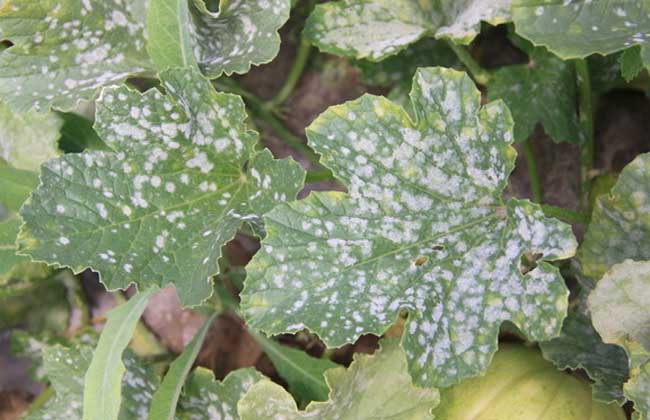
Powdery mildew in melons is one of the important diseases harming melon production. It can reduce the photosynthetic capacity of plants, cause premature aging, and even death, seriously affecting the yield and quality of melons. The disease is severe in spring and autumn, with an incidence rate of 30 to 100%, generally causing a yield reduction of 10 to 20%, and when the disease is severe, it can reduce yield by more than 40%. Let's take a look at the control methods for powdery mildew in melons below!
Damage symptoms
Powdery mildew in melons can occur throughout the entire growth period of melons, mainly damaging leaves, and in severe cases also damaging petioles and stems. When leaves are affected, small white powdery spots first appear on the front and back of the leaves. They gradually expand into white round powdery patches, and multiple lesions connect with each other, covering the leaf surface with white powder. As the disease develops, the color of the powdery patches gradually turns grayish-white, and occasionally small black dots form beneath the powdery layer in the later stage. Finally, the diseased leaves turn yellow, wither, and die.
Conditions for disease occurrence
Powdery mildew in melons can occur at 10 to 25°C. Whether it becomes epidemic depends on humidity and the growth condition of the host. It can germinate at low humidity, and the germination rate increases significantly at high humidity. Therefore, after rain, if it is dry or there is little rain, but field humidity is high, the spread of powdery mildew accelerates. Higher humidity is favorable for spore germination and invasion. High temperature and dryness are favorable for conidial reproduction and disease expansion, especially when high temperature and drought alternate with high humidity conditions, and there is also a large amount of powdery mildew inoculum and susceptible hosts, the disease becomes epidemic. In the north, this disease mostly occurs or becomes epidemic in late spring and early summer when the rainy season begins, or in early autumn when it is relatively dry. The functional leaves around the fruit-setting area are most susceptible, and afterward, as more fruits set, disease resistance declines and the disease continues to increase.
Control methods
1. Agricultural control: After the previous crop is harvested, remove diseased plant residues from the field to reduce infection sources. Cultivate strong seedlings to improve plant disease resistance. Apply sufficient farmyard manure and increase phosphorus and potassium fertilizer to prevent excessive vegetative growth and premature aging. Prune and remove side shoots in time to ensure good ventilation and light transmission for the plants. Water reasonably, and open the greenhouse in time for ventilation and dehumidification.
2. Biological control: Before disease onset or in the early stage of disease, use 300 million CFU/g Trichoderma harzianum leaf formula, spray with a 300-fold solution, once every 7 to 10 days. When the disease is severe, apply once every 5 to 7 days. 95% mineral oil, Bacillus subtilis, etc. can also be used.
3. Physical control: Use 27% high-fat film emulsion at 80 to 100 times dilution, spray it on the leaves in the early stage of disease, so that it forms a thin film on the leaves. This not only prevents pathogen invasion, but also creates an oxygen-deficient condition that kills powdery mildew fungi. Spray once every 5 to 6 days, for 2 to 3 consecutive sprays. A few days before transplanting, close the greenhouse, use 250 g sulfur powder and 500 g sawdust per 100 cubic meters, mix evenly, put into 4 to 5 small plastic bags, place them at points in the evening, ignite them, and keep the greenhouse closed for 1 night.
4. Chemical control: Spray 2% Nongkang 120 (pyrimidinyl nucleoside antibiotic) or 2% Wuyi mycin (BO-10) aqueous solution at 200 times dilution, or Gaoke Kongbai (azoxystrobin). Spray again after 6 to 7 days. Before disease onset, you can also choose 45% chlorothalonil smoke agent, using 200 to 250 g per mu, place it at points in the evening, ignite it with a smoldering flame, close the greenhouse and fumigate for 1 night, and open the greenhouse for ventilation the next day.