How to prevent and control walnut brown spot disease? Sharing practical methods
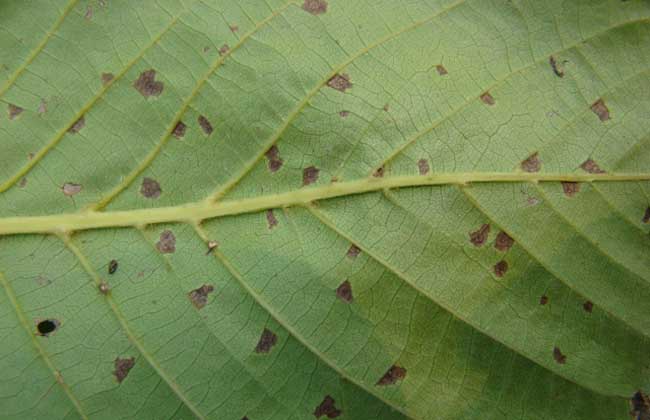
Walnut brown spot disease mainly damages leaves and young shoots. In the early stage of leaf infection, grayish-brown round to irregular lesions appear. Later, small black spots form on the diseased parts. Severely affected leaves wither and scorch and drop prematurely. After young shoots are infected, the lesions are dark brown, long oval, and slightly sunken. Diseased seedlings often form dead shoot tips. Now let us take a look at the prevention and control methods for walnut brown spot disease!
Occurrence symptoms
The diseased leaves of walnut brown spot disease mainly damage walnut leaves, new shoots, and fruit. On young leaves, the lesions are brown and polygonal; on older leaves, the lesions are round, grayish-brown in the center, brown at the edges, and sometimes surrounded by a yellow halo. The grayish-brown central part sometimes forms holes, and in severe cases the lesions connect with one another. Sometimes lesions also appear on the petioles. On branches and shoots, the lesions are elongated, brown, and slightly sunken. In severe cases, the lesions surround the branch and cause the upper part to die. When fruit is damaged, small, slightly raised brown soft spots first appear on the surface, then rapidly expand, gradually become sunken and black, with water-soaked halos around them. In severe cases, the kernel becomes black and rots. When old fruit is infected, only the outer pericarp is affected.
Occurrence pattern
The pathogen of walnut brown spot disease overwinters as conidia on infected leaves and shoots. After overwintering, the diseased leaves and shoots can still produce spores under suitable temperature and humidity conditions and spread with wind and rain. Fruit is easily infected by the pathogen before shell hardening, and the disease is severe when there is much rain in late spring and early summer. The severity of plant disease is related to humidity, and it spreads rapidly after rain. The incubation period of this pathogen is 5-34 days on fruit and 8-18 days on leaves. Plants are most susceptible during leaf expansion and flowering. In central Hebei, the peak disease period is from late July to mid-August, while in Shandong it generally begins in mid-to-late May.
Prevention and control methods
1. Field management: Before the spring rains arrive, thoroughly clean the walnut orchard, remove diseased branches and leaves in time, and bury them deeply or burn them. At the same time, strengthen comprehensive management of walnut cultivation, enhance tree vigor, and improve disease resistance. Particular attention should be paid to improving the soil, increasing fertilizer application, and improving ventilation and light conditions.
2. Chemical prevention: Before walnut brown spot disease occurs, use "Aolike - Liangguoan" diluted 300 times and spray it, applying once every 15 days. Together with "Wofengsu" diluted 600 times and sprayed, applying once every 7 days, this can relatively effectively prevent the occurrence of walnut brown spot disease.
2. Chemical treatment: When the disease is mild, dilute "Aolike - Liangguoan" 300 times and spray, applying once every 10-15 days. When the condition is severe, dilute it 200 times and spray once every 7-10 days. If the condition is severe, "Wofengsu" is needed, diluted 600 times and sprayed, applying once every 3 days. At the same time, strengthen orchard management, increase organic fertilizer application, improve the disease resistance of the tree, pay attention to drainage after rain, and reduce orchard humidity.