Detailed Explanation of Key Points for Sugarcane Pokkah Boeng Disease Control Techniques
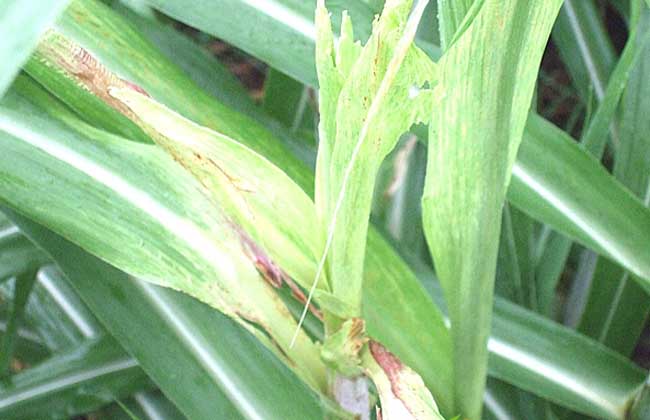
Sugarcane pokkah boeng disease is a fungal disease in which the leaf-infected young leaf bases become chlorotic and yellowed, narrower than normal leaves, and the leaves are noticeably wrinkled, twisted, or shortened. The conidia of the pathogen spread through airflow and land on the spindle leaves at the top of the cane, where they germinate and invade the young leaf bases. The diseased areas then produce conidia, causing repeated infection. Let us take a look at sugarcane pokkah boeng disease control techniques below!
Symptoms of Sugarcane Pokkah Boeng Disease Damage
In sugarcane plants affected by pokkah boeng disease, the bases of young leaves on infected leaf parts become chlorotic and yellowed, narrower than normal leaves, and the leaves are noticeably wrinkled, twisted, or shortened. After the diseased leaves age, irregular red spots or red streaks appear on the diseased areas. Some reddened tissues form irregular eye-shaped or diamond-shaped perforations, some form lesions with dark brown edges arranged in a ladder-like pattern, and dark reddish-brown to black irregular lesions also form on leaf margins and leaf tips. Some leaves show knot-like formations at the top where expansion is blocked. Leaf sheaths infected by the disease develop red necrotic spots or ladder-shaped lesions. When the spindle top is infected, a longitudinal cut reveals many dark red streaks, with the streaks at the nodes appearing as fine lines, and some internodes forming long depressed lesions with transverse septa that resemble ladders. When the diseased area occurs on one side of the stem, it causes the cane stem to bend. In the most severe cases, pokkah boeng forms, the tissue around the growing point softens and turns brown, and the spindle leaves become necrotic, causing the entire sugarcane plant to die.
Conditions for the Onset of Sugarcane Pokkah Boeng Disease
The pathogen on diseased plants and on plant residues decomposing on the soil surface spreads through airflow. Conidia land on the spindle leaves at the top of the cane and, under suitable conditions, germinate and invade the young sugarcane leaves. The diseased areas produce conidia for secondary infection. The disease is prone to occur in sugarcane fields with high temperature and high humidity, or after long drought followed by rain, or with excessive irrigation. Insufficient nitrogen fertilizer, weak plant growth, or excessive or one-sided application of nitrogen fertilizer, which makes plant tissues tender and causes rapid growth, leads to severe disease. Yuetang 54/176, Yuetang 57/423, and Shuntang 66/166 are relatively susceptible to the disease.
Sugarcane Pokkah Boeng Disease Control Techniques
1. Select disease-resistant varieties such as Guitang 57/624 and Yuetang 63/237.
1. Advocate the application of compost fermented with effective microorganisms or fully decomposed organic fertilizer, adopt formula fertilization techniques, pay attention to the reasonable combined application of nitrogen, phosphorus, and potassium, and avoid one-sided or excessive application of nitrogen fertilizer.
3. Repair the drainage and irrigation system well and drain accumulated water promptly.
4. Strengthen management, promptly strip off old leaves, remove ineffective tillers, and dig out diseased plants.
5. In severe disease areas, at the early stage of onset, spray 1:1:100 Bordeaux mixture or 30% Ludebao suspension concentrate at 500 times dilution, or 50% benomyl wettable powder at 1000-1200 times dilution, once every 7-10 days, for 3-4 consecutive applications.