How to Grow Raspberries for High Yield? A Complete Guide to Practical Growing Techniques
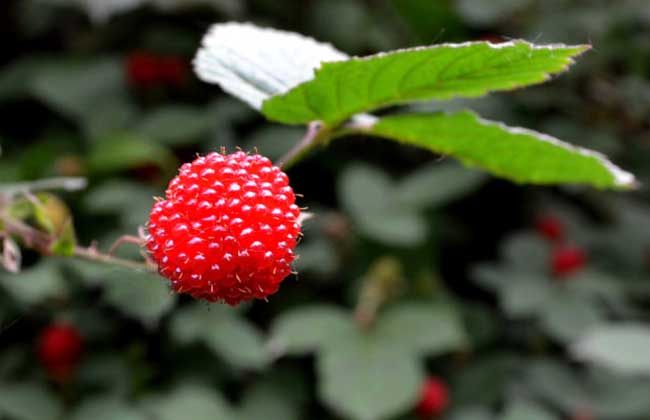
Raspberry, also known as mountain raspberry, shanpaozi, niunaipao, sayangpao, sanyuepao, siyuepao, fupenzi, and others, is a woody plant of the genus Rubus in the rose family. Its fruit is eaten as a fruit in Europe and America, and tastes sweet and sour. It is widely distributed in China but little known, with only a small amount cultivated in the Northeast region, and it is relatively rare on the market. Let us now take a look at high-yield raspberry growing techniques!
The Growing Habits of Raspberries
1. Environment: Raspberries usually grow in mountain and semi-mountain areas by streams, in hillside thickets, at forest edges, and among piles of rocks. They grow luxuriantly on barren slopes or, after slash-and-burn, under tung oil trees and oil tea camellia groves. They favor warmth and moisture and require well-lit diffused light. They are not strict about soil and are highly adaptable, but slightly acidic to neutral sandy loam, red soil, purple soil, and similar soils that are fertile, retain water and nutrients well, and drain well are better.
2. Fruiting: Raspberries bear fruit early and easily enter the full fruiting stage. Generally, they bear fruit two years after planting, reach high yield in 3 years, and reach their highest yield at 4 to 5 years, with the full fruiting stage lasting as long as about 15 years. The root system is shallow and not drought-tolerant; insufficient water will inhibit growth and fruiting. The flowering period is April to May, and the fruiting period is June to July. If soil moisture evaporation is too great and water is insufficient, the yield for that period will be affected.
Raspberry Propagation Methods
1. Root suckers: The mother raspberry plant should be kept in moist, loose soil with sufficient nutrients. Select well-developed root suckers and keep them 10-15 cm apart. Dig up the root suckers after autumn; dig deeply and retain more side branches. They can be planted as soon as they are dug, or dug up and heeled in first, then used to establish a plantation in early spring the following year.
2. Root cuttings: For raspberry root cuttings, dig out lateral roots about 1 cm thick, choose roots with buds, and cut them into root segments about 10 cm long. Carry out the cuttings in mid-March. Dig a furrow 10 cm deep, insert the roots obliquely into the seedbed, leaving one quarter exposed above the soil, then cover level with soil.
3. Transplanting plants: From November each year to March of the following year, dig up wild plants from mountain woodlands, cut off the aboveground primocanes, leaving 20 cm in length, being careful not to damage the dormant buds at the base. Then transplant them into a leveled field with a plant spacing of 25 cm and 2700 plants per mu. After planting, cover with soil and firm it, water to settle the roots, and cover with straw, dry grass, and similar material.
Raspberry Cultivation Techniques
1. Establishing the plantation: In East China, raspberries can be planted in spring or autumn, generally in mid-to-late November or mid-to-late March. Choose a wind-sheltered, sunny plot with loose soil, high organic matter content, and moist soil that is not prone to waterlogging to establish the plantation. Before establishing it, plow deeply and level the ground, and apply 2000-4000 kg of farmyard manure per mu. Use the strip planting method, with a row spacing of 2 m and a plant spacing of 0.4-0.8 m, and planting holes measuring 30×30×30 cm. When planting seedlings, be careful to protect the basal buds from damage.
2. Fertilizer and water: Apply sufficient base fertilizer before transplanting, using 3-5 kg of farmyard manure per plant. During the growing period, combine loosening the soil and weeding with 2-3 topdressings per year, mainly nitrogen fertilizer with an appropriate amount of phosphorus and potassium fertilizer. Apply seedling fertilizer in March, flower fertilizer in April, and wintering fertilizer in November. Apply 1500-2000 kg of human and animal manure per mu. Pay attention to watering during summer and autumn droughts.
3. Trellising: Raspberry branches are soft and often droop to the ground, or lodge in wind, affecting yield and quality. In April to May, when new canes produce side branches, remove the terminal buds to promote side branch growth, and also pinch the side branches to encourage secondary side branches. More branches mean lush leaves, increasing the fruiting canes for the next year and raising yield. During the fruiting period, set up a support beside each plant to prevent lodging.
4. Pruning: In spring, promptly cut off the dried-up tips of the biennial canes to encourage the remaining branches to produce strong fruiting canes. Thin out branches at the base that are too dense and branches affected by pests and diseases. Leave 7-8 biennial canes per plant and maintain a reasonable density to facilitate ventilation and light penetration, ensuring high and stable yields. After harvesting, cut off the biennial canes and thin out suckers and overly dense primocanes to control the total number of canes in the plantation.
5. Harvesting: The harvest time for raspberries is from mid-May to early June, when the fruit has fully developed and is still green, not yet turned red and ripe. Harvest in batches. After picking, remove stems, leaves, the receptacle, and other impurities, then blanch them in boiling water for 2-3 minutes and take them out. Then spread them out to sun-dry or dry them. The finished product is best when the grains are intact, firm, yellow-green in color, sour in taste, and free of stems, leaves, and debris.
Raspberry Pest and Disease Control
1. Stem rot
[Symptoms] Stem rot is a serious disease harming the primocanes at the base of the raspberry plant. It generally occurs on new shoots, first appearing on the sun-facing side of the new shoot relatively close to the ground as a dark gray, scald-like lesion about 1.5-5.5 cm long and 0.6-1.2 cm wide. The lesion spreads rapidly in all directions, the diseased area gradually turns brown, and many small black spots of varying sizes appear on the lesion surface. The xylem turns brown and necrotic. As the diseased area expands, the leaves and petioles turn yellow and wither, and in severe cases the entire plant dies.
[Control] In autumn, clean the plantation, cut off diseased canes, and burn them in a centralized pile to eliminate the pathogen. From May to August, spraying can be used for control. In mid-May and in July, at the early stage of the disease, spray susceptible varieties with thiophanate-methyl at 500 times dilution, or 40% phosethyl-Al at 500 times dilution, or thiram at 500 times dilution.
2. Powdery mildew
[Symptoms] The second disease of raspberries is called powdery mildew. Infected raspberry leaves are covered with a layer of white powdery substance, causing the leaves to twist and deform or curl up. Sometimes the leaves do not show the white powdery substance but instead show water-soaked spots. In severe cases, new shoot growth is stunted, and the fruit is sometimes infected as well.