Detailed Explanation of Muskmelon Greenhouse Cultivation Techniques and Management Key Points
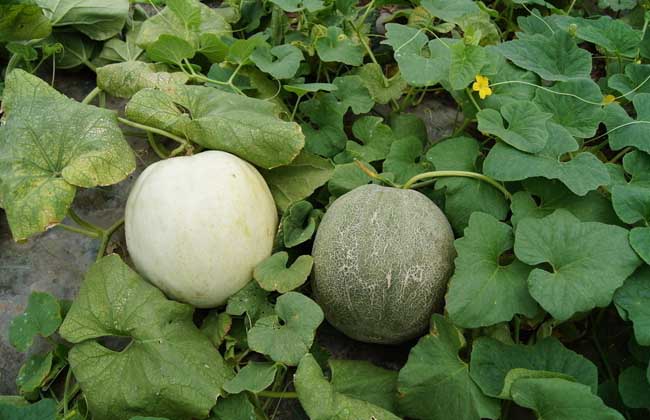
Muskmelon is an annual vining herbaceous plant of the genus Cucumis in the gourd family (Cucurbitaceae), also known as gangua, xianggua, Hami melon, etc. It is widely cultivated throughout China and also widely cultivated in temperate to tropical regions of the world. The fruit is an important fruit of midsummer. Due to its long history of cultivation, there are many varieties, and its cultivation has extremely high economic value. Let us take a look at muskmelon greenhouse cultivation techniques below!
Variety Selection
Muskmelon greenhouse cultivation varieties should mainly be early-maturing and mid-maturing high-quality varieties, supplemented by an appropriate amount of mid-to-late-maturing varieties. At present, the varieties mainly used in greenhouse production include Elizabeth, Yinmizi, Wangwenxiang, as well as some suitable early-maturing and mid-maturing varieties from home and abroad.
Seed Soaking and Germination Promotion
Muskmelon seeds need to be carefully selected. Before germination promotion, they should be sun-dried for 2 days, then soaked in warm water at about 50°C for about 15 minutes, with attention to stirring. After the water temperature naturally cools, continue soaking for 5 hours, then remove and wash clean, and then treat with a medicinal solution for sterilization and disinfection. Commonly used agents include 0.1% potassium permanganate for soaking for 2 to 4 hours, or a 500-fold solution of 70% thiophanate-methyl or a 1000-fold solution of 50% carbendazim for soaking for half an hour. Wash the seeds soaked in the medicinal solution once with clean water, place them in a container, cover them with a wet towel, and place them in a constant-temperature incubator or on a heated kang for germination promotion. The temperature should be controlled at 30°C, and the sprouts will be fully emerged in 14 to 24 hours. When the young sprouts appear, lower the temperature to about 25°C, and before sowing lower it to 13 to 20°C to prevent excessive growth from high temperatures. During the seedling stage, pay attention to fertilizer and water management; generally, heavy watering is not suitable.
Seedling Stage Management
After muskmelon seeds are sown, keep the daytime temperature at 28 to 32°C and the nighttime temperature at 18 to 20°C, not lower than 13°C. After the seedlings emerge completely, keep the daytime temperature at 20 to 26°C and the nighttime temperature at 10 to 13°C. After the true leaves flatten out, keep the daytime temperature at 22 to 30°C and the nighttime temperature at 13 to 20°C. When there are 2 to 3 true leaves, ventilation should be provided for hardening the seedlings, keeping the daytime temperature at 18 to 20°C and the nighttime temperature at 10 to 15°C. The seedling age is about 30 days, and planting is done at the 4- to 5-leaf stage.
Applying Sufficient Base Fertilizer
Apply 3500 to 4000 kg of decomposed farmyard manure, 60 kg of superphosphate, 40 kg of ammonium bicarbonate, and 100 kg of cake fertilizer per mu as base fertilizer. Apply two-thirds of the base fertilizer evenly, water thoroughly, then deep-plow 25 to 30 cm, and finally harrow finely and level. Spread the remaining one-third of the base fertilizer onto the planting rows in a 0.4 m wide band, then mix and blend it evenly with the soil.
Planting Management
Muskmelon seedlings are planted between strawberry ridges from late March to early April, with a plant-row spacing of 45 to 50*70, and 1900 to 2100 plants retained per mu, with a pit depth of 15 cm. Apply a small amount of organic fertilizer and inorganic fertilizer into the planting holes, and mix them evenly. After the melon seedlings are placed into the pits, keep the top of the melon soil ball 2 to 3 cm above the bed surface, surround it well with fine soil, and water thoroughly for planting.
Pruning Management
Muskmelon mainly sets fruit on secondary vines and tertiary vines. Pruning should be handled flexibly. When the melon seedlings grow to 4 true leaves, pinch off the growing tip. Each leaf axil from 1 to 4 grows one secondary vine. Generally, remove the secondary vines near the roots and keep the first 3 secondary vines. Each secondary vine needs to retain tertiary vines for fruit setting at 4 to 5 leaves. Each secondary vine should preferably set 5 to 6 melons. If a secondary vine sets few melons or fails to set fruit, it is necessary to retain tertiary vines for fruit setting. Each secondary vine should preferably produce 3 to 4 tertiary vines, and each tertiary vine should be pinched again at the 4th leaf, allowing the whole plant to set 4 to 5 tertiary-vine melons. After pruning, it is more suitable to keep 6 to 8 melons per plant.
Fertilizer and Water Management
Muskmelon has a very high fertilizer requirement during the growing season. In addition to applying sufficient base fertilizer, topdressing is also needed. Phosphate and potassium fertilizers can improve muskmelon quality; generally, apply more potassium fertilizer and less nitrogen fertilizer. The peak period of nitrogen fertilizer uptake during the muskmelon growing season is before 2 weeks after pollination. Generally, apply about 5 kg of ammonium sulfate per mu as topdressing, which can be done together with watering. During the young fruit expansion stage (starting when the melon is the size of an egg), focus on potassium fertilizer topdressing, applying 46 kg per mu in holes, and foliar fertilizer spraying can also be done once every 1 week. Before fruit setting, maintain soil moisture at 70% of maximum water-holding capacity; during the young fruit expansion stage, at 80 to 85%; and when the fruit enters the ripening stage, at 55 to 60%. In the early stage, moisture should not be excessive to prevent excessive growth and flower and fruit drop. During the fruit expansion stage, water supply must be sufficient, watering once every 1 week.