When is the best time to plant a peach tree? A detailed explanation of the best planting time
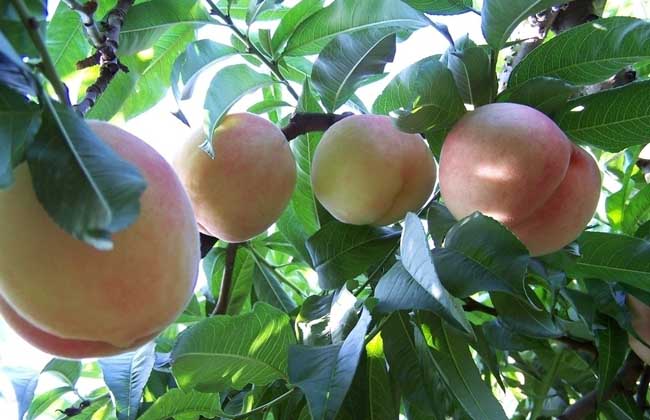
The peach tree is a small deciduous tree of the genus Prunus in the rose family (Rosaceae). Its flowers are ornamental, its fruit is juicy and can be eaten fresh or made into preserved peaches, canned peaches, and the like, and the kernel is also edible. There are many varieties: the nectarine has smooth skin, the flat peach (Pan Tao) bears flat disc-shaped fruit, and the ornamental peach (Bi Tao) is grown for its flowers. It is widely cultivated in the provinces and regions of our country. Let us take a look below at when peach trees are planted!
Planting time for peach trees
Peach tree planting can be divided into autumn planting and spring planting. Autumn planting is generally done after leaf fall in autumn (by which time it has actually entered winter), preferably for a period before the soil freezes; there is basically no seedling recovery period, which helps the buds sprout earlier in spring, and the tree grows more vigorously than one planted in spring. Spring planting is generally done after the ground thaws in spring and before the peach buds sprout; because after planting the root system still needs some time to start growing, which amounts to seedling recovery, early growth will be somewhat slower, but it avoids the low winter temperatures and will not suffer cold damage. In the cold regions of the north, autumn planting can sometimes cause winter dieback and other cold damage, leading to dead seedlings and the like, and trees are easily lost in some places, so spring planting can also be used.
Grafting time for peach trees
The best time to graft a peach tree is mid-March in spring, followed by early to mid-September in autumn. Too early and it easily produces gumming; too late and the temperature is too low for it to survive easily. Ordinary farmers generally prefer grafting in spring and summer. Spring grafting is usually from mid-February to the end of April, when the sap of the rootstock has already risen; the rootstock can be cut off 8-10 cm above the ground and a variety scion grafted on using the cut-grafting method, which can achieve a survival rate of over 95%. Summer grafting is from mid-May to early August, when sap flow is vigorous, the peach tree is sprouting and unfolding leaves, and the new buds are not yet plump, making it a good period for bud grafting.
Cultivation techniques for peach trees
1. Raising seedlings: For seedlings used as rootstock, pinch out the growing tip when the seedling is 25-30 cm tall to make the seedling thicker; by late summer and early autumn it can reach the thickness required of rootstock for grafting. Transplanting is best done in early spring or after leaf fall in autumn. Small seedlings can be transplanted bare-root or dipped in mud slurry; large seedlings need to be transplanted with a soil ball. Cultivating large seedlings requires shaping and pruning to form a framework. Peach trees are generally trained into a natural cup-shaped canopy and a natural open-center canopy.
2. Planting: The planting spacing between rows and plants is 4×5 m or 3×4 m, with 500-840 trees per hectare. Planting can be done anytime from after leaf fall to before bud break. A peach orchard must not be replanted continuously, otherwise the young trees will be noticeably weakened, leaves will lose their green color, new roots will turn brown and branch excessively, and the trunk and branches will exude gum. This replant problem is severe on sandy soil or low-fertility soil. The main cause is that the residual roots of the previous crop decompose in the soil and produce toxic substances such as benzaldehyde and hydrocyanic acid, which inhibit and poison the root system; it is also related to the multiplication and accumulation of nematodes in the soil under continuous cropping.
3. Fertilizing: The ratio of nitrogen, phosphorus, and potassium required by peaches is about 1:0.5:1. Young trees need to have nitrogen fertilizer application controlled, otherwise they easily grow excessively. After the full bearing period, increase nitrogen fertilizer to strengthen the tree vigor. The potassium content in peach fruit is 3.2 times that of nitrogen; increasing potassium fertilizer gives larger fruit and higher yield. Bearing trees are fertilized 3 times a year. The base fertilizer is applied in October-November together with deep soil tillage, mainly organic fertilizer, accounting for 50% of the annual fertilization amount. The fruit-swelling fertilizer is applied from late April to May during the pit-hardening stage of the fruit; for early-maturing varieties, potassium fertilizer is mainly applied, while for mid- and late-maturing varieties, nitrogen accounts for 15-20% of the annual amount, phosphorus 20-30%, and potassium 40%. The post-harvest fertilizer is applied before and after harvest, at 15-20% of the annual amount. In addition, the peach orchard needs frequent cultivating and weeding to keep the soil loose, and timely drainage to prevent waterlogging and root rot.
4. Training: Peach trees are mostly trained into a natural open-center shape, with the trunk set at a height of about 60 cm, leaving 3-4 main branches, with the main branches opened at an angle of 50-60°, and 1-2 sub-main branches reserved as appropriate on each main branch, with as few small branches as possible left on the main branches and sub-main branches. Pruning periods include winter pruning and summer pruning. Although young bearing trees (3-4 years after planting) have already fruited, they grow vigorously with many excessive shoots and dense branches, so summer pruning measures such as bud removal, pinching, and shoot twisting are needed to suppress the strong and support the weak and maintain tree balance. In peach trees in the full bearing period, because of many years of fruiting, the tree vigor has gradually moderated, excessive shoots and secondary shoots are markedly reduced, and the proportion of medium and short fruiting branches increases, so heading back should be the main method, and excessively dense branches and strong apical branches should be removed to improve the light conditions among the shoots, and weakened branches should be renewed promptly.