How to Grow Cat Poop Fruit? A Detailed Explanation of Key Cultivation Techniques
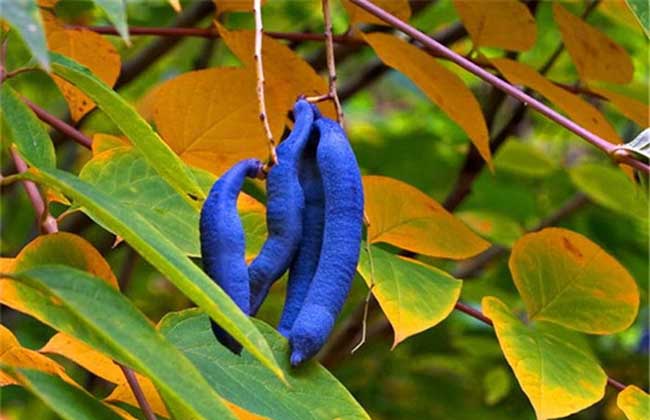
Cat poop fruit is a wild economic plant with great development value, also known as cat's poop, ghost finger, cat poop tube, etc. It is a deciduous shrub plant of the genus Cat Poop Fruit in the Lardizabalaceae family. Because its fruit turns blue-purple when ripe and is very juicy, with a shape much like cat poop, it is commonly called "cat poop fruit." It has relatively high cultivation value. Let us take a look at the cultivation techniques for cat poop fruit below!
The Growing Environment of Cat Poop Fruit
Cat poop fruit grows in valley-slope shrubland or damp shady places beside deep mountain gullies at an altitude of 900-2200 m. It is distributed in Shaanxi, Gansu, Anhui, Hubei, Hunan, Jiangxi and the southwestern provinces and regions. It is a shallow-rooted tree species with light-loving characteristics, so a place with sufficient sunlight must be chosen for cultivation. It requires deep, fertile soil with convenient drainage and irrigation to obtain high, stable yields and good quality. The soil pH should be selected from slightly acidic to slightly alkaline, and the topsoil should contain relatively high amounts of humus.
Sowing Techniques for Cat Poop Fruit
1. Seed treatment: Cat poop fruit seeds mature at the end of September, and in early to mid-October soft-ripe or already opened fruits are selected for seed collection. The harvested berries should be washed promptly and the flesh rubbed off. Use moist river sand and store at room temperature from October to November for 30 to 35 days, allowing the seeds to complete morphological after-ripening and stratification germination.
2. Seed sowing: The suitable planting time for cat poop fruit is from April to October. Choose a rainy day or a sunny afternoon when the sun is slanting, open furrows at a row spacing of 20-25 cm and sow in drills. The plant spacing can be determined according to the fertility of the soil, the level of management, and the difficulty of drainage and irrigation. After the seeds are sown into the furrows, cover with 2-3 cm of soil and press down.
Cultivation Techniques for Cat Poop Fruit
1. Site selection and land preparation: Choose mountain land or forest land for sowing and raising seedlings or hole sowing, which can make full use of the advantages of forest land, such as organic matter content, fertility, buffering capacity for temperature and moisture, and soil physical and chemical properties being better than farmland soil. For cultivation after clearing forest, this should be carried out 1 year before sowing so that organic matter fully decomposes and effective nutrients in the soil increase. This is very beneficial for improving soil physical and chemical properties, coordinating the ratio of solid, liquid and gas phases in the soil, eliminating sources of disease and pests, and promoting growth.
2. Trellising for climbing: Cat poop fruit is a twining climbing vine plant. Choose slow-growing oil tea, citrus or small tree species with obvious slow growth as climbing supports, and intercrop cat poop fruit after pruning the living climbing material at a row spacing of 3 m. Artificial climbing supports can use double rows of cement posts or double rows of wood, with 1 row of upright posts set every 4-6 m.
3. Seedling plot management: After cat poop fruit seedlings emerge, promptly remove the covering grass, and weed and thin the seedlings. After the first true leaf is fully expanded, set the seedlings at a plant spacing of 6 cm, and apply topdressing 1-2 times, applying urea or compound fertilizer at 300 kg/ha. Irrigate and drain promptly: water during drought and drain during waterlogging. The main disease and pest problem at the seedling stage is the red-bodied leafhopper damaging young stem tips, which should be controlled promptly; otherwise, it will cause the stem vine to shorten.
4. Timely pruning: Pruning cat poop fruit can extremely significantly increase the thickness and volume of the previous year's mother stems, and improve the yield and quality of the current year's akebia medicinal material. It should be carried out in combination with field management work such as guiding new shoots onto the first wire of the trellis, tying them to the second wire, and cutting off small stems that exceed the second wire and become tangled into clumps. In mid-May, select and retain 2-3 new shoots on each previous year's mother stem, and when the 4th to 8th young leaves appear, remove the stem tip of the new shoot; this is called 4/4 pruning or 2/8 pruning. In mid to late May, prune once at intervals of about 5 days.
5. Disease control: The main diseases of cat poop fruit include powdery mildew rust, shortening disease, fusarium wilt, rust and leaf spot. The main pests include red-bodied leafhopper, aphids, hairy caterpillars, inchworms, etc. Control should adopt a plan combining comprehensive agricultural measures with chemical control, do a good job in disinfecting seeds, seedlings and soil, pay attention to timely clearing ditches and draining waterlogging in rainy seasons, loosen soil and apply fertilizer, and promptly remove diseased plants when found. Disinfect diseased holes with quicklime to control the spread.