When is the best time to plant blueberry seedlings?
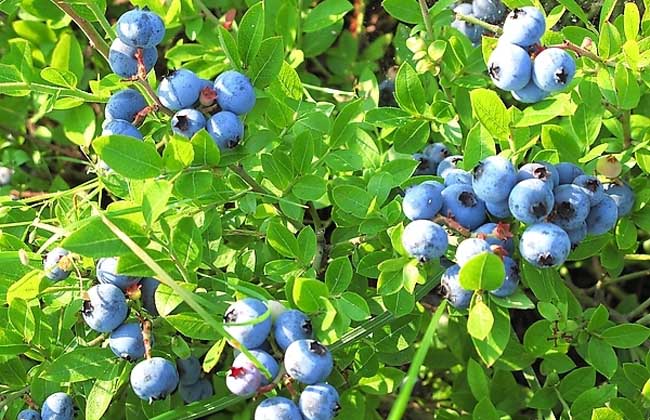
Blueberry is also known as lanmei, dusi, dushi, dushi and so on. It is a perennial shrub small berry fruit tree of the genus Vaccinium in the family Ericaceae. It is called blueberry because its fruit is blue. The fruit contains rich nutrients and has functions such as preventing brain nerve aging, protecting eyesight, strengthening the heart, resisting cancer, softening blood vessels, and enhancing human immunity. Let's take a look at the planting time for blueberry seedlings!
Blueberry seedling planting time
The best time to plant blueberries is from autumn to before bud break in the following spring, because seedlings during this period are easy to transport, manage, and transplant. In northern regions, planting is generally done in spring; autumn planting is prone to freezing damage if winter management is improper. Spring planting is usually in March to April, and generally 2- to 3-year-old small seedlings are used. Small seedlings are cheaper and also highly adaptable, making them very easy to establish.
Blueberry seedling planting environment
Blueberries are basically distributed worldwide, mainly in cool climates with ample sunlight, such as Korea, Japan, Mongolia, Russia, Europe, North America, and the Heilongjiang, Inner Mongolia, and Jilin Changbai Mountain regions of mainland China. They grow in areas from 900 m to 2,300 m in altitude, and are mostly seen in coniferous forests, peat bogs, mountain tundra, and pastures. They are also an important component of heath shrublands. Blueberries from North America are world-famous for their quality. Half-highbush blueberries are suitable for planting in cold temperate regions, northern highbush blueberries and some half-highbush blueberries are suitable for planting in warm temperate regions, and rabbiteye blueberries and southern highbush blueberries are suitable for planting in subtropical regions. In the Changbai Mountain and the Greater and Lesser Khingan Mountains areas of Northeast China, many wild blueberry plant resources such as wild Vaccinium uliginosum and Vaccinium vitis-idaea grow naturally.
Blueberry seedling planting varieties
1. Lowbush blueberry: Lowbush blueberry plants are short, 30-50 cm tall. They are cold-resistant and can be cultivated in areas with low temperatures of -40°C. They have simple cultivation and management requirements and are extremely suitable for large-scale commercial cultivation in the cold high mountain areas of Northeast China, with a yield of about 500 kg per mu.
① Meiden: A mid-season variety (ripening in mid-July in the Changbai Mountain area). The fruit is round and light blue, with abundant bloom, aroma, and good flavor. The tree is vigorous and high-yielding. In the Changbai Mountain area, 5-year-old plants average 0.83 kg per plant, with the highest reaching 1.59 kg. It has extremely strong cold resistance and can overwinter safely in the open field in the Changbai Mountain area, making it the first recommended variety for developing blueberries in cold high mountain areas.
② Fundy: Fundy is a Canadian variety, mid-season, with fruit slightly larger than Meiden, light blue, covered with bloom, high-yielding, and early-bearing.
2. Half-highbush blueberry: Half-highbush blueberry is obtained by crossing highbush and lowbush blueberries. The fruit is large and of good quality, the plant is relatively short, and the cold resistance is strong, generally resistant to -35°C low temperatures. It is suitable for cultivation in cold northern regions, with a tree height of 50-100 cm.
① Northland: An early- to mid-season variety with strong vigor and an upright type, about 1.2 m tall, making it a relatively tall variety among half-highbush blueberry types. The fruit is medium-sized, with abundant bloom, firm flesh, juicy, good fruit flavor, sweetness BX12.0%, and medium acidity. The fruit scar is medium-sized and dry. It is not selective about soil, extremely high-yielding, and cold-resistant.
② Northblue: A late-season variety with strong vigor and a tree height of about 60 cm. Dark green, glossy leaves are one of its major characteristics. The fruit is large, the skin is dark blue, the flavor is good, and it stores well. It is cold-resistant (-30°C). It is high-yielding, with a harvest of 1.3-3.0 kg per plant, and the harvest increases in warmer areas. It is susceptible to root rot under poor drainage conditions. Apart from promptly pruning dead branches, there is no need for special pruning.
③ Northcountry: An early- to mid-season variety, about one week earlier than Northblue or Northsky. The vigor is moderate, the tree height is 45-60 cm, and the crown width is about 100 cm. The vigor varies accordingly with soil conditions. The cold resistance is very strong, able to withstand -37°C low temperatures. The berries are medium-sized, good in flavor, and store well. The skin is bright blue, and the fruit is soft, sweet, and good in flavor. Fruit yield is high, with a harvest of 1.0-2.5 kg per plant. It is cold-resistant and can overwinter in the open field in cold high mountain areas.
3. Southern highbush blueberry: Southern highbush blueberry prefers humid and warm climatic conditions and is suitable for development in areas south of the Yellow River in China, such as Central China and South China.
① Sharpblue: A mid-season variety with moderate to strong vigor and an open type. The berries are medium to large, sweetness BX15.0%, acidity pH4.00, aromatic, and rich in juice, suitable for making fresh juice. The fruit scar is small and wet, and the chilling requirement is 150-300 hours. It has strong soil adaptability and is high-yielding, but not suitable for transport.
② O'Neal: An early-season variety with strong vigor and an open type. The fruit is large, sweetness BX13.5%, acidity pH4.53, and strongly aromatic, the most aromatic among southern highbush blueberry varieties. The flesh is firm, the fruit scar is small and quick-drying, and the chilling requirement is 400-500 hours. It is a heat-tolerant variety and high-yielding.
③ Misty: A mid-season variety with moderate vigor and an open type. The berries are medium to large, sweetness BX14.0%, acidity pH4.20, and aromatic. The fruit scar is small and dry, and the chilling requirement is 200-300 hours. It is the most high-yielding among southern highbush blueberry varieties and is a warm-zone evergreen variety.
4. Northern highbush blueberry: Northern highbush blueberry prefers cool climates and has relatively strong cold resistance. Some varieties can withstand -30°C low temperatures and are suitable for development in humid coastal areas and cold regions of northern China.
① Coville: A representative late-season variety with strong soil adaptability, strong vigor, and a large plant. Young trees are upright, and after fruiting the branches droop and gradually open up. The fruit is large, sweetness BX10.5%, strongly acidic, the skin is bright blue, with abundant bloom, and the fruit scar size and moisture are both medium. The fruit stores easily, has little cracking, and has a long ripening period.