Detailed Explanation of Key Techniques and Methods for Growing Chinese Lantern
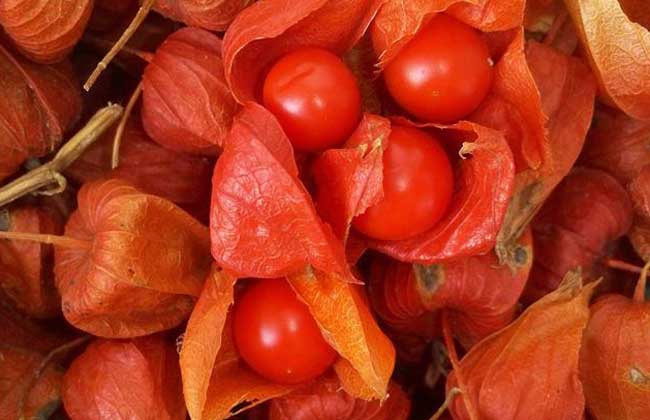
The Chinese lantern is native to China, with wild resources distributed in both northern and southern parts of the country. It has a long history of cultivation, and is now grown relatively extensively in the Northeast region, while being grown less in other areas, still remaining a rare specialty vegetable. When the cultivated Chinese lantern is immature, both the fruit and the husk enclosing the fruit are mostly green, turning yellow when mature. Let us take a look at Chinese lantern growing techniques below!
Growing Conditions for Chinese Lantern
The Chinese lantern is a perennial upright herbaceous plant of the genus Physalis in the Solanaceae family. It is mainly produced in Gansu, Shaanxi, Henan, Hubei, Sichuan, Guizhou and Yunnan, and is often grown as an annual. It is highly adaptable, cold-tolerant and heat-tolerant, prefers a cool, humid climate and sunshine, and is not choosy about soil. In particular, the Chinese lantern native to Asia can grow normally within a temperature range of 3-42°C.
Propagation Methods for Chinese Lantern
Vegetative propagation using rhizomes is a common method in artificial cultivation of the Chinese lantern. Rhizome propagation has the advantages of fast reproduction, being easy to master, easy seedling survival and robust plants. The rhizomes of the Chinese lantern bear many adventitious buds. In the north, around Qingming, dig up the rhizomes of wild Physalis, select disease-free and pest-free rhizomes as "planting stock", choosing thick ones as better, cut them into small sections of about 10 cm, each section retaining 2-3 adventitious buds, and sow the cut rhizome sections in furrows in rows, with a row spacing of about 50 cm and a plant spacing of 10-13 cm. Water them, and after the water seeps down, cover with 3-5 cm of soil to prevent wind penetration and drying out, and rake the soil smooth along the furrows. After firming, water again, and use an iron rake to level the furrows into flat beds. At a temperature of about 18°C, seedlings emerge in 14-15 days, and can grow continuously for 4-5 years.
Seedling Raising Techniques for Chinese Lantern
1. Seedling raising time: The marketing period of spring early-maturing cultivation of the Chinese lantern coincides with early summer. Since production costs are not high and economic benefits are significant, raise seedlings in a solar greenhouse or a windbreak sun-facing bed in January-February, transplant to open ground after the late frost in mid-April, and begin harvesting from late May to June.
2. Seedling site selection: The Chinese lantern is generally raised in seedling beds built in a windbreak sun-facing bed or a solar greenhouse. In the early stage of seedling raising, the outside temperature is relatively low. To raise the soil temperature, the plastic film should be tightly closed 15-20 days before building the bed and sowing, and straw mats should be added at night. Apply 30,000 kg of decomposed organic fertilizer per hectare to the seedbed, shallowly turn and rake level, and make a flat bed. Water before sowing, and sow after the water seeps down.
3. Seed sowing: Chinese lantern seeds can be soaked in warm water at 45°C, or soaked in a 0.01% potassium permanganate solution for 10 minutes to prevent the seeds from carrying viruses and other pathogens. Then soak the seeds in clean water for 12 hours, remove them, and place them under a temperature condition of 20-30°C to promote germination. Sow after 80% of the seeds have sprouted white.
4. Management after sowing: After broadcasting the Chinese lantern seeds, cover with 0.5-1 cm of soil, immediately close the plastic film tightly, and add straw mats at night to raise the seedbed temperature. Maintain 20-25°C during the day and 10-15°C at night. In the coldest season, the seedbed temperature should not be lower than 5°C.
5. Seedling stage management: After the Chinese lantern seedlings emerge, thin them out, removing overly dense, conjoined and damaged weak seedlings. At the 2-3 leaf stage, transplant the seedlings, with a plant and row spacing of 10 cm × 10 cm. During the seedling stage, keep the soil alternately dry and moist. In the young seedling stage, the outside temperature is low and evaporation is small, so watering may not be needed. At the seedling transplanting stage, the outside temperature gradually rises, so water once every 7-10 days. If the seedbed lacks fertilizer, apply a topdressing of compound fertilizer once, at 100-150 kg per hectare.
Chinese Lantern Growing Techniques
1. Land selection and preparation: The Chinese lantern has strong vitality and does not have strict requirements for soil conditions, having the characteristics of wide adaptability and strong stress resistance. Loam or sandy loam with fertile soil and good drainage is best. Prepare the land in early spring as soon as the ground thaws, firm the soil to preserve moisture, and apply farmyard manure in the furrows. Avoid sandy, thin and low-lying land.
2. Timely planting: Apply 45,000-75,000 kg of decomposed organic fertilizer per hectare to the Chinese lantern planting site, deeply plow and rake level, and make a flat bed. Planting should be carried out after the late frost. The suitable planting period is when the seedlings are at the 6-7 leaf stage and the first flower has just opened. When planting, lift the seedlings carefully to minimize root damage, so as to help them recover. The planting density is about 75,000 plants per hectare, with a plant and row spacing of 25-28 cm × 65-70 cm.
3. Reasonable topdressing: After the Chinese lantern is planted and has recovered, apply a seedling-promoting fertilizer together with watering, applying 7,500 kg of decomposed human manure or 160 kg of urea per hectare in holes or furrows. After the first fruit swells, apply a second round of fertilizer, applying 225-300 kg of compound fertilizer per hectare to promote fruit development and plant growth. In the middle and late stages of harvesting, topdress according to plant growth conditions; if the base fertilizer is insufficient, apply 300 kg of compound fertilizer.
4. Cultivation and watering: In the early stage after planting the Chinese lantern, cultivate once after each watering to loosen the soil, raise the soil temperature and promote root development. At the early flowering and early fruiting stage, cultivate and earth up together with topdressing, turning the cultivation rows into ridges to prevent the plants from lodging and to facilitate irrigation and drainage. Weed promptly in the middle and late stages of growth. Water thoroughly when planting the Chinese lantern, water once after the seedling-promoting fertilizer following recovery, that is, cultivate and restrain the seedlings. After the seedling restraint ends, water appropriately to keep the soil moist, once every 5-7 days, and once every 3-5 days in summer.
5. Plant adjustment: The Chinese lantern has many branches and a strong creeping habit, so trellising is necessary. Generally, bamboo poles are inserted into the soil to build a human-shaped trellis or a fence trellis. Tie the vines manually once for every 30 cm the plant grows. During the growing period, in order to inhibit vegetative growth, promote reproductive growth, avoid excessive branches and leaves affecting ventilation and light penetration, and avoid delayed fruiting, promptly carry out pruning and removal of side shoots.