Detailed Explanation of Key Points of Peach Tree Greenhouse Cultivation Techniques
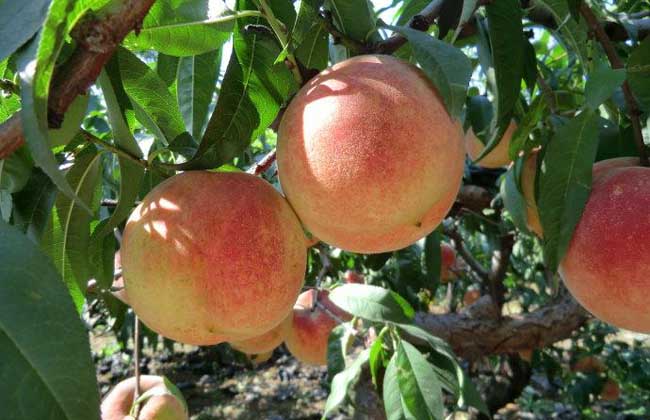
The peach tree is a deciduous small tree of the genus Prunus in the rose family. Its flowers can be ornamental, its fruit is juicy and can be eaten fresh or made into peach preserves, canned goods, etc., and the kernel can also be eaten. There are many varieties; generally the skin is fuzzy, nectarine skin is smooth, flat peach fruit is flat and disc-shaped, and ornamental peach is a peach tree grown for its flowers. It originated in China and is widely cultivated in all provinces and regions. Let us take a look at greenhouse peach tree cultivation techniques below!
Cultivation Conditions for Greenhouse Peach Trees
Peach trees prefer land with abundant light, loose soil and a low groundwater table. When cultivating, it is best to choose high, dry sandy soil or gravelly soil; clay soil with a relatively low groundwater table, high organic matter content and good drainage can also be used for cultivation. Peach trees grow quickly and can flower and bear fruit in the second year after planting. Shoot growth is vigorous, and 3 new shoots can be produced in one year; secondary shoots can also form flower buds, flower and bear fruit. They enter full fruiting stage in 4 to 5 years. Because fruiting begins early, the full fruiting stage can last 10 to 15 years, and the tree's lifespan is relatively short, mostly 20 to 25 years.
Cultivation Varieties of Greenhouse Peach Trees
1. Jinhua Large White Peach: Jinhua Large White Peach matures early, ripening in early June. The fruit is nearly round with a flat apex, and a single fruit weighs 150 to 350 grams. The skin is white with a red blush on the sunny side, and the flesh is milky white, crisp and fine-textured; the fruit is soft and juicy, sweet and fragrant, with excellent quality. It does not crack and has no pollen, so a pollinizer variety must be planted.
2. Daguan No. 1: Daguan No. 1 matures from early to mid-June, with an average single fruit weight of 110 grams and a maximum of 350 grams. The fruit surface has a red blush, the appearance is attractive, and it is extremely productive.
3. Ultra-Early Red Nectarine: Ultra-Early Red Nectarine matures in early May. The fruit is nearly round, with an average single fruit weight of 60 to 80 grams. The fruit surface is smooth and bright red, and the flesh is golden yellow, with a pleasant sweet-and-sour taste. It does not crack and is semi-clingstone. This variety has moderate vigor, good flower bud differentiation, a high fruit-setting rate, and high and stable yields, but it requires flower and fruit thinning.
4. Extremely Early Red Nectarine: Extremely Early Red Nectarine matures in mid-to-late May. The fruit is nearly round, with an average single fruit weight of 100 to 120 grams and large fruit reaching 150 grams. The fruit surface is smooth and bright red, and the flesh is golden yellow, delicious and juicy, purely sweet with little acidity, and very rarely cracks. The tree has vigorous growth, good flower bud differentiation, a high fruit-setting rate, and strong disease resistance. During cultivation, shoots should be controlled in time to prevent excessive vigor, and fertilizer and water should be appropriately controlled.
5. Flat Peach No. 2: Flat Peach No. 2 usually matures in late May. The fruit shape is flat, with an average single fruit weight of 95 to 430 grams and large fruit at 250 grams. The skin is bright red on the sunny side, and the flesh is white, soft and juicy, sweet and fragrant, with a small stone and a high edible rate.
Propagation Techniques for Greenhouse Peach Trees
1. Cuttings: Use hardwood cuttings in spring and softwood cuttings during the plum rain season. Cutting branches must be vigorous and plump in growth. Spring is the main time for cuttings. Cut the cuttings diagonally at about 20 cm. To prevent disease infection and promote rooting, the lower end of the cuttings is best dipped quickly in a fungicide, 50% carbendazim at 600 to 1200 times dilution, and in indolebutyric acid at 750 to 4500 mg/L before cutting. The plant and row spacing is 4×30 cm, and the cutting depth should preferably be 2/3 of the cutting length.
2. Grafting: Rootstocks for propagation are mostly wild peach or peach seedlings (own-root stock). Both branch grafting and bud grafting have relatively high survival rates. Branch grafting is carried out in March when the buds have begun to sprout, commonly using cut grafting, and one- or two-year-old seedlings are best for rootstock. Bud grafting is carried out in July to August, mostly using the “T”-shaped graft. One-year-old plump seedlings are best for rootstock.
3. Sowing: The flowering period of peach is March to April, and the fruit ripening period is June to August. Harvest ripe fruit, pile and mash it, remove the flesh, dry it, and collect clean seedling seeds for autumn sowing. Before sowing, soak the seeds for 5 to 7 days. Autumn-sown seeds germinate early the next year, with a high emergence rate, rapid growth and strong vigor. For sowing the next spring, the seedling seeds need to be stored in moist sand for more than 120 days. Use drill sowing, with a row width of 10 cm and a depth of 1 to 2 cm, and cover with 6 cm of soil after sowing. Sow 25 to 30 kg of seed per mu. When the seedlings are 3 cm tall, thin and set the seedlings, with a plant spacing of 20 to 25 cm.
Greenhouse Peach Tree Cultivation Techniques
1. Removal of Shoots and Pruning: During the budbreak period of greenhouse peach trees, remove unreasonable buds in time. After flowering, promptly thin out overly dense branches, water sprouts, upright branches, shade-casting branches and crossing branches as needed. From 4 to 6 weeks before harvest, cut back excessively vigorous fruiting trees, leaving only one new shoot in front of the fruit spur shoot, and part of the new shoots can be appropriately short-tipped. Adjust the tree structure until there is an even dappled shadow under the tree at noon.
2. Reasonable Crown Control: Keep one vigorously growing new shoot in an appropriate direction on each scaffold branch. When the secondary shoot on the fruit spur growing upward reaches 10 large leaves, repeatedly pinch the growing tip and remove side buds to make it form a blind branch. For other vigorously growing new shoots, dip the tips with 15% PP333 at 50 times dilution. Taking these measures effectively controls excessive vigor, increases yield per tree, and reduces physiological fruit drop and preharvest fruit drop.
3. Leaf Removal and Branch Tying: For peach trees, 20 days before harvest, remove leaves that affect the fruit's exposure to light, and tie drooping branches up to the light-receiving side to promote fruit coloration. From 4 to 6 weeks before harvest, use rope to tie up or pull drooping fruiting branches to the top of the canopy, which can greatly improve the light conditions of the tree and increase fruit coloration.
4. Fruit Promotion and Fertilizer Supplementation: Spray LXL fruit-setting agent once each at the flowering stage and 2 weeks after flowering, or a fruit-shaping agent containing 1.8% GA4+7 and 1.8% 6-benzyladenine, to increase the fruit-setting rate and promote fruit enlargement. About 10 days after peach flowering, spray 2 to 3 times a mixture of 0.5% urea and 0.2% potassium dihydrogen phosphate. Spraying should preferably be done on a windless evening or on a cloudy day, once every 2 weeks.