Detailed Explanation of Key Points for Apple Tree Valsa Canker Control Technology
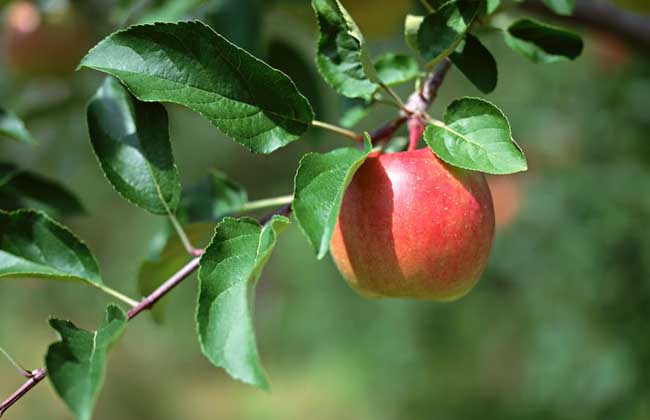
Apple tree Valsa canker is one of the more serious diseases in apple-producing areas of China, commonly known as stinky bark disease, rotting bark disease, and running bark disease. In the northern apple-producing areas of China, Valsa canker is very severe, with trees covered in disease scars and branches and trunks incomplete, often causing tree death and orchard destruction. In recent years, there has been a worsening trend. Let's take a look at apple tree Valsa canker control technology together!
Symptoms of Apple Tree Valsa Canker Damage
When branches and trunks of diseased trees are affected, the lesions have two types: ulcerative and branch-blight. In the ulcerative type, the diseased area is reddish-brown, water-soaked, slightly raised, and the diseased tissue is soft and rotting, often exuding yellowish-brown sap with a distillers' grain smell. Later it shrinks and sinks, and the diseased area has distinct small black dots (pycnidia). When moist, orange-yellow tendril-like substances emerge from the small black dots. The branch-blight type mostly occurs on small branches, fruit spurs, and dry stubs. The diseased area is not water-soaked, rapidly loses water and dries up, causing the entire branch to die, with small black dots forming on it. When fruit is affected, the lesions are dark reddish-brown, round or irregular, with concentric rings, soft-rotten, slightly smelling of distillers' grains, and the center of the lesion often has distinct small black dots.
Transmission Routes of Apple Tree Valsa Canker
Apple tree Valsa canker mainly overwinters as mycelium, pycnidia, and perithecia in diseased tree tissues and residues, and the pathogen can survive in diseased areas for about 4 years. The following year, conidia are released from the pycnidia and spread by rain splash, invading through wounds. The pathogen has latent infection characteristics, and when the tree or its local tissues weaken, it will expand and spread. Generally, infection occurs from March to May, disease onset begins in July to August, with early spring being the peak period of onset. After late spring, disease resistance increases and incidence drops sharply. The occurrence of apple tree Valsa canker is closely related to tree vigor, number of wounds, and healing ability. Extensive management and periodic freeze damage are the main epidemic factors.
Conditions for Apple Tree Valsa Canker Onset
The optimal temperature for germination of conidia and ascospores of the Valsa canker pathogen is 25-30°C, and they can also germinate at 5°C after a relatively long period. Extensive cultivation management and freeze damage are the main triggers for Valsa canker epidemics. Orchards with low soil organic matter, soil compaction or poor water and fertilizer retention, poor root growth, insufficient compound fertilizer, excessive application of nitrogen fertilizer, excessive fruiting, severe alternate bearing, and early defoliation that cause weakened tree vigor all have more severe disease, while the opposite conditions have less. Orchards in low-lying areas with prolonged waterlogging in the later period, as well as orchards that are prone to freeze damage due to excessive vegetative growth and delayed dormancy, also have severe disease. Periodic freeze damage in the north, causing large-scale bark freezing injury to trees, is an important reason for the widespread epidemic of Valsa canker.
Apple Tree Valsa Canker Control Technology
1. Strengthen cultivation management: Strong trees resist disease. Reasonable pruning, adjusting tree vigor, regulating tree load, overcoming alternate bearing, increasing application of organic fertilizer, reasonably combining nitrogen, phosphorus, potassium fertilizers and medium and trace elements, doing well in cold protection for fruit trees, reducing freeze wounds. For fruiting trees, apply whitewash. Commonly used whitewash formula: lime:salt:water:animal oil (10:1:30-35:0.2). Generally applied after leaf fall, with trunk coating height of 2 m.
2. Timely clean the orchard: Timely cleaning of the orchard can reduce pathogens. When disease spots are found, scrape them off promptly. During pruning, pay attention to removing diseased branches, residual stubs, and diseased fruit spurs. Pruned diseased branches and dead diseased trees should be promptly removed and burned. Pruning and saw cuts and other wounds should be sealed with chemicals or paint to reduce pathogen infection routes.
3. Use chemical prevention: Spray fungicides before tree bud break in early spring. Chemicals include 500x dilution of Gerun or Shenaning aqueous solution, 3-5 degree lime sulfur mixture, 500x dilution of 5% Jun du qing aqueous solution, etc. From June to July, the above chemicals can be used to brush large branches and trunks. Continuous control over several years has obvious effects.
4. Use treatment for disease scars
① Scraping method: Cut a protective ring 0.5 cm beyond the edge of the disease scar, reaching the xylem. Then thoroughly scrape off the diseased bark and healthy bark within the ring, and collect the diseased tissue scraped onto a plastic sheet for centralized burning. For the exposed xylem, cut deeply 1-1.5 cm with a knife and then apply chemical treatment. Use 5x dilution of Gerun, 5x dilution of 5% Jun du qing aqueous solution, etc. for smearing. Apply again 20 days after treatment.
② Mud dressing method: Mix water and soil into a mud cake, apply it to the disease scar and a 5-8 cm surrounding area, 3-4 cm thick, then tie tightly with plastic sheeting or kraft paper. This method is suitable in spring. Remove the wrapping in the following spring, clear the diseased residual tissue, then apply chemicals for disinfection and protection.
③ Foot grafting method: Using foot grafting (or bridge grafting) can improve the tree's ability to transport nutrients and water, help restore tree vigor, and extend the fruiting years. This method is widely used in old fruit-growing areas and can be actively promoted in new fruit-growing areas.