What are the cultivation methods for potted kumquat?
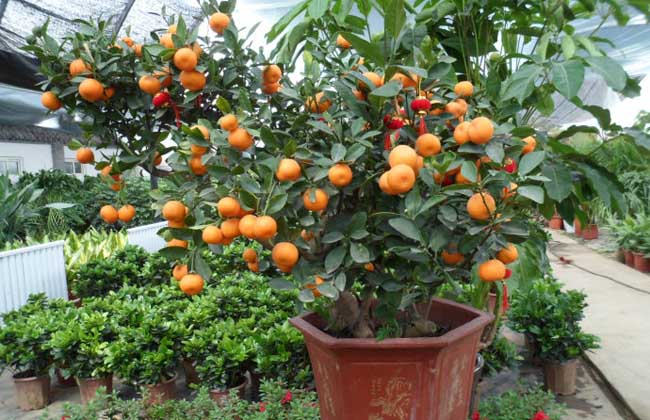
Kumquat, also known as golden jujube, golden citrus, small orange and so on, is an evergreen shrub of the genus Fortunella in the family Rutaceae. Potted kumquat has lush branches and leaves and stays evergreen all year round. When it blooms, it fills the air with a delicate fragrance, and its white flowers are very soft and beautiful. When the fruit ripens, it turns yellow-red. Whether for foliage, flowers or fruit, it has a certain ornamental value and is also very common in homes. Now let us take a look at the cultivation methods for potted kumquat.
Grafting propagation
Potted kumquat is usually propagated by grafting, with trifoliate orange, sour orange or sown seedlings used as rootstock. Grafting methods include scion grafting, bud grafting and approach grafting. For scion grafting, use the cut-grafting method in spring from March to April; for bud grafting, carry it out from June to September; for potted plants, the approach grafting method is commonly used, carried out from April to July.
Soil preparation
Kumquat likes fertilizer, and cultivation requires well-drained, fertile, loose, slightly acidic sandy loam. For potting, it is best to use a culture soil mixed with 4 parts leaf mold, 5 parts sandy soil and 1 part cake fertilizer. When repotting, apply hoof pieces or decomposed cake fertilizer at the bottom of the pot as a base fertilizer.
Watering management
Kumquat likes moisture but fears waterlogging. If the potting soil is too wet, the roots are prone to rot, so during the growing period it is best to keep the potting soil moderately moist. In spring, when it is dry and windy, spray water on the leaves once a day to increase air humidity. In summer, spray water 2 to 3 times a day and also spray water on the ground. However, avoid spraying water during the flowering period to prevent flower rot and affect fruiting. In the rainy season, promptly pour out accumulated water in the pot to avoid root rot. When placed outdoors in summer, it is best to prop up the flowerpot with bricks to facilitate drainage. From the white flowering stage to the young fruit stage, kumquat is quite sensitive to water requirements. At this time, if the potting soil is too dry, the pedicels and fruit stalks are prone to abscission layer formation and drop; if watered excessively and the potting soil has poor drainage, it is also easy to cause flower and fruit drop. At this time, it is best to keep the potting soil in a semi-moist state that is neither dry nor wet.
Light management
Kumquat likes a warm and humid climate with plenty of sunlight, and during maintenance it should be placed in a place with ample sunlight. If there is insufficient light and the environment is shady, it often causes excessive growth of branches and leaves and fewer flowers and fruits. Since kumquat likes a cool climate in summer, or when the summer sunlight is intense, it is better to place it in slightly shaded areas at this time. In winter, the room temperature should be above freezing. If the room temperature is too high, the plant cannot get sufficient dormancy, then the next year's growth will be weak and it is prone to dropping flowers and buds.
Temperature management
Kumquat likes warm and refreshing growing temperatures. When the temperature falls below 10°C in late autumn, it should be moved indoors promptly. In winter, the room temperature is best kept between 6 and 12°C. If the temperature is too low, it is prone to freezing damage; if too high, it will affect the plant's dormancy and is not conducive to flowering and fruiting the following year.
Reasonable fertilization
Potted kumquat requires proper water and fertilizer management. From the beginning of new bud sprouting until before flowering, apply a diluted decomposed sauce residue water once every 7 to 10 days, and alternately water with alum fertilizer water several times. After summer begins, it is better to apply more phosphorus fertilizer to promote bud formation and fruiting. In the early fruiting stage, fertilization should be paused. When the young fruit grows to about 1 cm in size, continue applying liquid fertilizer once a week until the end of September.
Reasonable pruning
Pruning is an important technical measure to make kumquat bloom abundantly and bear abundant fruit. To make the tree shape beautiful and bear more fruit, before the sap begins to flow each year and before spring buds sprout, carry out one heavy pruning, cutting off dead branches, diseased and pest-infested branches, overly dense branches and excessively vigorous branches, keeping 3 to 4 robust, evenly distributed branches from the previous year. For each branch, keep only 2 to 3 buds at the base and cut off the rest, so that more than 10 full spring shoots can sprout. When the new shoots grow to 15 to 20 cm, pinch off the tips to make the plant shape fuller. At this time, apply a quick-acting phosphorus fertilizer once to promote flower bud differentiation. When flowering, thin the flowers appropriately to save nutrients. After young fruits are set, when the young fruits grow to about 1 cm in size, fruit thinning can be carried out. Keep 2 to 3 fruits per plant on thick branches, and keep one fruit per branch on weak branches, and make the fruits on the whole plant uniform. Promptly cut off autumn shoots so as not to let it bear a second crop, so as to help ensure consistent fruit shape, size and maturity and improve the ornamental value.