Is the ugly mandarin a genetically modified fruit? Read on and you will understand.
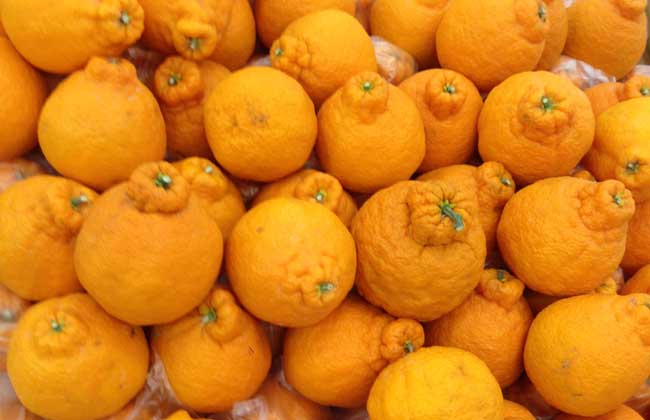
The Chinese scientific name of the ugly mandarin is Dekopon, also known as ugly mandarin, convex-top mandarin, ugly monster, and so on. It belongs to the Rutaceae family, Citrus genus. It was first introduced into Sichuan Province in 2000 for cultivation in China. The fruit has extremely high nutritional value and is rich in nutrients and trace elements needed by the human body. Now let us take a look together at whether the ugly mandarin is genetically modified!
Is the ugly mandarin genetically modified?
The ugly mandarin is not genetically modified. It was bred by crossbreeding Kiyomi and Nakano No. 3 ponkan in 1972 at the Kuchinotsu Experiment Station of the Kurume Branch of the Horticultural Experiment Station of the Japanese Ministry of Agriculture and Forestry. Because of its excellent flavor and exceptional quality, it has become the highest-priced citrus variety sold in Japan in recent years. The fruit is obovate, often with a protruding short neck, and the peel is yellow-orange, yellow-orange, slightly rough on the surface, easy to peel, extremely sweet, and excellent in flavor.
The nutritional value of the ugly mandarin
The nutritional value of the ugly mandarin is much higher than that of similar fruits. The flesh is rich in vitamin C and trace elements needed by the human body. The nutrient content per 100 grams of ugly mandarin is 36.89 kcal of calories, 9.02 grams of carbohydrates, 0.82 grams of protein, and 1.64 grams of fiber. Moreover, the vitamin C content of the ugly mandarin is far greater than that of other similar fruits. The vitamin C content per 100 grams of ugly mandarin is 50 mg/100 g, the vitamin C content of ordinary ugly mandarin is about 28 mg/100 g, the vitamin C content of oranges is about 33 mg/100 g, and the vitamin C content of lemons is 22 mg/100 g.
The effects and functions of the ugly mandarin
1. The ugly mandarin is rich in vitamin C and citric acid. The former has a beauty effect, while the latter has the effect of relieving fatigue.
2. The thin inner peel of the ugly mandarin contains dietary fiber and pectin, which can promote bowel movements and can also lower cholesterol.
3. Hesperidin can strengthen the toughness of capillaries, lower blood pressure, and dilate the coronary arteries of the heart. Therefore, the ugly mandarin is a food for preventing coronary heart disease and arteriosclerosis. Studies have confirmed that eating citrus can reduce cholesterol deposited in arterial blood vessels and help reverse atherosclerosis.
4. In fresh citrus juice there is a substance with very strong anticancer activity, “nomilin”, which can decompose carcinogenic chemicals, inhibit and block the growth of cancer cells, multiply the activity of detoxifying enzymes in the human body, prevent carcinogens from damaging the cell nucleus, and protect the integrity of genes.