Detailed Explanation of Key Techniques for High-Yield Cultivation of Orah Mandarin
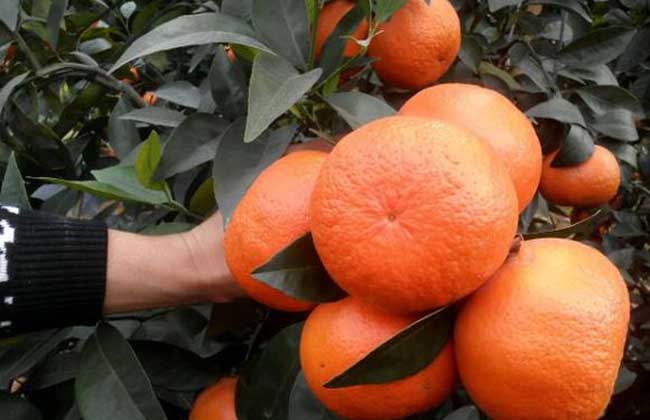
Orah mandarin originated in Israel and has since been introduced for cultivation in the United States, South Korea, Chongqing and Guangxi in China, and other places. It features an attractive appearance, late ripening and high sugar content, early fruiting with high yield and excellent quality, strong and vigorous tree growth, cold and drought tolerance, resistance to huanglongbing (citrus greening) and fruit cracking and sunburn, minimal fruit drop in the later stage, good storage and transport tolerance, and harvest during the off-season for fruit. Let us now take a look at the high-yield cultivation techniques for Orah mandarin!
Yield Performance of Orah Mandarin
Orah mandarin mainly uses early autumn shoots as fruit-bearing mother branches, and the fruiting branches are mostly leafy flower branches; generally, the fruit-setting rate is higher in the middle and lower parts of the canopy. For grafted seedlings of “Orah” on trifoliate orange rootstock, flowering begins on a trial basis 3 years after planting, with per-plant yield reaching 5-1 kg in the 4th year and 19.7 kg in the 5th year. For “Orah” top-grafted onto the interstock of Nichinan No. 1, a small amount of trial flowering can occur in the 2nd year, with per-plant yield between 3.4-10.4 kg, and by the 3rd year per-plant yield can reach 17.2 kg, with a per-mu yield of about 1400 kg.
Preparation of Orah Mandarin Seedlings
When cultivating Orah mandarin, it is essential to ensure that the seedlings have a good plant shape and a complete root system, and in particular that they do not carry pathogens of quarantine diseases such as citrus huanglongbing, canker, and tristeza. For dry sloping land or alkaline soil, Ziyang fragrant orange, sour orange, or red tangerine are mainly used as rootstocks; for paddy fields, large-leaf trifoliate orange is used as the rootstock (using trifoliate orange or citrange as rootstock tends to cause nutrient deficiency yellowing symptoms).
Soil Cultivation in the Orchard
Choose loose, fertile land with good drainage and irrigation, sheltered from the wind and facing the sun, or paddy fields to establish the orchard. For sites with a relatively small slope, a high-horsepower tractor with a single plow can be used for deep plowing and subsoiling of the entire orchard. Plow when soil moisture is not high, with the direction following contour lines or perpendicular to roads. One plowing pass can reach a depth of 60-70 cm, then harrow once or twice until level. Then, according to the drainage conditions of the sloping land, flat land, or paddy field, use an excavator to dig drainage ditches. Alternatively, a large excavator can be used to deeply loosen the entire orchard to a depth of more than 60 cm in one pass, followed by leveling with a harrow. Or dig planting holes 1 m long, 1 m wide, and 0.6 m deep, place 50 kg of well-decomposed organic fertilizer and 1 kg of superphosphate, mix thoroughly with soil, and backfill the hole, with the backfilled soil mounded above ground level.
Planting Techniques for Orah Mandarin
1. Planting density: For Orah mandarin, plant spacing is 2-3 m and row spacing is 3-4 m, with 56-110 plants per mu, which can be chosen according to planting preferences and management level.
2. Planting time: In southern regions, the planting time for Orah mandarin is preferably from February to early May, when temperatures rise and there is more rainfall or cloudy weather; planting can also be done from September to November during rain or cloudy days. Container-grown seedlings can be planted year-round.
3. Planting method: For bare-root Orah mandarin seedlings, the entire seedling can be soaked in a 0.1% potassium permanganate solution for about 2 minutes, removed and air-dried for about 3 minutes, then rinsed once with clean water, which can kill pathogens present on the plant surface. Then soak the root system of the Orah mandarin seedling in a solution of fungicide, insecticide, and nutrient solution for about 8 hours. After removing the seedling, coat it with yellow mud slurry made from this solution and it is ready for planting.
Management of Young Orah Mandarin Trees
1. Fertilizer and water management: Orah mandarin has extremely strong growth vigor and requires abundant water and fertilizer. A water-fertilizer integrated drip irrigation system should be installed as much as possible. The system mainly includes a fertilizer dissolution tank, water tank, filter, water pump, main pipe, branch pipes, valves, drip tapes, and drippers. For young trees, the goal is to rapidly build the canopy, so apply fertilizer frequently and lightly, with a reasonable ratio of nitrogen, phosphorus, and potassium. Apply organic fertilizer as base fertilizer only once a year, with about 15 kg of organic fertilizer and about 2 kg of compound fertilizer per plant per year.
2. Training and pruning: Orah mandarin has extremely strong shoot-sprouting ability. Under good water and fertilizer conditions in Nanning, Guangxi, young trees can sprout new shoots 6-7 times a year. If not controlled, they often grow in clusters, with short and weak branches. After planting the seedling, set the main trunk height at about 20-30 cm, then prune according to the guiding principle of the “one fork, three branches” method, that is, leave about three evenly spaced and sturdy branches at each fork, remove the excess, and when the branches mature, cut back the overly long ones, keeping each branch 20-25 cm long. This method has a clear guiding concept for shaping, is easy to operate, and can also make the entire tree shape reasonable, with branches that are relatively sturdy and mature as quickly as possible, sprouting new buds, which is conducive to simplified management of Orah mandarin trees.
Management of Mature Orah Mandarin Trees
1. Fertilizer and water management: This can be summarized in three sentences: “Nitrogen in spring, potassium in summer, compound fertilizer in autumn; during the fruit expansion period, irrigate with bran water; after harvest, apply heavy fertilizer to promote recovery.” Apply well-fermented organic fertilizer once a year at 50 kg per plant, along with peanut bran, superphosphate, etc. During the fruit expansion period from September to December, attention should be paid to strengthening water and fertilizer irrigation during drought, applying fertilizer frequently and lightly. During the fruit maturation period from January to March, attention should be paid to controlling water to increase sugar accumulation.