Where do water chestnuts come from? An overview of the main domestic production areas
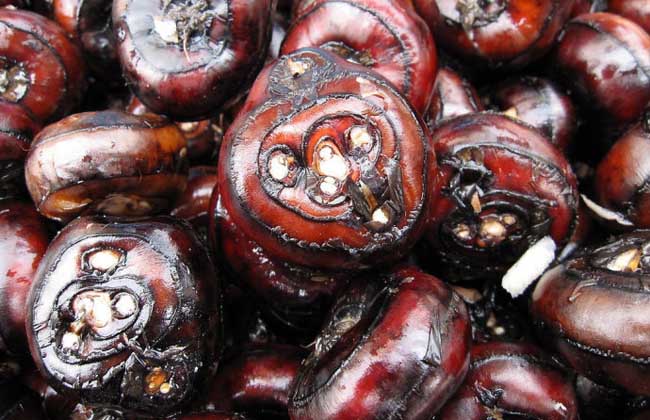
The water chestnut is also known as the horseshoe, water chestnut, and wild rice stem, among other names. It is a perennial herbaceous plant with persistent roots of the genus Eleocharis in the Cyperaceae family. Its color is purple-black, its flesh is pure white, it is sweet and juicy, crisp and tasty, and it has the reputation of being the "underground snow pear." Northerners call it "Jiangnan ginseng." It can be eaten raw as a fruit and also eaten as a vegetable. Now let us take a look at where water chestnuts come from!
Where do water chestnuts come from?
The water chestnut originated in India. There are about 150 species worldwide, widely distributed across the globe, with most found in tropical and subtropical regions. China has records of cultivation as early as the Western Han Dynasty. At present there are more than 20 species and some varieties, mainly distributed in low-lying areas of Guangxi, Jiangsu, Anhui, Zhejiang, Fujian, Guangdong, Hunan, Hubei, Jiangxi, Guizhou and other places, with some distribution also in parts of Hebei. Baihu Town, Lujiang County, Anhui Province, abounds with high-quality water chestnuts and is China's largest "hometown of water chestnuts." Qingshan Town, Lipu County, Guilin City, Guangxi, is a state-recognized "hometown of horseshoes." Lechang water chestnuts in the Shaoguan area of Guangdong are famous for their large size, thin skin, tender flesh, abundant moisture, clear sweetness without fiber, and crisp, refreshing taste. In addition, Maoli Town, Shayang County, Jingmen City, Hubei Province, is also a water chestnut producing area, and its products have long been exported overseas and are widely renowned.
The growing environment of water chestnuts
Water chestnuts prefer to grow in ponds or are cultivated in paddy fields, and propagation uses corms, also called fruit balls, for asexual reproduction. They like warmth and moisture and fear freezing, and are suitable for growing in loamy soil with a soft plow layer and a firm subsoil. In cultivation, a plow layer of 20-25 cm is required, which is beneficial for the growth and development of the corms, prevents the corms from drilling too deep, keeps individual development uniform and consistent in size, and also facilitates digging and harvesting. If the plow layer is too sticky, it is not conducive to the expansion of the corms; if there is too much humus, the sugar content of the corms decreases and the sweetness is poor. They are suitable for growing in shallow water, and in terms of nutritional requirements, they need less nitrogen fertilizer and more phosphorus fertilizer. Throughout the entire growth period, they require sufficient light.
Cultivated varieties of water chestnuts
1. Guilin horseshoe: A local variety of Guilin City, Guangxi. The plant height is 100-120 cm, and the spread is 20 cm. The corm is flat-round, 2.4 cm high, 4 cm in transverse diameter, with a thick and strong terminal bud, and the two side buds are often upright together, hence the name "three-masted ship." The skin is reddish-brown, the flesh is white, and a single one weighs 30 grams. It is mainly eaten fresh, and can also be eaten cooked or processed. It has relatively high sugar content, crisp flesh, and excellent quality. It grows vigorously and has relatively strong lodging resistance. From June to July, corms are used for seedling raising; the seedling stage is 25 days, and the growth period is 130-140 days. The yield per mu is 1,500-2,000 kg.
2. Water horseshoe: A local variety of Guangdong. The plant height is 70-90 cm, and the spread is 15-20 cm. The corm is flat-round, 2 cm high, 2.5-3 cm in transverse diameter, with a relatively pointed and long terminal bud, blackish-brown skin, and white flesh. A single one weighs 10 grams. It has high starch content and is mainly used for cooked eating and making starch. It grows vigorously, has relatively strong stress resistance, is moisture-tolerant, and does not store well. From June to July, corms are used for seedling raising; the seedling stage is 25 days, and the growth period is 130-140 days, with a yield per mu of 1,500 kg.
3. Jiucai: Jiucai originated in the Philippines. The plant height is 110-120 cm. The corm is large, oval-shaped, 4 cm in transverse diameter, 2.6 cm in longitudinal diameter, and a single one weighs 25 grams. It is crisp in texture and sweet in taste, with good quality, and is mainly eaten fresh. The yield per mu is more than 2,000 kg.
4. Xiaogan qi: Xiaogan qi is a local variety of Xiaogan City, Hubei Province. The plant height is 90-110 cm. The corm is flat-round, bright red, with an average single weight of 22 grams, thin skin, sweet taste, fine texture and little fiber, and it is mainly eaten fresh, with good quality. The yield per mu is 1,000-1,500 kg.
5. Su qi: Su qi is a local variety of Suzhou City, Jiangsu Province. The plant height is 100-110 cm. The corm is flat-round, with a pointed terminal bud and a flat navel, thin skin, white flesh, and a single weight of about 15 grams. It is suitable for processing into canned goods. The yield per mu is 750-1,000 kg.
6. Yuhang qi: Yuhang qi is a local variety of Yuhang County, Hangzhou City, Zhejiang Province. The corm is flat-round, with a thick and straight terminal bud and a flat navel, brownish-red skin, thin skin, sweet taste, and a single weight of about 20 grams. It is suitable for processing into canned goods and for fresh eating, with a yield per mu of 1,000-1,200 kg.
7. Guanghong water chestnut: Guanghong water chestnut is a local variety of Shetianqiao Town, Shaodong, Hunan. Because of Guanghong's special soil, the water chestnuts produced each winter have white flesh, red and thin skin, a crisp and loose texture, and are sweet. The size is moderate. During the annual production period, tourists rush to buy them in an endless stream, and locals also call them "cigu zi."