Dendrobium nobile: Benefits and Effects, and How It Differs from Dendrobium officinale: Dendrobium Is Called the "Immortal Grass"
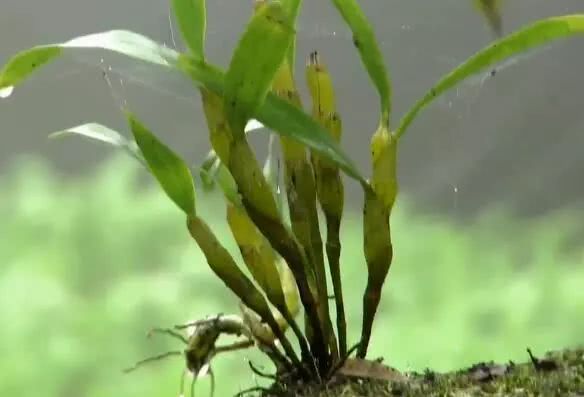
Dendrobium
Dendrobium nobile
A single plain hairpin, unadorned
With its free and graceful bearing it can
Match a fair and slender woman
Its noble nature is like gold
Prosperity can also be sought amid plain simplicity
This is -
Dendrobium nobile
The stems of Dendrobium nobile are upright, slightly flattened cylindrical
The upper part is more or less zigzag-curved, and the base is markedly narrowed
Its shape resembles the hairpins worn on the head in ancient times, hence the name "Jinchai" (gold hairpin) Dendrobium
(Dendrobium nobile flower)
On the tips of the slender white petals, one after another
A touch of pale purple is dotted
A misty haziness
Making people marvel:
"What beautiful Dendrobium flowers!"
The Benefits and Effects of Dendrobium nobile
The "Compendium of Materia Medica" states that it has the effects of "strengthening yin and benefiting essence, nourishing the stomach and intestines, replenishing internal deficiencies, and lightening the body to prolong life." Historically, physicians called Dendrobium nobile"Dried it does not wither, chewed it leaves no residue, its flavor is rich yet it contains no fat or grease; it nourishes the stomach and benefits fluids, yet has no cooling effect that harms the spleen - truly a supreme excellent product"。
Used as a tea, it promotes salivation and moistens the throat, keeping the voice from failing; extracted from it, it resists bacteria and prevents cancer, and delays aging.Therefore its effects are remarkable, and it is scarce on the market, long known as "thousand-gold grass" and "soft gold"!Its main effects include the following:
1. Anti-aging, enhancing immunity
Dendrobium nobile can significantly raise the level of superoxide dismutase (SOD) and lower lipid peroxide (LPO),Regulate the level of brain monoamine neurotransmitters, inhibit monoamine oxidase (MAO)-like activity, and play a role in delaying aging.
The Dendrobium polysaccharides that have attracted much attention in recent years also have significant immune-enhancing activity and multiple effects such as anti-aging and anti-radiation. The already-developed Chinese patent medicines and health products are deeply favored by people, such as Jinchai Fengdou Jing, Dendrobium Powder, Qingyan Ning, Yichang Tang, Dendrobium Dew, Dendrobium Essence, Yangyin Oral Liquid and Dendrobium Tablets, etc.
2. Promoting blood circulation and removing blood stasis, improving cardiovascular and cerebrovascular function
Dendrobium nobile contains ester components, which have the effects of promoting blood circulation and removing blood stasis, dilating blood vessels and resisting platelet aggregation, and treating thromboangiitis obliterans, cerebral thrombosis, arteriosclerotic occlusion, etc.Mailuoning Injection, extracted and processed from Dendrobium, honeysuckle and other medicinal materials, has the functions of clearing heat and nourishing yin, and promoting blood circulation and removing blood stasis.
3. Anti-tumor
The phenanthrene and bibenzyl compounds extracted from Dendrobium nobile have effects against lung cancer, ovarian adenocarcinoma and promyelocytic leukemia.It can promote T cell growth and the production of inhibitory factors by lymphocytes, playing a role in enhancing immunity.
The ethyl acetate extract of Dendrobium nobile has significant cytotoxic effects on human lung cancer cells, human ovarian adenocarcinoma cells and human promyelocytic leukemia.
4. Treating digestive system diseases
Dendrobium nobile has an excitatory effect on the intestinal tract, and can increase the amplitude of contraction. Pharmacological tests show that oral Dendrobium decoction can promote gastric juice secretion and aid digestion.
Dendrobine has effects similar to those of fluoxetine but weaker, and Dendrobium extract can stimulate the contraction of small intestinal smooth muscle, promoting gastrointestinal peristalsis.It can achieve unique and satisfactory results for chronic atrophic gastritis.
5、Treating eye diseases
Dendrobium nobile has a clear therapeutic effect on eye diseases. It not only inhibits galactose-induced cataracts but also has a certain therapeutic effect, with a lens preservation rate of 36.8%.
In treating cataracts, it has an inhibitory and corrective effect on the abnormal changes in enzyme activity caused by galactose, and can also prevent or correct the imbalance in the ratio of total lipids to total cholesterol in the lens caused by galactose-induced cataracts."Shihu Yeguang Wan" is composed of 25 traditional Chinese medicinal materials including Dendrobium and ginseng, and has good efficacy in treating cataracts, glaucoma, optic neuritis, etc.
What Differences Does It Have Compared with Dendrobium officinale
Appearance
The difference between the two is mainly distinguished by appearance.The flower color of Dendrobium nobile is pinkish white, and the front part gradually leans toward purplish red, with each flower having six petals.
While the flowers of Dendrobium officinale appear pale yellow,The number of flowers on each flower stalk is as few as seven or eight, and as many as twenty or even more, with each flower also having six petals, and presenting a flower shape that spreads out in all directions.
Taste
The difference between Dendrobium nobile and Dendrobium officinale is mainly in the content of dendrobine and the content of polysaccharides.In terms of dendrobine content, Dendrobium officinale has less than Dendrobium nobile,which is also the reason why Dendrobium nobile is bitter while Dendrobium officinale is not bitter.
The more bitter the Dendrobium nobile, the higher the dendrobine content, and the higher its medicinal value.While Dendrobium officinale has a relatively high polysaccharide content, so Dendrobium officinale is not bitter, has much gel, and is sticky.That is why there is a saying: choose Jinchai for medicinal use, choose Tiepishi for health care。
Composition
Scientific research shows that the relative integrated areas of the chromatographic peaks with even mass-to-charge ratios in electrospray ionization mass spectrometry of Dendrobium officinale and Dendrobium nobile are 2.34% and 41.87% respectively. Conclusion: Dendrobium officinale and Dendrobium nobile differ greatly in the number and content of alkaloid components, but as far as the same chemical components they contain are concerned, the quality of Dendrobium officinale is better than that of Dendrobium nobile.。