You can identify Dendrobium just by looking at its flowers, and it is not just beautiful
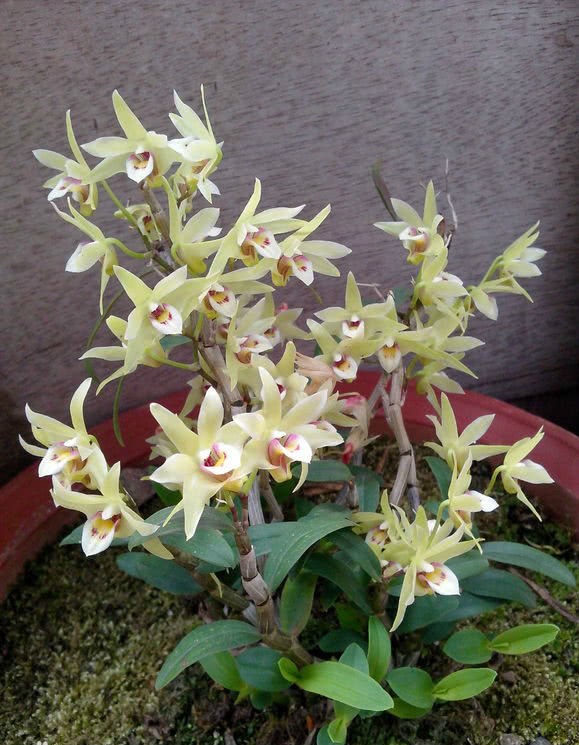
Dendrobium officinale as the opener. It must be included. The flowers are very beautiful and its medicinal efficacy is also the best
Dendrobium clavatum
Dendrobium lindleyi
Dendrobium nobile 1
Dendrobium nobile 2
Dendrobium nobile 3
Dendrobium crystallinum
Dendrobium sulcatum
Dendrobium jenkinsii, also known as turtle-back dendrobium
Dendrobium lituiflorum
Dendrobium fimbriatum
Dendrobium draconis
Dendrobium crepidatum
Dendrobium loddigesii
Dendrobium tortile
Dendrobium aphyllum
Dendrobium parishii
Dendrobium moschatum
Dendrobium thyrsiflorum
Dendrobium wardianum
Dendrobium cucullatum
Dendrobium falconeri
Dendrobium aduncum
Dendrobium chrysotoxum
Dendrobium heterocarpum
Dendrobium farmeri
Dendrobium farmeri 1
Dendrobium thyrsiflorum 1
Dendrobium thyrsiflorum 2
Dendrobium thyrsiflorum 3
Dendrobium parishii
Dendrobium chrysanthum
Dendrobium anosmum
Dendrobium anosmum again
Dendrobium xichouense
Dendrobium jenkinsii var. minus
Dendrobium hybrid spring
Dendrobium hercoglossum
Dendrobium bambusifolium
Dendrobium amethystoglossum
Dendrobium parishii var. purpureum
Dendrobium violet
An unidentified Dendrobium is really so beautiful, so I am posting it
Below let us introduce the benefits of Dendrobium officinale flowers:
The benefits of Dendrobium officinale flowers are rarely understood by ordinary people, mainly because in today's society, our traditional Chinese medicine has begun to decline, while Western medicine has gradually replaced the position of Chinese medicine. This situation is actually entirely caused by us ordinary people. After many people get sick, they envy the fast effects of Western medicine, so most people choose Western medicine. Little do they know that while treating the disease, it also harms their own body.
Strictly speaking, the effects and benefits of Chinese medicine are much better than those of Western medicine. Chinese medicine not only treats the symptoms but can also treat the root cause, so generally speaking, Chinese medicine has no side effects; Western medicine is different. Western medicine usually can only treat the symptoms but not the root cause, and most Western medicines have side effects. Below let us talk about the benefits of Dendrobium officinale flowers.
Among the many Chinese medicines, Dendrobium officinale flowers are sweet and neutral in nature, enter both the spleen meridian and the kidney meridian, have the function of nourishing yin and also have the effect of warming yang. They are a very rare superior-grade product for gently regulating yin and yang. Below is a detailed explanation from traditional Chinese medicine of the benefits and effects of Dendrobium officinale flowers:
1) Shennong Bencao Jing: "It mainly treats damage to the middle, removes obstruction, lowers qi, tonifies the five viscera and consumptive diseases, emaciation, strengthens yin, and when taken for a long time thickens the stomach and intestines." Dendrobium mainly treats damage to the middle burner (spleen and stomach) caused by various reasons; it can eliminate various symptoms of blockage and stagnation, regulate the qi mechanism of the spleen and stomach, is good at tonifying emaciation caused by consumptive diseases of the five viscera, and can also tonify yin. When taken for a long time, it can strengthen the function of the spleen and stomach.
2) Bielu: "It benefits essence, tonifies internal exhaustion and insufficiency, calms stomach qi, promotes muscle growth, expels pathogenic heat and prickly heat qi from the skin, treats pain, cold, numbness, and weakness of the feet and knees, and settles the mind and removes fright." Dendrobium can tonify the spleen and kidneys, clear summer heat, regulate yin and yang, and calm the mind and settle the spirit.
3) Sengshen Jifang: "For those with damp scrotum and little essence, and residual dribbling of urine, it is appropriate to add this." Dendrobium can treat damp scrotum, low semen in men, and incomplete urination; equivalent to prostate diseases in modern medicine.
4) Yaoxing Lun: "It boosts qi and removes heat. It mainly treats weakness of the waist and feet in men, strengthens yang, expels wind and obstruction from the skin and muscles, long-standing cold in the bones, deficiency and damage, tonifies the kidneys and accumulates essence, treats waist pain, nourishes kidney qi, and boosts strength."
5) Rihua Zi Bencao: "It treats deficiency, damage, poor weakness, strengthens bones and muscles, warms the water organ, benefits the intellect, calms stomach qi, and expels deficient pathogenic factors."
6) Bencao Yanyi: "It treats deficient heat in the stomach."
7) Gangmu: "It treats fever with spontaneous sweating, and carbuncles and abscesses with internal blockage of pus."
8) Yaopin Huayi: "It treats long-standing deficiency of lung qi and incessant coughing."
9) Bencao Bei Yao: "It treats nocturnal emissions and spermatorrhea."
10) Gangmu Shiyi: "It clears the stomach and removes deficient heat, promotes body fluids, stops consumptive damage, and when used as a substitute for tea, it opens the appetite and strengthens the spleen. It settles fright and treats wind, can calm excessive phlegm, relieves summer heat, and its sweet fragrance directs qi downward."
11) Bencao Zaixin: "It regulates stomach qi, clears stomach fire, removes vexation and thirst in the heart, treats deficient heat of the kidney meridian, calms the mind and settles fright, and relieves night sweats. It can relieve summer heat."
Next, let us learn about how to eat Dendrobium flowers:
Brewing with boiling water:Take a small amount of Dendrobium officinale flowers, put them into a glass cup, and brew with boiling water. If you like it sweet, add a little rock sugar or honey, and remember not to add tea leaves.
Boiling to drink:Take a small amount of Dendrobium officinale flowers, wash them clean, add a little rock sugar, and simmer over low heat for 20-30 minutes. It can be drunk hot, or cooled and then refrigerated in the fridge, taken twice in the morning and evening.
Juicing:Take an appropriate amount of fresh Dendrobium officinale flowers and wash them clean; put them into a juicer and add water; start the juicer and run it for 3-5 minutes so that the nutrients can be fully extracted; pour it out and drink it, and according to personal preference add an appropriate amount of honey or rock sugar.
Making soup:Required ingredients: fresh Dendrobium officinale flowers, free-range chicken, goji berries. Wash the required materials and set aside; chop the free-range chicken into pieces and put them into clean water to boil, skim off the floating blood foam; after bringing to a boil over high heat, switch to low heat and simmer slowly; after the chicken meat is soft and tender, add Dendrobium officinale flowers and add salt to season; simmer for 30 minutes and it is ready.
Scrambled eggs with Dendrobium officinale flowers:Ingredients: 4 eggs (two servings), fresh Dendrobium officinale flowers, appropriate amounts of oil and salt. Wash the Dendrobium officinale flowers, beat the eggs; add the fresh Dendrobium officinale flowers to the beaten egg mixture and stir evenly; heat the pan, add an appropriate amount of oil; after the oil is hot, pour in the egg mixture, stir-fry for about one minute, then quickly remove from the pan and serve.
Fresh Dendrobium officinale flower pancakes:Ingredients: flour, fresh Dendrobium officinale flowers, appropriate amounts of salt and oil. Wash the Dendrobium officinale flowers and set aside, mix the flour into a batter, not too thick; add the Dendrobium officinale flowers and salt to the flour batter; add oil to a flat-bottomed pan and heat it, pour in the batter and spread it flat; fry slowly over low heat until both sides are golden brown.
Steamed meat patties with Dendrobium officinale:2-3 liang of lean pork, a small amount of Dendrobium officinale flowers, add a little table salt and mix well. Steam until cooked, then eat.
In these ways of eating, there is no strict distinction between using dried flowers or fresh flowers for Dendrobium officinale flowers; they are interchangeable. If fresh flowers are hard to get, use dried flowers. Of course, the ways to eat Dendrobium officinale flowers are not limited to these; more novel and distinctive ways of eating still await everyone to explore and discover together.
Cordyceps sinensis, black goji berries, bird's nest, Panax notoginseng, saffron, maca, reishi mushroom, donkey-hide gelatin, American ginseng, fish maw, sea cucumber, Swietenia macrophylla seeds, honey, moringa seeds, Eurycoma longifolia, Gastrodia elata, velvet antler, red dates, ginseng, red ginseng, snow chrysanthemum, Cistanche deserticola, Dendrobium officinale, Anoectochilus formosanus, Fritillaria cirrhosa, Codonopsis pilosula, brown sugar, snow frog, Vaccinium vitis-idaea, Astragalus membranaceus, Angelica sinensis... (continuously updating)