Detailed Explanation of Key Techniques for High-Yield Water Chestnut Cultivation
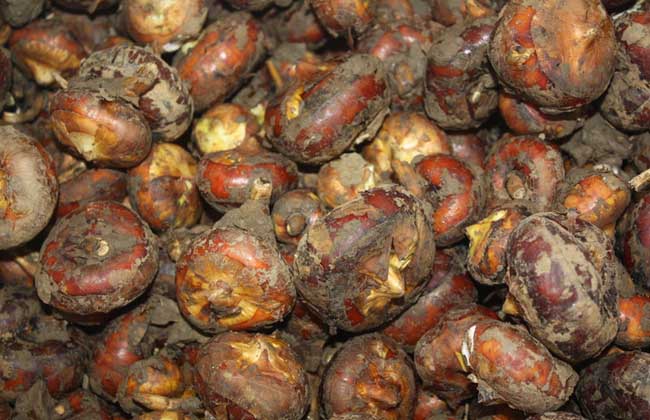
The water chestnut, also known as matai, water chestnut, fuzi, wuyu, puji, dili and so on, is a clumping aquatic herb of the genus Eleocharis in the Cyperaceae family. Its underground corms are used for food; the flesh is crisp and refreshing and rich in starch. It can be eaten as a fruit or vegetable, and can also be made into canned goods, starch or preserves, and is deeply favored by consumers. Let us now take a look at the high-yield water chestnut cultivation techniques!
The Origin and Distribution of the Water Chestnut
The water chestnut originated in India. There are about 150 species worldwide, widely distributed across the globe, mostly in tropical and subtropical regions. In China, records of cultivation date back to the Western Han Dynasty. At present there are more than 20 species and some varieties, mainly distributed in the low-lying areas of Guangxi, Jiangsu, Anhui, Zhejiang, Fujian, Guangdong, Hunan, Hubei, Jiangxi, Guizhou and other places, with some areas of Hebei also having distribution. Baihu Town, Lujiang County, Anhui Province is rich in high-quality water chestnuts and is the largest “home of water chestnuts” in China. Qingshan Town, Lipu County, Guilin City, Guangxi is a nationally recognized “home of matai”. Lechang water chestnuts from the Shaoguan area of Guangdong are famous for their large size, thin skin, tender flesh, abundant moisture, refreshing sweetness without grit, and crisp, delicious taste. In addition, Maoli Town, Shayang County, Jingmen City, Hubei Province is also a water chestnut production area, and its products have long been exported overseas and are renowned far and wide.
The Growing Environment of the Water Chestnut
The water chestnut prefers to grow in ponds or is cultivated in paddy fields. Propagation uses the corm, also called the fruit bulb, for asexual reproduction. It likes warmth and moisture and fears freezing, and is suitable for growing in loam with a soft plow layer and firm subsoil. For cultivation, a plow layer of 20-25 cm is required, which is conducive to the growth and development of the corms while preventing the corms from drilling too deep, keeping individual development uniform and consistent in size, and also facilitating digging and harvesting. If the plow layer is too sticky, it is not conducive to the expansion of the corms; if there is too much humus, the sugar content of the corms decreases and the sweetness is poor. It is suitable for growing in shallow water. In terms of nutritional requirements, it needs less nitrogen fertilizer and more phosphorus fertilizer. Throughout the entire growing period, it requires sufficient light.
Seedling Raising Techniques for the Water Chestnut
1. Selection of seed corms: The water chestnut reproduces through stolons. Before sowing, select one by one corms with unbroken skin, robust and well-formed apical and lateral buds, dark brown skin, a single corm weight of more than 15 grams, and characteristics of the cultivated variety as seed corms. Before sowing, soak them in a 500-fold dilution of 50% carbendazim wettable powder for 18-24 hours to kill surface pathogens. Each mu of field requires about 15-20 kg of seed corms.
2. Seedling raising time: The seedling raising time for water chestnuts depends on the transplanting period. For early water chestnuts, because the early-stage temperature is low, seedling raising begins 40-45 days before transplanting (late March to early April). For late water chestnuts, because the temperature during seedling raising is relatively high, seedlings are raised 20-25 days before planting. In the middle and lower reaches of the Yangtze River, seedlings are generally raised from Qingming to Guyu. Before raising seedlings, sprout them indoors first, then sow and transplant them temporarily in paddy fields.
3. Sprouting of seed corms: The indoor sprouting method is to spread a layer of rice straw about 10 cm thick on the ground, arrange the seed corms on the straw with the buds facing up, stack them in 3-4 layers, then cover them with more rice straw, and water once each morning and evening. After 10-15 days, when the buds have grown to 3-4 cm, the seedlings can be transplanted into the seedling field for sowing.
4. Seedling field preparation: The seedling field should be chosen in a place with convenient drainage and irrigation and fertile, loose soil. Deeply plow, finely harrow and level the seedling field, leaving furrow ditches around it and building a surrounding ridge. Because during this period the nutrition for water chestnut growth mainly comes from the corms, the seedling field generally does not need fertilizing.
5. Sowing and seedling raising: Arrange the sprouted corms one by one into the seedling pond, and press the corms into the mud 1-2 cm, with a plant and row spacing of 6×6 cm. The buds are required to face upward and be at a uniform height, and the field should maintain a water layer of 1-2 cm. After 15-20 days, when the seedlings are about 10 cm tall and have 5-6 leaf-like stems, temporary transplanting can be carried out.
6. Temporary transplanting of water chestnuts: Temporary transplanting of water chestnuts means separating the raised seedlings and enlarging their plant and row spacing to facilitate concentrated fertilizing and management, and more importantly to meet the need in southern regions of planting water chestnuts after rapeseed or wheat. The specific method of temporary transplanting is, 20-25 days after sowing, to transplant corms with leaf-like stems 10-15 cm long into the water chestnut seedling field, planting the corms at a plant and row spacing of 30 cm×40 cm. This is beneficial for rooting and also expands the nutritional area for the seedlings.
7. Seedling stage management: After transplanting the seedlings, the seedling field is best kept with a shallow water layer of 2-3 cm, which can raise the soil temperature and promote seedling growth. About 15 days after transplanting, apply 20 kg per mu of a nitrogen-phosphorus-potassium compound fertilizer. Note that it should be broadcast, not concentrated near the roots, so as not to burn the seedling roots. After 30-40 days, when the seedlings are 35-40 cm tall and the leaf-like stems are more than 0.5 cm thick, the seedlings can be lifted and planted in the field.
Planting Techniques for the Water Chestnut
1. Land preparation and fertilizing: It is best to choose a paddy field with sufficient sunlight, loose topsoil, relatively firm subsoil, a plow layer of about 20 cm, abundant water, convenient irrigation, and clean water for planting. Before planting, deeply plow the field to about 15 cm, then apply base fertilizer. The reference standard for fertilizing is to apply 3,000 kg of decomposed pig manure, 30 kg of superphosphate, 10-15 kg of potassium chloride, and 15 kg of ammonium bicarbonate per mu. Finally, harrow it finely and thoroughly so that the field soil becomes muddy.